IEA Warns of Oil Shock, Urges Australians to Work From Home, Reduce Air Travel
Key Takeaways
- IEA urges Australians to work from home to cut energy usage.
- IEA recommends lower driving speeds to reduce energy consumption.
- IEA proposed ten measures to reduce global energy consumption.
Global Energy Crisis Warning
The International Energy Agency (IEA) has issued stark warnings about an escalating global oil crisis.
“With energy prices still high due to the conflict in the Gulf, governments around the world are being urged to reduce driving speed limits and encourage more working from home”
The agency describes it as 'the greatest global energy security threat in history' according to IEA executive director Fatih Birol.

The IEA has released comprehensive policy recommendations urging governments worldwide to implement immediate conservation measures.
These recommendations include specific attention to Australia's fuel supply situation.
The agency's analysis reveals that road transport accounts for approximately 45% of global fuel demand.
This makes road transport a critical target for reduction strategies.
The IEA's recommendations come amid ongoing concerns about fuel shortages in Australia.
The Australian government has acknowledged that imports may not flow at normal volumes from mid-April.
This is creating significant uncertainty across oil-reliant sectors.
Conservation Measures
The IEA has released a ten-point conservation strategy targeting transportation and work patterns.
These measures could significantly reduce oil consumption globally.
Among the key recommendations, asking workers to stay home when possible could reduce car oil consumption by up to 6%.
Cutting speed limits by 10km/h would reduce petrol use by 5 to 10%.
Other transport-related measures include encouraging public transport usage.
The agency recommends implementing odd-number vehicle plate systems for road access.
Promoting carpooling is another recommended strategy.
Reducing air travel is also strongly recommended.
The IEA also suggests transitioning to non-gas cooktops in households.
These measures reflect the agency's assessment that behavioral changes combined with policy interventions can make substantial impacts.
They could reduce global oil demand in the short term.
Global Policy Responses
Many Asian nations and less developed countries have already implemented travel restrictions.
“With energy prices still high due to the conflict in the Gulf, governments around the world are being urged to reduce driving speed limits and encourage more working from home”
Developed countries have been slower to adopt such policies according to IEA analysis.
The agency notes that France, Japan, South Korea, Croatia, Austria have moved to cap fuel retailer margins or prices.
These nations are taking these measures as immediate responses to the energy crisis.
This disparity highlights the varying approaches different regions are taking.
They are addressing the global oil shock through different policy mechanisms.
The IEA's executive director Fatih Birol acknowledged that such advice can be politically difficult.
He emphasized that high energy prices provide people with a 'big incentive' to adopt new conservation strategies.
This suggests that economic pressures may ultimately drive behavioral changes.
This occurs even when political will is lacking.
The economic factor may be more powerful than political considerations in driving conservation efforts.
Australian Response
In Australia, the government has been responding cautiously to the IEA's recommendations.
Energy Minister Chris Bowen downplayed the agency's suggestions as merely an 'options paper'.
He stated it's 'not a request or a set of instructions from the IEA.'
Despite this measured response, Australia has significant emergency powers available.
These include the ability for ministers to nationalize elements of the economy and fuel supply.
The Labor government has indicated it's not currently intent on using these extraordinary powers.
However, sources in high-level briefings suggest more drastic measures might be required.
This would happen as the situation evolves.
States also maintain extraordinary powers around fuel rationing.
This creates multiple layers of potential intervention.
These could be deployed should the crisis deepen.
More on Other

U.S. Bans Cuba From Receiving Russian Oil as Two Tankers Head to Cuba
17 sources compared

Israel Bans Eid Prayers at Al-Aqsa Mosque in Occupied East Jerusalem.
10 sources compared
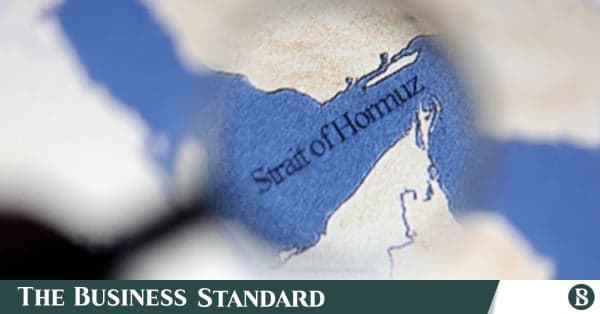
Iran triggers Strait of Hormuz closure, disrupting India's LPG market and destabilizing energy supplies.
14 sources compared

Cuban Border Guards Shoot Dead Occupants of Florida-Registered Speedboat; Reports Vary on Death Toll
73 sources compared