
Wally Liaw, Super Micro co-founder, charged in $2.5B AI chip smuggling scheme to China
Key Takeaways
- Wally Liaw, co-founder of Super Micro Computer, charged with smuggling Nvidia AI servers to China.
- Charges allege conspiracy to export high-performance Nvidia chips and AI servers to China without licenses.
- Indictment unsealed in Manhattan SDNY; three defendants include Liaw, Ruei-Tsang Chang, and Ting-Wei Sun.
Liaw's Background
Wally Liaw, the co-founder and prominent Silicon Valley executive of Super Micro Computer, has been charged in a major $2.5 billion AI chip smuggling scheme to China.
“Table of Contents Authorities in the United States have arrested Yih-Shyan “Wally” Liaw for allegedly conspiring to unlawfully export AI servers”
As a 71-year-old US citizen who co-founded Super Micro in 1993, Liaw has built a career spanning three decades in the server hardware industry.

He has served in senior leadership roles across sales and business development, with international experience including serving as President of the US arm of 2CRSi in 2020.
This role involved overseeing operations across the US and East Asia - regions central to the global technology supply chain.
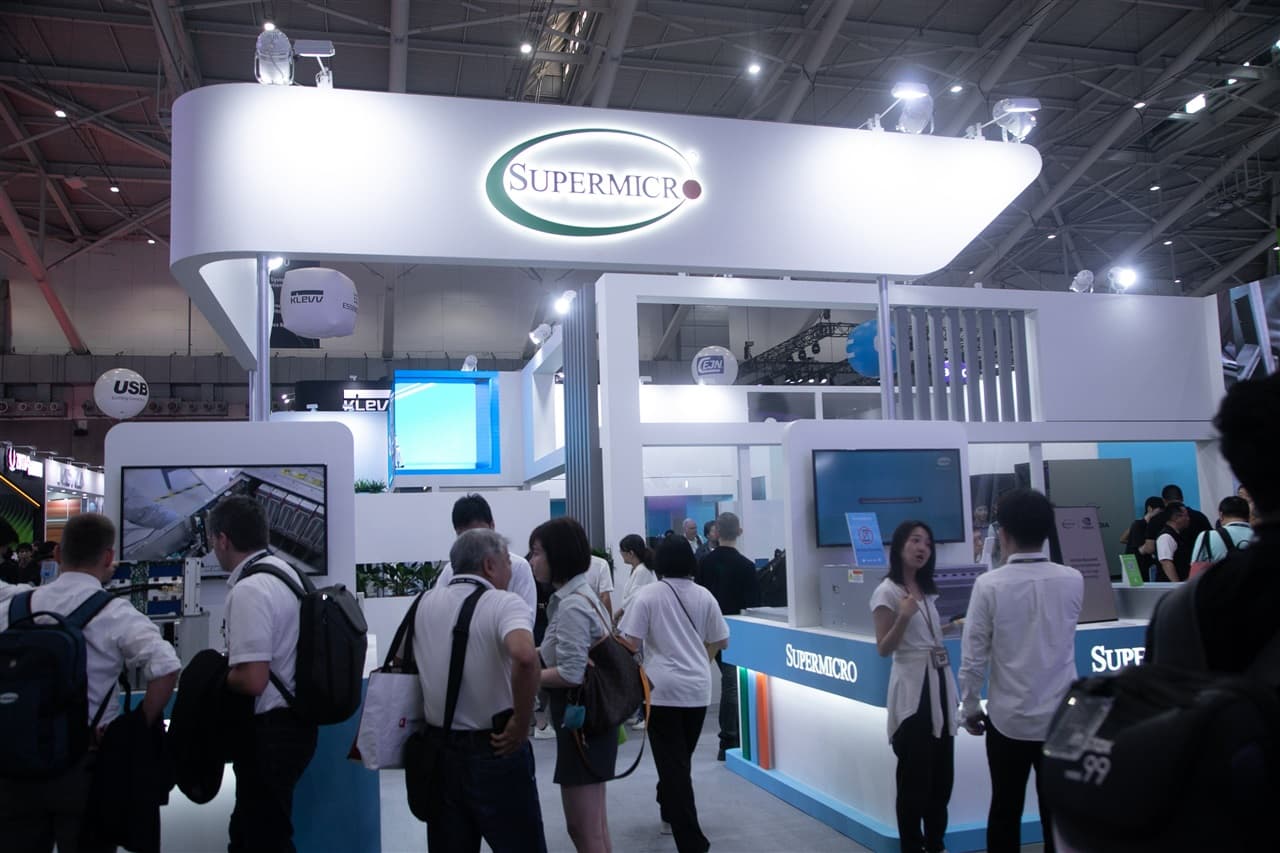
Within Super Micro, Liaw has been closely tied to scaling the company's global footprint, particularly across the US and Asia.
He has held the position of Senior Vice President for business development since 2022, a significant role given Super Micro's position as one of the largest vendors of server machines based on Nvidia's products.
According to Bloomberg reports, Super Micro accounts for about 9% of Nvidia's revenue, highlighting Liaw's proximity to advanced AI technology.
Smuggling Scheme Details
The criminal charges against Liaw and his co-conspirators involve a sophisticated scheme to divert $2.5 billion worth of US-made AI servers containing sensitive NVIDIA graphics processing units (GPUs) to China in violation of US export control laws.
According to the Department of Justice indictment unsealed on March 19, 2026, Liaw worked with Super Micro's Taiwan general manager Ruei-Tang "Steven" Chang and contractor Ting-Wei "Willy" Sun to establish a complex transshipment pipeline.

The operation involved using an ASEAN-based shell company to purchase servers from Super Micro, which were then shipped to facilities in Taiwan before being rerouted through Southeast Asia and ultimately delivered to Chinese buyers.
The scheme allegedly became increasingly brazen, with authorities reporting that over $500 million worth of servers were diverted to China between April and mid-May 2025 alone.
The indictment details how the conspirators utilized encrypted messaging apps to coordinate the illicit activities while attempting to evade detection by Super Micro's compliance team and US authorities.
Concealment Methods
The sophisticated methods employed by the alleged conspirators to conceal their activities reveal the lengths they went to circumvent export controls and deceive authorities.
“Yih-Shyan 'Wally' Liaw was accused by US authorities of plotting to violate US export control regulations by smuggling high-performance computer servers built in the US with advanced AI capabilities to China”
According to court documents obtained by multiple sources, the scheme involved elaborate deception tactics including the creation of thousands of "dummy" servers - non-working replicas of actual computers - to fool compliance inspections and audits.
Prosecutors claim surveillance footage captured workers using hair dryers to remove labels and serial numbers from real servers and applying them to the dummy machines, which were then left behind for inspection while the actual servers were shipped to China.
The indictment further alleges that the conspirators falsified documents and sent deceptive communications to create the illusion that the Southeast Asian shell company was the legitimate end buyer of the servers.
These elaborate measures were reportedly coordinated through encrypted messaging apps that allowed the defendants to discuss server quantities, delivery locations in China, and methods to keep the operation hidden from both Super Micro's compliance team and US authorities.
Company Response
Following the unsealing of the indictment and the arrests of Liaw and Sun, Super Micro Computer has taken immediate action to distance itself from the alleged misconduct.
The company announced that it has placed Liaw and Chang on administrative leave while terminating its relationship with Sun, who was a contractor.

In a statement released on March 19, 2026, Super Micro emphasized that "the conduct by these individuals alleged in the indictment is a contravention of the Company's policies and compliance controls, including efforts to circumvent applicable export control laws and regulations."
The company further asserted that it "maintains a robust compliance program and is committed to full adherence to all applicable U.S. export and re-export control laws and regulations."
Super Micro also confirmed that it is fully cooperating with the ongoing investigation.
The news had an immediate impact on the company's stock, which dropped approximately 8-12% in after-hours trading following the announcement, though it later rebounded.
Meanwhile, NVIDIA, whose AI chips were at the center of the alleged smuggling scheme, issued a statement emphasizing that "strict compliance" with export laws is a top priority for the company.
Legal Consequences
The charges against Liaw and his co-conspirators carry severe legal consequences, with each facing potential maximum sentences of up to 30 years in prison if convicted.
“Home Tech ICT Supermicro co-founder charged in US$2”
The three-count indictment includes charges of conspiring to violate the Export Controls Reform Act, conspiring to smuggle goods from the United States, and conspiring to defraud the United States.
As of the indictment's unsealing on March 19, 2026, Liaw had been arrested in California and released on bail, while Sun, a contractor, remained in custody awaiting a detention hearing.
Chang, who served as the Taiwan sales manager for Super Micro, remained at large as a fugitive.
The investigation, which involved the FBI's Counterintelligence and Espionage Division, has highlighted the growing tensions in US-China technology trade relations.
The case represents one of the largest alleged smuggling schemes involving restricted AI chips to China to date, underscoring the strategic importance of these technologies in the ongoing global tech competition.
More on USA

TSA Officers Quit as Funding Lapse Leaves Screeners Unpaid
12 sources compared

Trump administration sues Harvard for failing to protect Jewish and Israeli students
39 sources compared
President Trump Slams NATO as Cowards as Marines and Warships Head to the Middle East
44 sources compared

Iran Threatens Global Tourist Sites Worldwide
14 sources compared