
Mohammad Reza Aref Says Iran’s Strait of Hormuz Security Is Not Free
Key Takeaways
- Security of the Strait of Hormuz is not free; oil export restrictions jeopardize safe passage.
- Iran argues maritime security costs are tied to ending economic pressure and Western blockade.
- The statements come amid rising U.S.-Iran tensions and the seizure of an Iranian cargo ship.
A cost for security
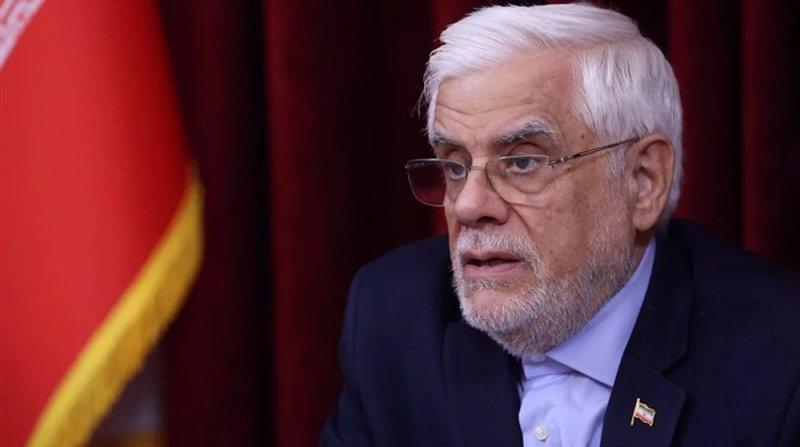
Iran’s First Vice President Mohammad Reza Aref said providing security in the Strait of Hormuz is “not free,” warning that restricting Iran’s oil exports would bring “the risk of significant costs for everyone.”
“Iran warns security of Strait of Hormuz can’t be assured if country’s oil exports restricted First Vice President Mohammad Reza Aref says no country can expect safe passage through strait while blocking Iran’s oil exports Tarek Chouiref 20 April 2026•Update: 20 April 2026 ISTANBUL Iran’s First Vice President Mohammad Reza Aref warned early Monday that security in the Strait of Hormuz cannot be guaranteed if Iran’s oil exports remain restricted”
In a post on X, Aref wrote, “You cannot restrict Iran's oil exports and expect free security for others,” and he added, “The choice is clear: either a free oil market for everyone, or the risk of significant costs for everyone.”
IRNA’s account of Aref’s remarks tied the argument to what it called an “illegal US maritime blockade in international water aimed at restricting Iranian vessels,” and it quoted him again on fuel-price stability, saying, “Stability in global fuel prices depends on a guaranteed and lasting end to economic and military pressure against Iran and its allies.”
PressTV similarly framed Aref’s position around the Strait’s management, saying Aref reiterated that “the management of the Strait of Hormuz lies with Iran and constitutes a legal right of the Islamic Republic.”
Multiple outlets also linked the vice president’s comments to recent maritime incidents, with PressTV saying the United States deployed “its terrorist marines onto the ship’s deck and disabling its navigation systems” on an Iranian merchant vessel in the Sea of Oman.
PressTV then described an immediate Iranian response, stating that “Iranian forces struck back, targeting several American military vessels in the area with drone attacks.”
The same reporting chain placed Aref’s warning inside a wider sequence of opening and closing decisions, saying that on Friday Iran declared the Strait open to commercial shipping, “weeks after it was shut down,” before the IRGC Navy said on Saturday that Iran closed it again after the United States retained its blockade of Iranian ports.
From ceasefires to blockades
The warnings about Hormuz security came as Iran and the United States traded accusations over ceasefires, blockades, and maritime access.
PressTV said Aref’s remarks came “after the United States carried out a flagrant act of aggression on an Iranian merchant vessel in the waters of the Sea of Oman,” and it described the U.S. action as deploying marines and disabling navigation systems.

It then said “On Friday, Iran had declared the Strait was open to commercial shipping,” but added that the IRGC Navy said on Saturday that Iran “has closed the Strait of Hormuz again after the United States chose to retain its blockade of Iranian ports in violation of the conditions of a two-week ceasefire announced by US President Donald Trump.”
Türkiye Today likewise described the immediate backdrop, saying Aref’s comments appeared “to criticize the U.S. blockade against Iranian ports,” and it added that the remarks came “as Tehran and Washington prepare for a second round of talks in Islamabad on Tuesday.”
That same outlet said the U.S. imposed a naval blockade on April 13 and that a previous round of talks on April 11-12 ended “without an agreement.”
DW provided a broader timeline around ceasefires and navigation, saying a temporary ceasefire put fighting “between Iran and a US-Israeli coalition on hold until April 22,” and noting that “On Friday, both Iran and the US said the Strait of Hormuz was now ‘open’ to commercial shipping,” while the U.S. “blockade of Iranian ports would remain in place until a peace deal with Tehran was reached.”
DW then reported that “Shortly after, on Saturday, Iran reversed its decision to open the strait, citing the US blockade of its ports,” and it said “Maritime traffic there had ground to a halt since the start of the war on February 28.”
Revenge and no talks
Iran’s posture toward the United States also included a rejection of negotiations and a vow of retaliation tied to the seizure of a cargo ship.
“France and the United Kingdom have said they are ready to lead a multinational mission to help restore freedom of navigation and trade in the Strait of Hormuz, only to be deployed once peace had been agreed in the region”
Radio Free Europe/Radio Liberty reported that Iranian Foreign Ministry spokesman Esmail Baqaei said on April 20 that “Iran has no plans to participate in a second round of peace talks with the United States,” while also describing uncertainty over “Pakistani-hosted face-to-face talks between US and Iranian delegations in Islamabad.”
Baqaei told reporters, “Iran will make the appropriate decision on continuing the path of negotiations by prioritizing national interests and concerns,” and the same report said he called the US seizure of an Iranian ship “aggression” while stating Iranian authorities were investigating the incident.
The same report said a senior Iranian official told Reuters: “the continued US naval blockade undermines Iran-US peace talks,” and it added that “Iran’s defense capabilities, including its missile program, are non-negotiable.”
RFE/RL also quoted a senior Iranian official from state media as saying “We warn that the Armed Forces of the Islamic republic of Iran will soon respond to and retaliate against this armed piracy by the US military,” describing the U.S. action as violating a cease-fire by shooting and seizing an Iranian commercial vessel in the Gulf of Oman.
The same RFE/RL report said the ship was traveling “from China to Iran when it was intercepted,” and it stated that the guided-missile destroyer Spruance fired “several rounds into Touska’s engine room,” while Trump claimed the ship was under U.S. control.
Iran International added that the Iranian Supreme National Security Council said passage would be permitted only after “issuing a crossing certificate in accordance with Iranian controls” and “in exchange for payment of security, safety, and environmental protection service fees.”
Europe weighs escort plans
European governments and shipping experts described a cautious approach to Hormuz navigation, even as Iran and the United States issued “open” statements.
DW reported that France and the United Kingdom said they were ready to lead a multinational mission to help restore freedom of navigation and trade in the Strait of Hormuz, “only to be deployed once peace had been agreed in the region,” and it said that at a meeting in Paris on Friday “the mood remained one of caution.”
DW quoted French President Emmanuel Macron saying, “The ceasefires in Lebanon and Iran, as well as Iran's statement [to open] the Strait of Hormuz, are steps in the right direction,” while adding, “But we consider these developments with prudence.”
UK Prime Minister Keir Starmer was quoted saying the opening of the strait must be “both lasting and a workable proposal.”
DW also reported that “International experts seemed to share the skepticism about the recent announcements,” including Jakob Larsen of BIMCO writing on LinkedIn that it was “incorrect to believe the waterway was therefore ‘safe for transit.’”
The DW report included a warning from Ian Ralby of Auxilium Worldwide that “The war first needs to completely end and even then, the potential for things going wrong or even a friendly fire incident kicking off is very high,” and it said he told DW that the coalition was right to show restraint.
DW further cited Michelle Wiese Bockmann of Windward, who said a claim by Iran to be laying mines “has prevented traffic from picking up again once the ceasefire was announced,” and she added, “It is unclear, if there are indeed any mines, but 832 tanker vessels and cargos are blocked in the strait right now.”
Conditional passage and fees
Iran’s internal security framework for Hormuz passage was described as conditional, administrative, and fee-based, with the Iranian Supreme National Security Council setting terms for ships.
“Iran’s Vice President Mohammad Reza Aref has said that providing security in the Strait of Hormuz “is not free”, warning that restrictions on Iran’s oil exports would have wider consequences”
Iran International reported that the council announced passage through the Hormuz Strait would be permitted only after “obtaining full information about passing ships,” “issuing a crossing certificate in accordance with Iranian controls,” and “in a manner suited to wartime conditions,” and it said this was “in exchange for payment of security, safety, and environmental protection service fees on the routes designated by Iran.”
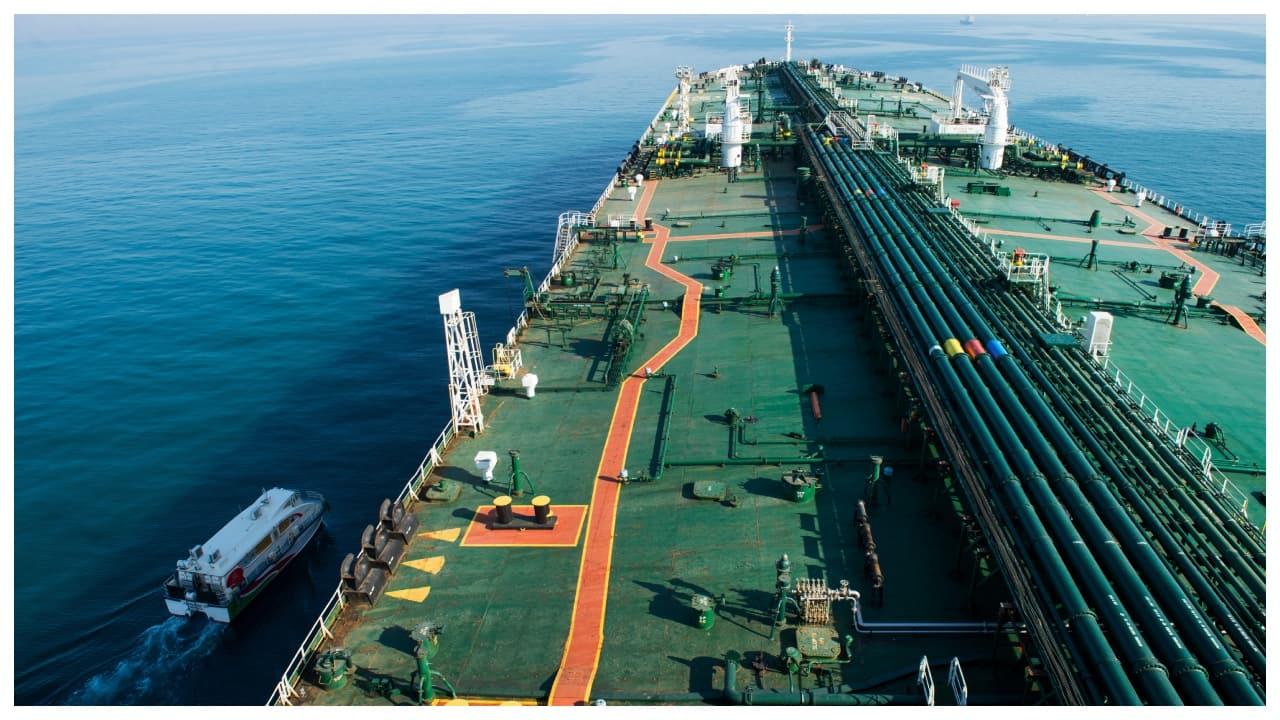
The same report said India summoned the Iranian ambassador in New Delhi on Saturday, April 18, because “two Indian vessels in the Hormuz Strait were forced to alter their course and return following reports of gunfire by the IRGC,” and it quoted the Indian Ministry of External Affairs statement that New Delhi had “deep concern” over the shooting incident targeting two ships flying the Indian flag.
Iran International also said that after Tanker Trackers announced that the IRGC had fired on two Indian vessels, the British Royal Navy’s Maritime Trade Operations (UKMTO) said a leisure cruise ship reported an object striking the water about “three nautical miles east of Oman,” and it noted ships were advised to report suspicious activity.
The report added that Tanker Trackers stated two Indian ships were forced to change course toward the west after gunfire by IRGC forces, and it said some commercial ships received wireless messages on Saturday, April 18, from the IRGC Navy informing them that the Hormuz Strait had been re-closed.
TRT عربي described the Supreme National Security Council’s threat to close the Strait completely if the U.S. naval blockade continued, stating that “Iran is determined to monitor and control traffic through the Strait of Hormuz until the war ends decisively and lasting peace is achieved in the region.”
TRT عربي also said ships crossing during this phase must “cover the costs related to security, safety, and environmental protection services, in accordance with the regulations announced by Iran.”
More on Iran

Iran Launches Drone Strikes On U.S. Ships After U.S. Navy Seizes Iranian-Flagged Cargo Vessel Near Hormuz
14 sources compared
United States Seizes Iranian-Flagged Cargo Ship Near Strait of Hormuz, Oil Prices Jump
12 sources compared

U.S. Readies Global Boarding of Iran-Linked Ships, Expands Naval Blockade Worldwide
25 sources compared

Iran’s Revolutionary Guard Fires on Two Indian-Flagged Tankers in Strait of Hormuz, India Warns Tehran
19 sources compared