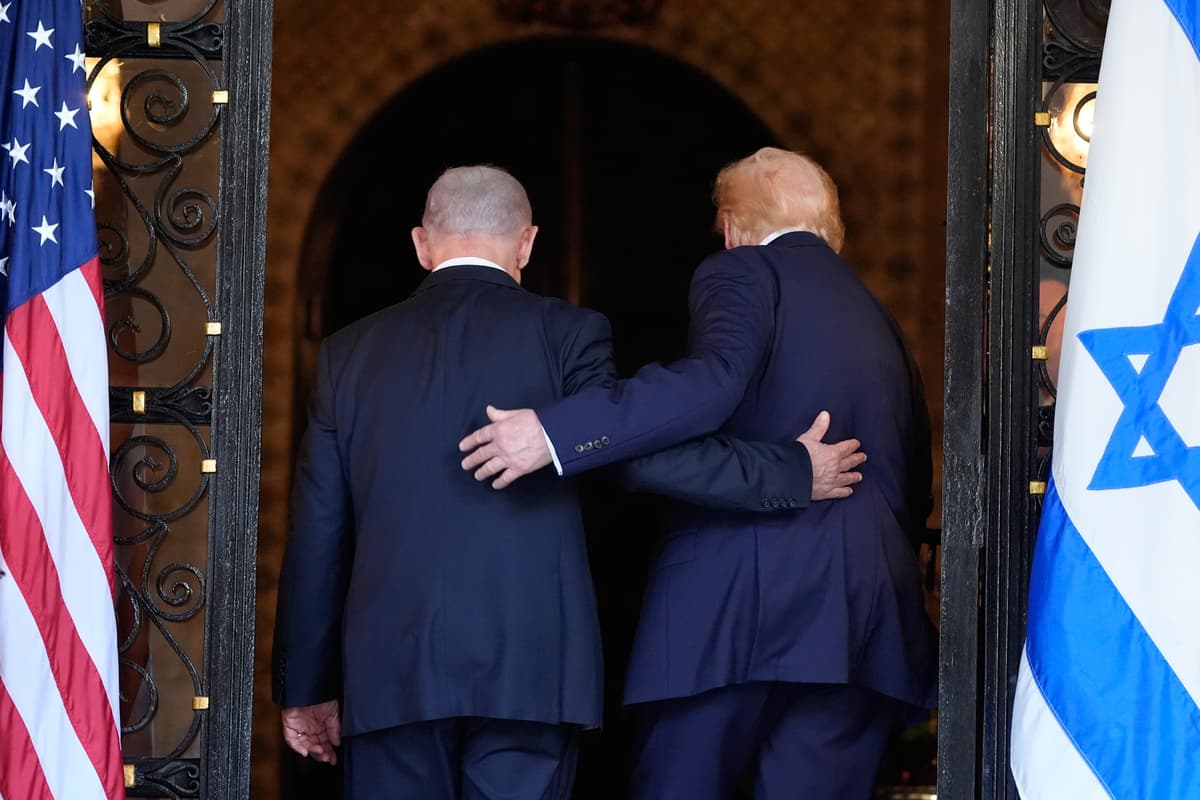
Israel Kills Iran's Top Leaders in Airstrikes, Experts Warn Backfire
Key Takeaways
- Israel has killed multiple senior Iranian leaders in rapid airstrikes.
- Experts warn the strategy could backfire despite leadership-targeted strikes.
- U.S. and Israel have divergent objectives in the Iran war.
Leadership Decapitation
Israel has carried out targeted killings against Iran's top leadership, including the death of Supreme Leader Ayatollah Ali Khamenei in the opening salvo of the war.
“It is using escalation as a means to force accommodation,” Toossi said”
Khamenei was replaced by his son Mojtaba, who is seen as even less compromising than his father.

The Israeli government has launched dozens of decapitation strikes against Iranian officials in a bid to weaken Iran's government structure.
Israeli Prime Minister Benjamin Netanyahu has stated that these killings are aimed at weakening the government so Iranians can rise up and overthrow it.
Netanyahu hopes to replace Iran's current government with a pro-Western government similar to the monarchy overthrown in 1979.
However, there has been no sign of such an uprising, as Iranian authorities previously crushed mass protests in January.
The strategy represents a significant escalation in the ongoing conflict between Israel and Iran.
Strategic Effectiveness
Military experts and analysts are divided on the effectiveness of Israel's targeted killing strategy against Iranian leaders.
Some argue that while these operations can weaken enemy organizations, they do not fundamentally change their ability to carry out attacks.

Yossi Kuperwasser, former head of Israel's military intelligence research division, acknowledges that targeted killings can be an effective tool but are not a 'cure for all problems.'
He states these operations 'by themselves don't dramatically change the ability of those organizations to cause damage and to carry out attacks,'
though he maintains 'it's important for Israel to weaken its enemies.'
U.S. President Donald Trump has suggested the war could elevate more moderate leaders from within Iran's government,
though experts warn the end result could be more radical or outright chaos if the state implodes.
Historical Precedents
Historical examples demonstrate that targeted killings often fail to achieve their intended long-term goals.
“While Israel had previously targeted fuel depots, it had avoided direct strikes on Iran’s core energy production infrastructure”
Such killings can even backfire by radicalizing followers and elevating more extreme successors.
Hezbollah serves as a prime example: after Israeli forces killed its then-leader Abbas Musawi in 1992,
his replacement Hassan Nasrallah led the group to become the region's most powerful armed force.
Hezbollah fought Israel to a bloody stalemate in 2006 despite the loss of its original leader.
Similarly, despite nearly all architects of Hamas's October 7, 2023 attack being killed,
the group has continued its operations fueled by decades-old grievances.
The United States has also experienced mixed results with targeted killings –
while Osama bin Laden and Abu Bakr al-Baghdadi were successfully eliminated,
their organizations persisted for years and required full-scale military campaigns to significantly diminish.
Impact Assessment
Despite the risks, Israeli officials claim their decapitation strikes have had a tangible impact on Iran's government structure.
A senior Israeli intelligence official told The Associated Press that Israel's strikes in Iran had degraded political leaders' ability to issue orders to the military, form policy and make decisions.
The official spoke on condition of anonymity to discuss classified assessments.
Yossi Kuperwasser further noted that in Iran, 'maybe there's not 'regime change' yet, but there is 'change in regime.'
He stated, 'The people are not the same people,' suggesting fundamental alterations in leadership composition.
This assessment suggests that while the fundamental structure of Iran's government may remain intact,
the composition and dynamics of leadership have been fundamentally altered.
However, experts caution that these changes may not be sustainable without a broader political strategy.
Backfire Risks
Experts warn that leadership decapitation carries significant risks of backfire, potentially leading to increased violence against civilian populations.
“War can't entirely eliminate Iran's nuclear program, the U”
Such tactics can create power vacuums that may be filled by more extreme elements.

Northeastern University political scientist Max Abrahms presents data showing that violence against civilians spikes after targeted killings.
His research covers multiple contexts including Afghanistan, Pakistan, Israel and the Palestinian territories.
He warns that 'Leadership decapitation is risky,' explaining the dynamics of leadership succession.
Abrahms states, 'When you take out a leader that prefers some degree of restraint and had influence over subordinates,
then there's a very good chance that, upon that person's death, you're going to see even more extreme tactics.'
This pattern suggests that Israel's strategy may ultimately result in more radical and less predictable behavior
from successor regimes and militant groups.
More on Iran

Iran Attacks Kuwaiti Oil Refinery as Tehran Steps Up Gulf Attacks
21 sources compared

Police Scotland Arrest Iranian Man and Woman After Breach Attempt at Faslane Nuclear Submarine Base
14 sources compared

Israel strikes South Pars gas field; Iran attacked Gulf energy sites
38 sources compared
Iran Targets Gulf Oil and Gas Facilities
74 sources compared