
Israel Kills Iran's Intelligence Minister as Gulf Energy War Escalates
Key Takeaways
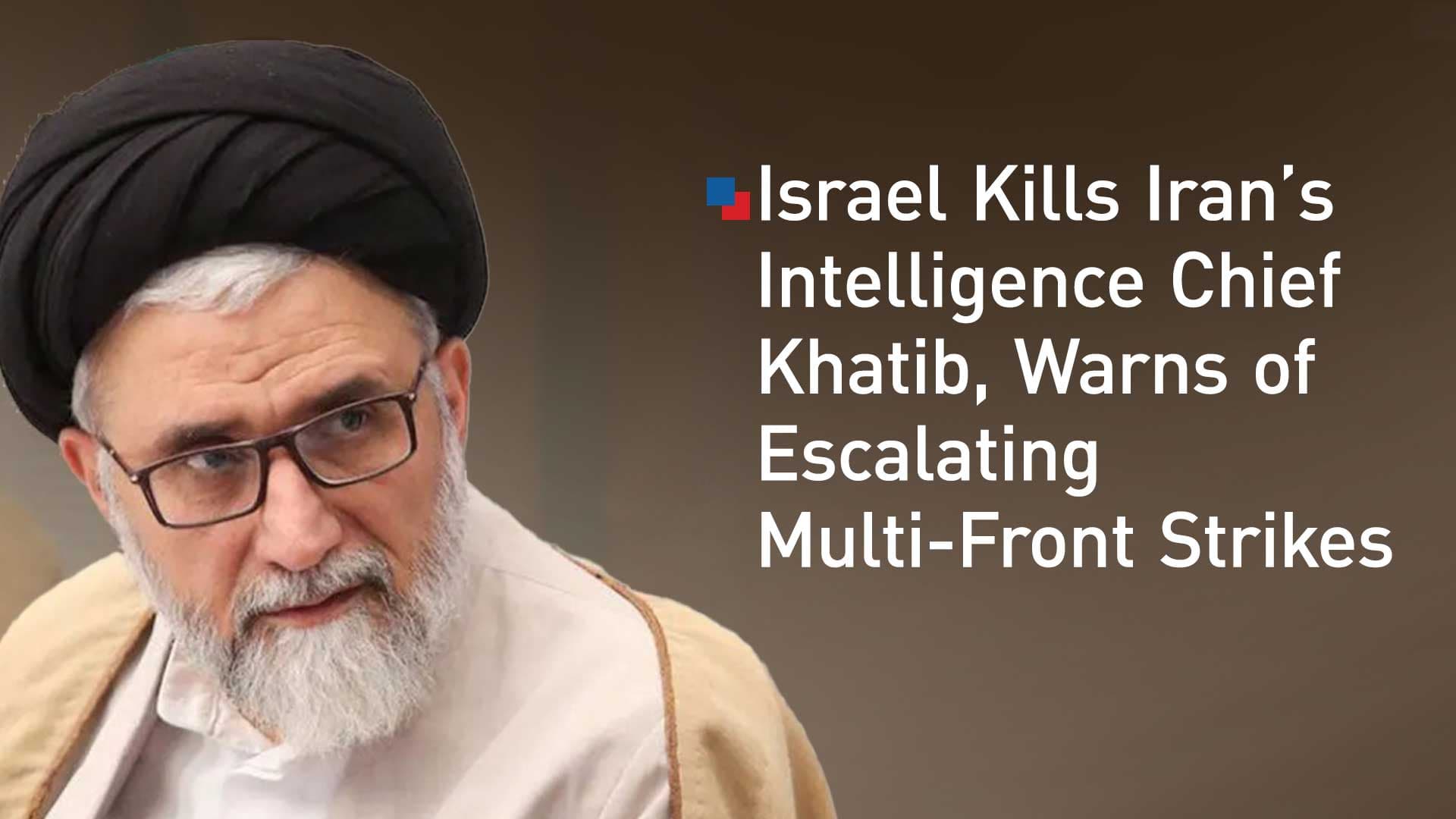
- Iranian Intelligence Minister Esmail Khatib killed in Israeli strike.
- Israeli strike targeted Iran's offshore gas field, South Pars, amid escalating regional energy tensions.
- Escalation targets Iran's energy facilities; Iran retaliates in the Persian Gulf.
Israeli Assassination Campaign
Israel dramatically escalated its campaign against Iranian leadership by killing Intelligence Minister Esmail Khatib in an overnight strike.
“DUBAI, United Arab Emirates -- Israel killed Iran's intelligence minister as it kept up its campaign against the Islamic Republic's top leadership and reportedly attacked an Iranian offshore natural gas field Wednesday, as the war escalated pressure on energy, the region's economic lifeblood”
The assassination continued a pattern of targeted killings that began with the elimination of top security official Ali Larijani and Revolutionary Guard Basij commander Gen. Gholam Reza Soleimani the previous day.

Israeli Defense Minister Israel Katz promised 'significant surprises' to come, indicating the campaign was far from concluded.
The strikes represent a systematic effort by Israel to decapitate Iran's security apparatus.
U.S. intelligence assessments indicate the Iranian government remains 'largely degraded but intact' rather than toppled.
The attacks have occurred amid broader regional tensions as Israel continues its military operations in Lebanon and the occupied territories.
Iranian Retaliation
Iran responded to the assassinations with furious retaliation, unleashing missile strikes against Israel and escalating attacks on Persian Gulf neighbors' energy infrastructure.
Iranian Supreme Leader Ayatollah Mojtaba Khamenei expressed condolences for Larijani's death, stating the assassination demonstrated 'the extent of his importance and the hatred of the enemies of Islam towards him.'
Iran targeted multiple Gulf Arab states including Qatar, Saudi Arabia's Eastern Province, Kuwait, Bahrain and the United Arab Emirates, hitting energy facilities as part of a strategy to drive up oil prices and pressure the U.S. and Israel.
Qatar responded by ordering Iranian Embassy officials to leave within 24 hours after a missile struck its Ras Laffan liquefied natural gas facility, causing 'extensive' damage.
The UAE called the attacks a 'dangerous escalation' in Iran's war against Israel and the United States.
Energy Crisis Impact
The escalating conflict has triggered a severe energy crisis in the Persian Gulf region, with Iran intensifying pressure on the strategically vital Strait of Hormuz through which one-fifth of the world's oil travels.
“US Senate vote on Iran war fails along familiar lines U”
Since the war began, only a small number of ships from Iran, Turkey, India and elsewhere have successfully navigated the waterway, which Iran insists remains open but 'not to the U.S. or its allies.'
The disruption has caused oil prices to surge dramatically, with Brent crude rising nearly 50% since the conflict's start to over $108 per barrel.
In response to the supply crisis, the Trump administration eased sanctions on Venezuela, allowing U.S. companies to do business with the state-owned oil and gas company.
Gulf Arab states are scrambling to adapt, with Iraq reaching a deal to export 250,000 barrels of crude daily via pipeline to Turkey, and Saudi Arabia redirecting some oil exports through pipelines to Red Sea ports to bypass the threatened Strait of Hormuz.
Humanitarian Toll
The conflict has produced devastating humanitarian consequences across the region, with significant civilian casualties reported in multiple theaters.
In the occupied West Bank, Iran's missile strikes marked the territory's first fatalities during the Iran war, with at least three people killed and 13 others injured in Beit Awa when an Iranian cluster munition bypassed Israel's air defense system.

In Lebanon, Israeli strikes have displaced more than 1 million people—roughly 20% of the population—while killing at least 968 Lebanese civilians.
Ten people died in Israeli airstrikes targeting central Beirut apartment buildings, with Israel flattening a building that had been attacked four times, claiming it was used by Hezbollah to store money for financing activities.
Iran has also suffered heavy losses, with over 1,300 people killed since the conflict began, according to the Iranian Red Crescent.
Additionally, Iran executed a man identified as Kourosh Keyvani on charges of spying for Israel's Mossad intelligence agency, drawing condemnation from Sweden's Foreign Ministry regarding the execution of a Swedish citizen.
Strategic Shifts
The escalating violence has fundamentally altered strategic calculations across the Middle East, with multiple fronts now engaged in what threatens to become a wider regional conflict.
“intelligence assessments have found U”
Israel's campaign against Iran's leadership has been accompanied by intensified operations targeting Hezbollah in Lebanon, including unprecedented attacks on Lebanese state infrastructure such as bridges on the Litani River.
Israeli military leaders have explicitly threatened to turn parts of Lebanon into 'Gaza-like devastation' unless there is immediate action to disarm Hezbollah, creating a dangerous standoff as the Lebanese government has stated it cannot disarm the group while under attack.
Meanwhile, the Trump administration has sought to maintain distance from some Israeli actions, with officials confirming the U.S. was informed about Israel's plans to strike Iran's South Pars gas field but did not participate, while refusing to endorse or condemn the operation.
The conflict has also seen unusual geopolitical maneuvering, with Saudi Arabia and Iraq finding alternative export routes, and Venezuela benefiting from U.S. sanctions easing as the Trump administration seeks to mitigate the global oil supply crisis.
More on Iran

Iran Attacks Kuwaiti Oil Refinery as Tehran Steps Up Gulf Attacks
21 sources compared

Police Scotland Arrest Iranian Man and Woman After Breach Attempt at Faslane Nuclear Submarine Base
14 sources compared

Israel strikes South Pars gas field; Iran attacked Gulf energy sites
38 sources compared
Iran Targets Gulf Oil and Gas Facilities
74 sources compared