
Iran Suspends U.S. Talks After Israel Intensifies Attacks in Lebanon, Trump Says
Key Takeaways
- Iran suspends talks with the United States over Israel’s attacks in Lebanon and Gaza.
- Iran warns it will suspend negotiations and rejoin battle if Israeli attacks persist.
- Hezbollah reportedly accepts a mutual cessation of attacks under a U.S. mediation plan.
Iran halts talks
Iran suspended talks with the United States on Monday after Israel intensified attacks in Lebanon, according to state media reports and an Iranian official cited by The Washington Post.
“The Speaker of the Islamic Consultative Assembly and head of the Iranian negotiating delegation, Mohammad Bagher Qalibaf, affirmed during a phone call with Lebanese Parliament Speaker Nabih Berri that Hezbollah and the Amal Movement are today defending their land and the Islamic nation, stressing that the relationship between Iran and Lebanon is a deeply rooted and inseparable one, and that “our blood and your blood are one”
The NPR report said Iran would halt all communications with the U-S unless Israel stops its expanding military offensive in southern Lebanon, and Tasnim said the Iranian negotiating team was stopping "talks and exchange of texts through a mediator."
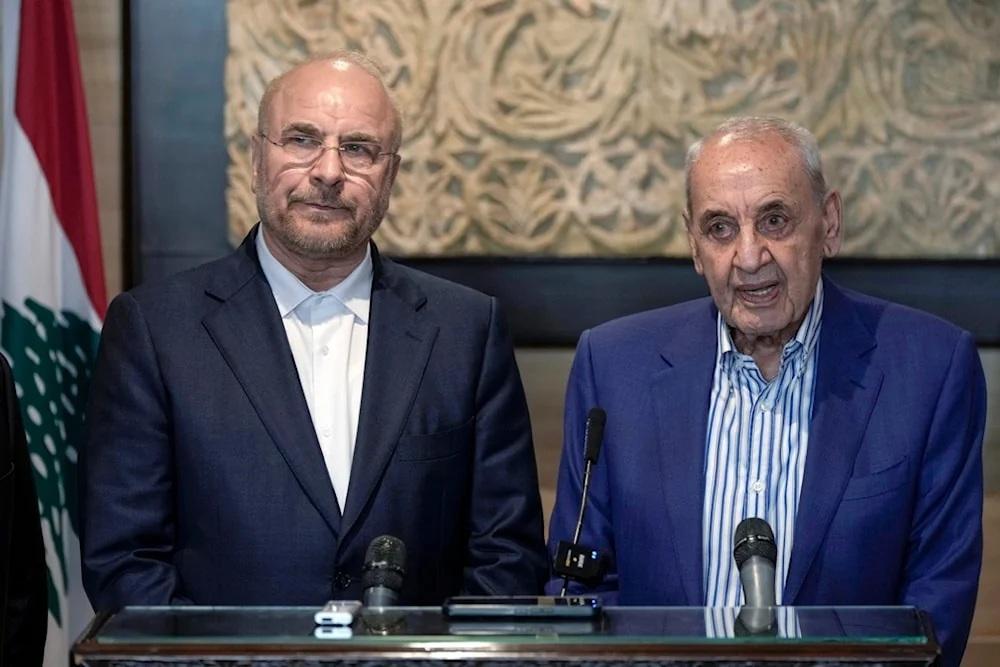
NPR also reported that Iran demanded an end to the "aggressive and brutal army operations in Gaza and Lebanon" and called for Israel's "complete withdrawal from the occupied areas in Lebanon."
The Washington Post said the escalation came as Israel intensified attacks in Lebanon, and it framed the decision as a suspension of ceasefire-related diplomacy with the United States.
In response, President Donald Trump posted on Truth Social that he had spoken to Israeli Prime Minister Benjamin Netanyahu and, via intermediaries, to Hezbollah leaders, writing, "there will be no Troops going to Beirut".
Ceasefire claims collide
The BBC reported that Lebanon said Hezbollah accepted a US plan for a mutual cessation of attacks, with the Lebanese embassy in the US saying it had "received confirmation of Hezbollah's acceptance of the US proposal".
Netanyahu confirmed the agreement but warned that strikes on Beirut would go ahead "if Hezbollah does not stop attacking our cities and civilians," as the BBC described the conditional nature of the halt.

NPR said Trump claimed the parties agreed that "all shooting will stop — That Israel will not attack them, and they will not attack Israel," while Netanyahu said Israel would continue operating in southern Lebanon as planned.
The BBC added that Hezbollah said it had launched three attacks at Israeli tanks and soldiers near two villages in northern Israel, using drones and "a barrage of artillery shells."
The BBC also quoted Foreign Minister Abbas Araghchi saying the US-Iran truce was "unequivocally a ceasefire on all fronts, including in Lebanon," and that "its violation on one front is a violation of the ceasefire on all fronts".
What comes next
NBC News reported that Iran suspended high-stakes negotiations with the United States to protest Israel’s expanding military offensive in Lebanon, complicating efforts to end the three-month war.
“What you should know: The United States and Israel's war against the Islamic Republic of Iran began on Saturday, 9 Esfand 1404, after which a number of Iran's top regime officials, including Ali Khamenei, were killed”
NBC News also said Iranian Parliament Speaker Mohammad Bagher Ghalibaf told Lebanese Parliament Speaker Nabih Berri that Iran might retaliate if Israeli attacks in Lebanon continue, adding, "we will not only suspend the negotiation process, but we will also stand against the Zionist regime."
The Washington Post and NPR both tied the diplomatic rupture to ceasefire uncertainty, with NPR saying Iran halted communications unless Israel stops its expanding offensive in southern Lebanon.
The BBC reported that the Lebanese embassy said the ceasefire would be expanded to encompass all Lebanese territory, while Netanyahu said "the IDF [Israel Defense Forces] will continue to operate in southern Lebanon as planned."
NPR further reported that the Strait of Hormuz had been closed for months and that before the U.S. and Israel launched their war on Iran three months ago, "a fifth of the world's oil supply passed through" the waterway.
More on Iran
Guyana and Dominican Republic Sign Contract for Oil Exploration in Berbice Block
10 sources compared
U.S. Bombs Iranian Radar Sites, Intercepts Two Iranian Missiles Targeting U.S. Forces in Kuwait
14 sources compared
Trump Says U.S.-Iran Talks Continue at Rapid Pace After Iran Suspends Indirect Negotiations
16 sources compared
Esmail Qa'ani Says Quds Force Will Make Bab al-Mandeb Like Strait of Hormuz
12 sources compared