Iran strikes US F-35 over central Iran, claims damage as pilot makes emergency landing
Key Takeaways
- US F-35 struck by Iranian air defenses over Iran, forced to emergency land; pilot stable.
- IRGC released video purporting to show a hit on the F-35.
- Iranian claim marks first strike on a US stealth fighter in this war.
Emergency Landing Incident
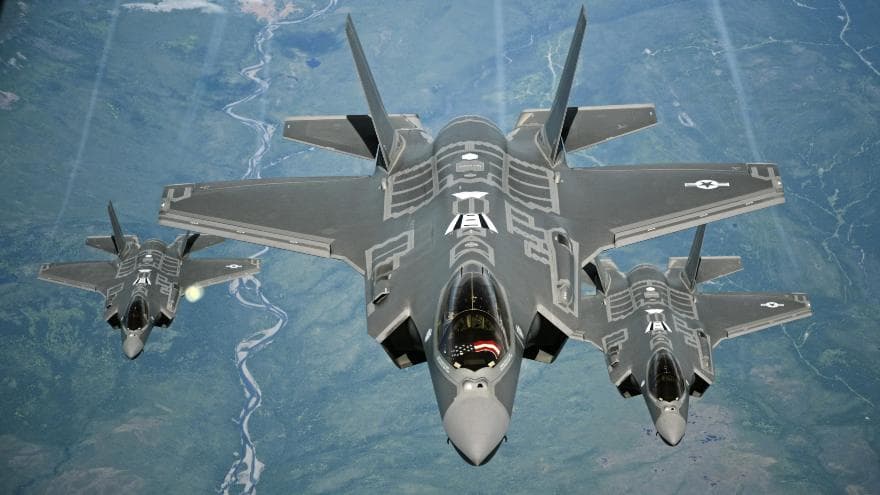
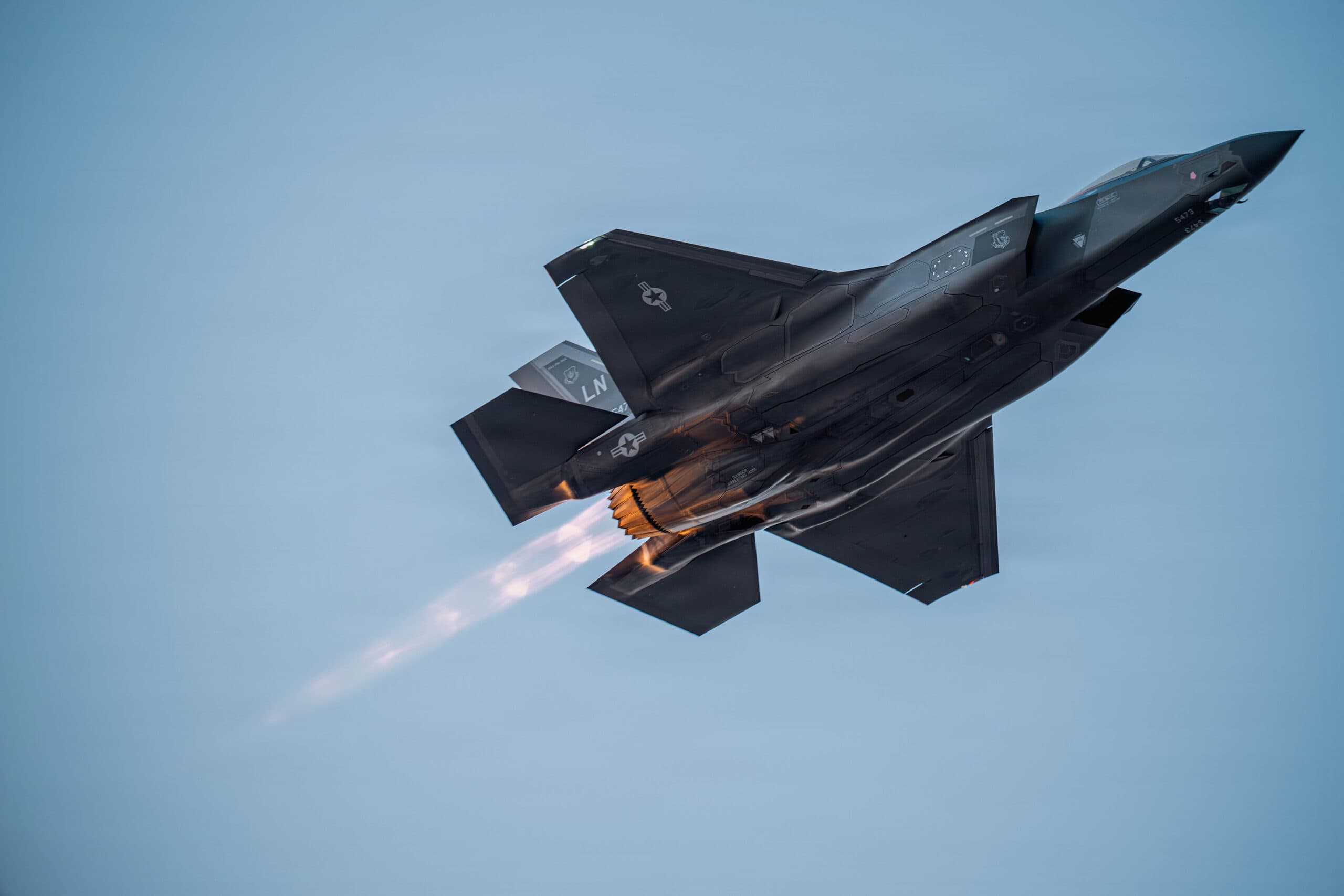
A US F-35 stealth fighter jet was struck by suspected Iranian fire during a combat mission over central Iran and forced to make an emergency landing at a US airbase in the Middle East.
“The Pentagon has launched a formal investigation into the incident”
The aircraft was flying over Iran when it sustained damage and had to divert to a nearby base, where it landed safely with the pilot in stable condition.
CNN first reported the incident, citing two sources who said the fighter jet was hit by what appeared to be Iranian anti-aircraft fire.
US Central Command spokesperson Captain Tim Hawkins confirmed that the fifth-generation stealth jet was "flying a combat mission over Iran" when the emergency unfolded, though he did not explicitly confirm Iranian involvement.
The incident marks a significant development in the ongoing conflict between the US and Iran, which began in late February 2026 following joint US-Israeli strikes on Iranian territory.
Iranian Claims
Iran's Islamic Revolutionary Guard Corps (IRGC) claimed direct responsibility for the strike, providing a sharply different account of the incident's severity.
According to the IRGC statement, the US F-35 was hit at approximately 2:50 a.m. local time in central Iranian airspace by what it described as an advanced, next-generation air defense system operated by the Revolutionary Guards' Aerospace Force.
The IRGC asserted that the aircraft sustained "heavy damage" and claimed "the jet's fate remains unclear and is still being assessed, with the probability of a crash being high."
Iranian state media released footage purporting to show the moment of the strike, though its authenticity could not be independently verified.
Iranian officials framed the incident as part of a broader pattern of successful air defense operations, noting it came "after the successful interception of more than 125 US-Israeli aggressor drones" and demonstrated "effective and targeted changes in the country's integrated defense systems."
US Response
US officials acknowledged the emergency landing but characterized it as a successful recovery of both the aircraft and the pilot, maintaining a significantly different narrative from Iran's claims.
““They came into this fight with a lot of weapons,” Caine said”
Captain Tim Hawkins, spokesperson for US Central Command, stated that "the aircraft landed safely, and the pilot is in stable condition" while confirming the incident is under investigation.
The Pentagon has launched a formal investigation into the incident to determine the exact cause and extent of any damage.
This conflicting narrative between Tehran and Washington highlights the information warfare aspect of the conflict, with both sides presenting starkly different interpretations of the same event.
The gap between the two accounts could not be independently reconciled, leaving uncertainty about the true extent of the damage sustained by the $100 million stealth aircraft.
Strategic Significance
The incident carries significant strategic implications for the ongoing conflict between the US and Iran, particularly regarding air superiority and technological capabilities.
If confirmed as a successful strike, it would represent the first known instance of Iran targeting an advanced US stealth aircraft, marking a potentially dramatic shift in the regional military balance.

The F-35 Lightning II, widely regarded as one of the most advanced combat aircraft in service with a price tag exceeding $100 million per unit, has been a cornerstone of American air power in the conflict.
Both the US and Israel have been deploying F-35s extensively in their operations against Iran, making any successful engagement with these aircraft particularly noteworthy.
The incident comes amid claims from senior US officials that American forces have "flattened" Iran's air defenses and are "winning decisively" in the campaign, assertions that are now being called into question by this development.
Technical Implications
Iran's apparent success in targeting the F-35 raises questions about the effectiveness of US air superiority and Iranian defensive capabilities, suggesting potential vulnerabilities in even the most advanced stealth aircraft.
Military analysts note that while the F-35 excels at evading radar detection, it remains vulnerable to other detection methods such as electro-optical and infrared-guided sensor systems.

Chinese military affairs expert Song Zhongping told Global Times that "the F-35 stealth fighter is not truly 'invisible' in an absolute sense" and that Iran possesses anti-stealth capabilities including weapons and sensors equipped with infrared and electro-optical detection technologies.
The incident may trigger a reassessment of the US air campaign's risk calculus, particularly regarding the continued use of fifth-generation aircraft in contested Iranian airspace where layered radar coverage and surface-to-air missile systems remain operational.
The event carries strategic signaling implications, as the ability to inflict damage on an F-35—an aircraft designed specifically to survive in high-threat environments—may influence both regional deterrence perceptions and future operational planning by US Central Command.
More on Iran

Iran Attacks Kuwaiti Oil Refinery as Tehran Steps Up Gulf Attacks
21 sources compared

Police Scotland Arrest Iranian Man and Woman After Breach Attempt at Faslane Nuclear Submarine Base
14 sources compared

Israel strikes South Pars gas field; Iran attacked Gulf energy sites
38 sources compared

Iran Targets Gulf Oil and Gas Facilities
74 sources compared