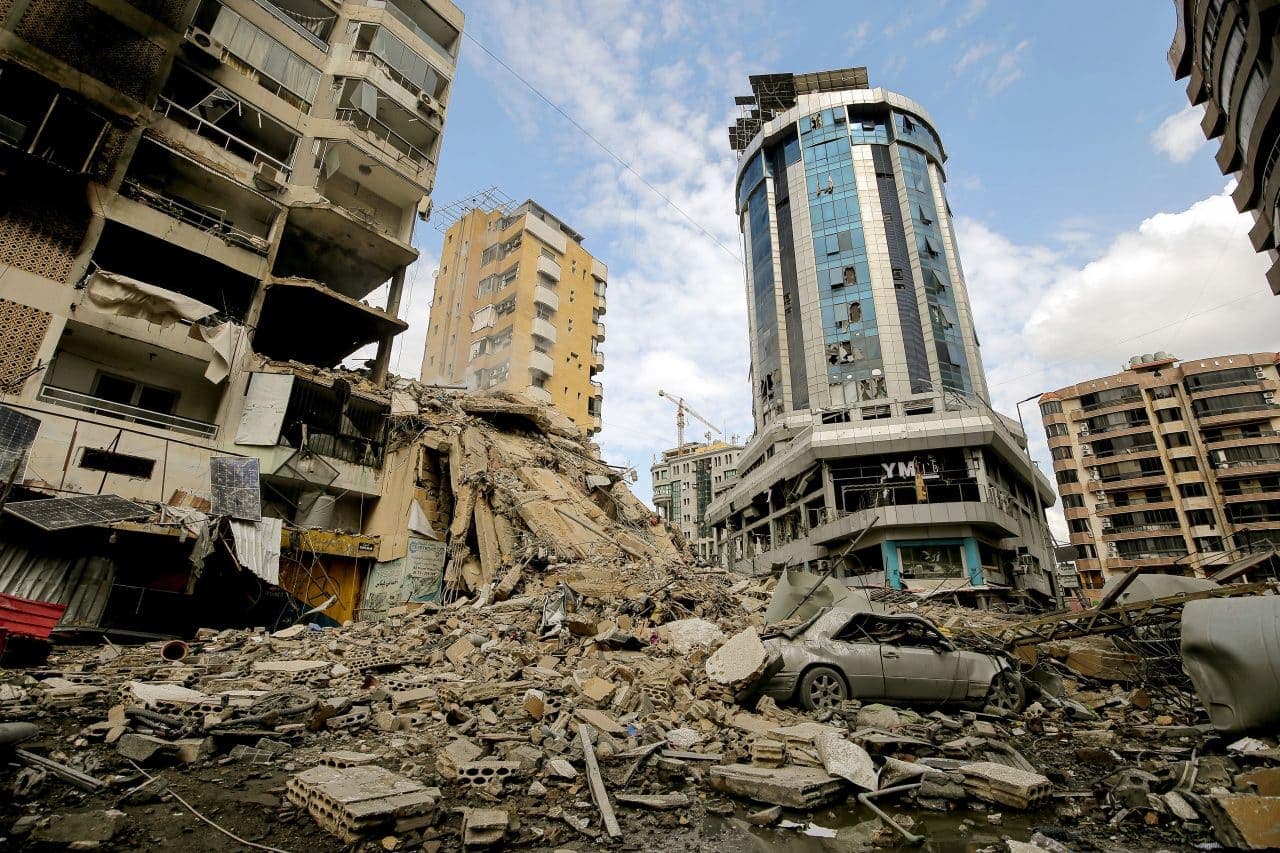
Inside Israel’s psychological warfare campaign in Lebanon
Key Takeaways
- Israeli army dropped leaflets over Beirut ordering immediate evacuation to save lives.
- Blanket evacuation targeted southern Lebanon first, then extended to large parts of Beirut.
- Measures caused widespread panic and displaced about one million Lebanese.
Summary
Leaflets dropped by the Israeli army over Beirut at the onset of Israel’s 2026 war on Lebanon ordered residents to evacuate immediately.
““Save your lives and evacuate your homes immediately,” read one of the leaflets dropped by the Israeli army over Beirut at the onset of Israel’s 2026 war on Lebanon”
The blanket evacuation order first targeted southern Lebanon in early March and then extended to entire parts of Beirut, triggering widespread panic and displacing about one million Lebanese in under two weeks.
That amounts to roughly one in four Lebanese being displaced, with the total continuing to rise.
Local media described the warning as unprecedented for Beirut, noting that the order directed where to go—east toward Mount Lebanon or north toward Tripoli—while warnings not to go south were included.
The public response included jokes about the army acting as traffic control.
Photographs circulated of people leaving Beirut’s southern Dahiya by foot, bus, or car, moving to downtown, along the seafront, and to other neighborhoods, especially in West Beirut.
Residents described leaving everything behind.
Many had been preparing to break their fast when the evacuation warning arrived.
A woman said she left the food on the stove and now had nothing to break her fast with.
The parallels with past traumas were evident; one user wrote it looked exactly like 1948 and called it Lebanon’s Nakba.
Summary
Smotrich posted a video stating Beirut’s Dahiya would soon resemble Khan Younis, a reference to destruction in Gaza.
A friend asked why they are alive and suggested that dropping a nuclear bomb would be easier than the current suffering.
It would be easier than this deathlike life.
The leaflets dropped from above created a sense of choice between death and life and linked present events to past traumas.
Similar leaflets were dropped in 1948 over Lydd and Ramla, stating that the Israeli Army had surrounded the area, that residents must leave immediately toward the east, and that anyone remaining may face military attack.
The leaflets accompanied a campaign that displaced thousands of civilians from both cities.
Similar warnings appeared elsewhere: in al-Tira, leaflets urged the next hours were crucial, that destiny was in residents’ hands, that fighters should be turned in, and that the army would crush villages.
In Haifa, residents were warned of judgment and ordered to evacuate women, children, and the elderly and to move away from neighborhoods where fighters were operating.
The text on the leaflets read like verses from sacred texts, demanding compliance or consequences.
A week into the war the army dropped leaflets from the sky alongside two sonic bombs and urged people to take matters into their own hands and to disarm Hezbollah or face the consequences.
Israel’s defense minister echoed the threat, saying that if Lebanon does not stop Hezbollah, Israel will take matters into its own hands.
The leaflets carried a QR code that linked to direct chats on Facebook and WhatsApp, described as forums for recruiting collaborators.
Other leaflets described Gaza as a great success story and warned the Lebanese of a similar fate if Hezbollah did not revolt.
If you do not obey, you will suffer the consequences.
The orders resembled divine instruction, a perception reinforced by their falling from the sky.
Counter messages circulated warning not to scan the codes to prevent phones from being compromised, drawing on past experiences of psychological warfare, including the 1982 invasion of Beirut and the 2014 Gaza leaflets that claimed you are always seen and always known.
The effect was described as a sense of omnipresence, with the technology becoming a godlike instrument and drone operators as deities who can see without being seen.
The aim of psychological warfare was to convey omnipresence, making civilians feel the state’s reach as unavoidable.
During the Gaza genocide, leaflets cited Quranic verses about Moses parting the sea and warned that the IDF was coming to Gaza.
In Beirut, leaflets resembled the front page of a newspaper called The New Reality, with a headline about great Gaza success and a question about Lebanon’s future.
The same newspaper reportedly appeared in Gaza in 2024, purporting to reveal the truth and accusing Hamas of looting aid while urging residents to reveal the whereabouts of Israeli captives.
During a live broadcast in the early days of the Dahiya bombing, a displaced person said that Israel is gods on earth and decides who lives or dies, and another person lamented that there were no UN meetings as with Gaza and that the only movement was the jets above and the displaced moving toward hell.
Leaders, unlike gods, are believed to be subject to international law, but the Gaza genocide signaled the death of international law and the world order, with Israel acting with impunity.
The leaflets dispatched from above were described as tokens from an unseen author, and the same source delivering death from the sky underscored the perception of divine power and ultimate judgment.
Counter-messaging and law
Counter-messages circulated warning not to scan the QR codes to prevent phones from being compromised, drawing on past experiences of psychological warfare, including the 1982 invasion of Beirut and the 2014 Gaza leaflets that claimed you are always seen and always known.
““Save your lives and evacuate your homes immediately,” read one of the leaflets dropped by the Israeli army over Beirut at the onset of Israel’s 2026 war on Lebanon”
The article links these tactics to broader patterns of Israeli propaganda and the use of leaflets to sway civilian behavior, arguing that Gaza genocide signaled the death of international law and the world order, with Israel acting with impunity.
It contends that the leaflets and aerial violence are part of a broader effort to project omnipresence and control in conflict zones, shaping public perception and behavior.
Implications and accountability
The leaflets are described as a tool of psychological warfare intended to create a sense of omnipresence and divine judgment.
The same source also drops bombs from the sky, killing and displacing civilians and reinforcing a narrative of impunity.
The piece argues that these tactics have real consequences for civilians and require scrutiny of media coverage and official claims.
It concludes with a call to consider accountability and international law.
More on Lebanon

Israel Attacks Lebanon as Missile Lands Near RT Reporter
31 sources compared

Israel Attacks Beirut, Building Flattened; Death Toll Rises
10 sources compared
Israel Attacks Hezbollah Infrastructure in Beirut, Forcing Over 1 Million Lebanese to Flee
12 sources compared
Israel Launches Ground Operation in Southern Lebanon to Target Hezbollah
10 sources compared