
Israel Attacks Lebanon as Missile Lands Near RT Reporter
Key Takeaways
- Missile exploded near RT reporter Steve Sweeney and cameraman Ali Rida; both injured.
- IDF said warnings were issued; struck after warnings; does not target civilians or journalists.
- CPJ urged investigation; Jerusalem Post echoed calls for investigation into media targeting.
Journalist Strike Incident
On March 19, 2026, a dramatic incident occurred in southern Lebanon when an Israeli missile struck mere meters away from RT reporter Steve Sweeney and his cameraman Ali Rida during a live broadcast.
“BREAKING World Trade Organization chief warns war on Iran threatens global food securityIran strikes Israeli oil refinery as regional energy facilities targetedSurge in oil and gas prices amid concerns over global fuel supplies Click to pause breaking news tickerpause-square-backgroundClose Breaking News Tickerclose”
The chilling footage captured Sweeney ducking for cover as the missile exploded behind him, sending both journalists to the ground with shrapnel injuries.
RT described the incident as a 'deliberate targeted attack on journalists,' with Sweeney later stating 'Israel tried to kill me in a targeted airstrike' while accusing Israel of planning ethnic cleansing operations.
Both journalists were conscious and receiving medical treatment at a local hospital, with Rida joking that 'you can hear a missile when it's flying at you.'
The incident was verified by multiple outlets including the BBC and occurred near the Al-Qasmiya Bridge in southern Lebanon, an area where Israeli forces had been conducting ongoing strikes.
Military Operations Context
The incident occurred against a backdrop of intensified Israeli military operations in Lebanon amid the ongoing US-Israeli conflict with Iran.
Israeli forces had been conducting extensive airstrikes targeting infrastructure in southern Lebanon, including bridges over the Litani River that connect the region to the rest of the country.
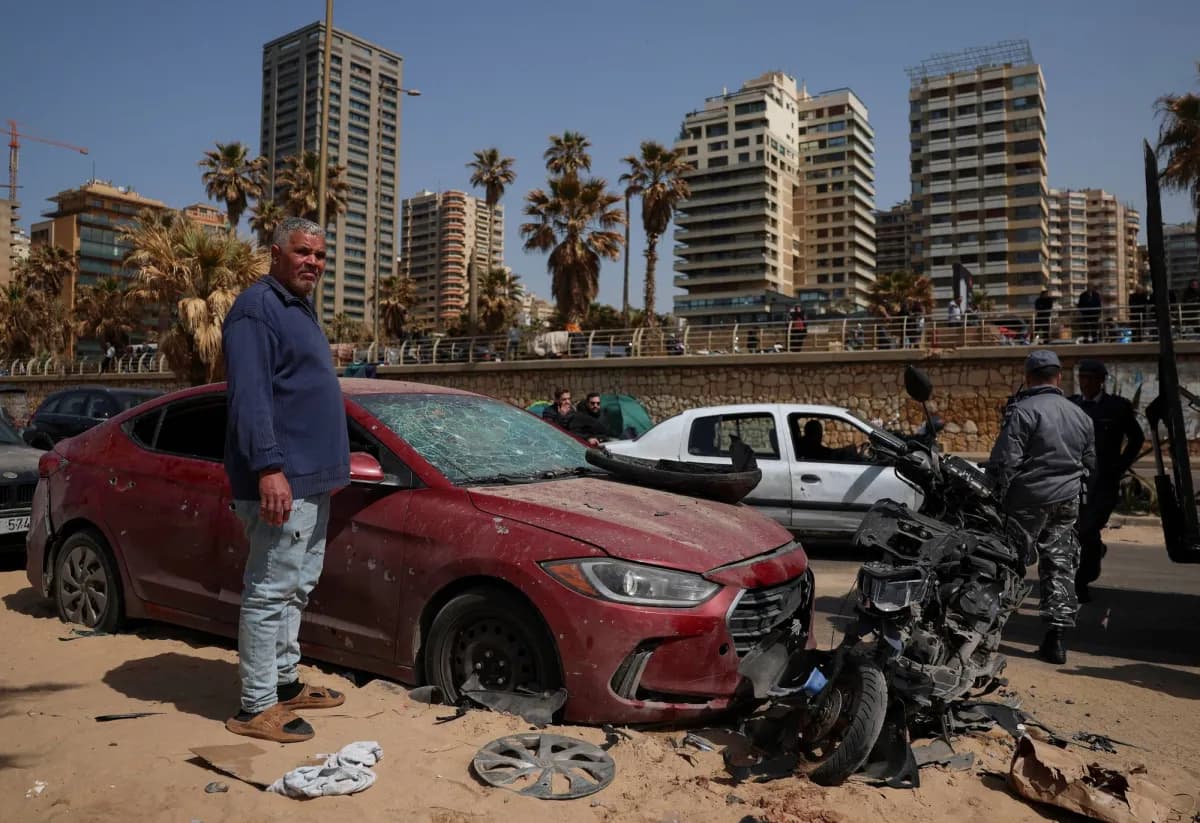
The strikes have displaced approximately one million Lebanese citizens, representing about 20% of the country's population.
US Defense Secretary Pete Hegseth stated that the war objectives remained unchanged since strikes began on February 28, emphasizing the goal to 'destroy Iran's missile launchers as well as its defence industrial base and navy.'
Meanwhile, Director of National Intelligence Tulsi Gabbard revealed that US and Israeli objectives during the military campaign in Iran were not the same, indicating potential strategic differences between the allies.
The Lebanese Health Ministry reported that Israeli strikes had killed 1,001 people in the country since March 2, with the death toll continuing to rise as fighting intensifies.
Dispute Over Deliberacy
The incident sparked a fierce dispute over whether the strike was deliberate or accidental, with conflicting narratives emerging from different parties.
“The BBC has verified the footage”
Russian officials and the RT crew strongly maintained that the attack was targeted and intentional.
Russian Foreign Ministry spokeswoman Maria Zakharova stated that 'given the killing of around two hundred journalists in Gaza, the day's events could not be described as accidental, especially that the missile did not hit an important strategic military facility, but rather a filming location.'
The Russian embassy in Beirut echoed this sentiment, saying 'It is difficult to believe that the incident was an accident.'
In contrast, the Israeli Defense Forces claimed the strike was legitimate and that they had issued explicit warnings about the area.
The IDF stated 'In footage released in the past few hours, a journalist is seen at the Qasmiya crossing. An explicit warning had been issued regarding this area,' and emphasized that 'The IDF does not target civilians or journalists and operates in accordance with international law.'
The bridge being targeted was described by Israel as being used by Hezbollah for weapons transfer, though the journalists were reporting from a location where civilian evacuations had been ordered.
Journalist Safety Crisis
The incident is part of a broader pattern of attacks on journalists covering the Middle East conflicts, particularly those involving Israel.
According to the Committee to Protect Journalists, Israel has committed more targeted killings of journalists than any other government's military since the organization began documenting deaths in 1992.

The record for 2025 showed 129 journalists killed worldwide, with Israel blamed for two-thirds of those deaths.
Recent high-profile cases include Reuters journalist Issam Abdallah killed in Gaza in October 2023, with Amnesty International finding no indication of fighters or military objectives at the strike sites.
The attack on the RT crew follows the killing of Hezbollah-affiliated Al-Manar TV journalist Mohamed Sherri in a Beirut strike the previous day, along with his wife and injured son.
RT Editor-in-Chief Margarita Simonyan condemned the incident, stating 'War journalists are not legitimate targets. We pray for them.'
The Russian Embassy in Lebanon called for an 'appropriate investigation,' labeling attacks on media workers as 'unacceptable' under international law and citing the Safety of Journalists resolutions.
International Reactions
The attack on the RT journalists has escalated tensions between Russia and Israel, with Moscow calling for international action and condemnation.
“In a post on X, the IDF acknowledged the strike at the bridge, noting footage of a journalist at the scene, adding that it had given prior “explicit warning” for civilians to leave the area”
Russia's Foreign Ministry has demanded a response from international organizations, with its embassy in Beirut calling for an 'appropriate investigation' into the incident.

Russian officials have emphasized that attacks on media personnel carrying out editorial assignments are unacceptable under international law.
The incident comes amid already strained relations between Russia and Israel, particularly regarding media coverage of the Middle East conflict.
While some social media users dismissed Sweeney as a 'propagandist' due to his work for the Russian state-funded outlet, the broader implications for media freedom and journalist safety in conflict zones remain significant.
The incident has also drawn attention to the dangerous environment for journalists covering the escalating Israeli-Lebanese conflict, which has displaced over a million people and resulted in more than 1,000 deaths according to Lebanese health authorities.
International observers continue to monitor the situation closely, with concerns growing about the potential for further escalation of the conflict and its impact on civilian populations and media workers alike.
More on Lebanon

Israel Attacks Beirut, Building Flattened; Death Toll Rises
10 sources compared
Israel Attacks Hezbollah Infrastructure in Beirut, Forcing Over 1 Million Lebanese to Flee
12 sources compared
Israel Launches Ground Operation in Southern Lebanon to Target Hezbollah
10 sources compared

Unidentified Attacker Plants Explosive at U.S. Embassy Entrance in Oslo; Oslo Police Investigate Possible Terrorism
12 sources compared