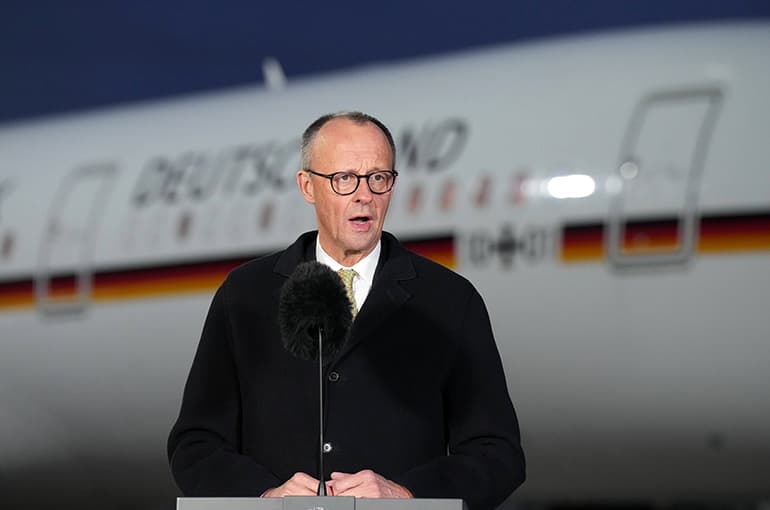
German Chancellor Friedrich Merz Presses President Xi Jinping to Reduce Market Distortions, Urges Chinese Investment
Key Takeaways
- Urged Beijing to reduce market distortions and enforce fair competition rules
- Called on Chinese firms to increase investment in Germany
- Secured Chinese pledge to import more high-quality German goods to narrow trade deficit
Merz's China visit
Chancellor Friedrich Merz arrived in Beijing for his first official visit as chancellor.
“The Chinese and German leaders speak of a desire to deepen their decades-old economic ties during chancellor’s visit”
He held two days of talks during the visit.

He led a large business delegation that included major German firms.
Yicai described the entourage as roughly 30 executives.
Al Jazeera and DW reported that he held talks with President Xi Jinping and Premier Li Qiang and that the program included a visit to Hangzhou.
The visit combined commercial outreach with political messaging.
Merz pressed China on state subsidies, industrial overcapacity and an undervalued yuan while urging deeper Chinese investment in Germany.
Chinese leaders framed the trip as an opportunity for stronger strategic communication and mutual trust.
Germany-China trade imbalance
A key focus of Merz's messaging was Germany's widening trade imbalance with China.
Multiple outlets recorded a roughly €90 billion deficit last year.

Al Jazeera gives specific import and export figures — imports rose to €170.6bn while exports fell to €81.3bn.
DW and El Mundo similarly report trade figures placing China as Germany's largest trading partner with overall trade above €250bn.
These statistics formed the backdrop for Merz's calls for fairer market access and for German firms' demands that he press Beijing on industrial overcapacity and subsidy-driven competition.
Al Jazeera wrote: "Merz highlighted a growing German trade deficit with China — a €90 billion gap last year".
DW wrote: "China, now Germany’s top trading partner, accounted for over €250 billion in trade last year and left Germany with a record deficit of about €90 billion".
El Mundo wrote: "Germany’s trade with China reached €251 billion in 2025".
Merz on China concerns
Merz publicly pressed for concrete remedies to market distortions, naming an undervalued yuan, state subsidies and Chinese overcapacity.
“German Chancellor Friedrich Merz met with Chinese leader Xi Jinping in Beijing, hoping to bolster ties with his country's largest trading partner and high-tech rival as Europe's biggest economy struggles”
He urged Chinese firms to raise investment in Germany.
whbl and Inbox.lv report his direct urging to Chinese companies to increase investment and to curb distortions.
DW and The Straits Times cite German business demands that he press Beijing on subsidy-driven competition, export controls on critical raw materials and unequal market access.
These demands accompanied Merz's broader five-point approach to China engagement, which includes reducing dependency and ensuring fair competition.
whbl paraphrased that Merz said he wanted to deepen ties but raised specific concerns about an undervalued yuan, state subsidies and overcapacity.
DW wrote that German firms want him to press Beijing on industrial overcapacity, subsidy-driven competition, export controls on critical raw materials and unequal market access.
Inbox.lv said he urged Chinese firms to boost investment in Germany while pressing Beijing to reduce market distortions.
China-Merz visit summary
China’s response combined reassurance on cooperation with diplomatic positioning on global issues.
Chinese officials welcomed stronger strategic communication and mutual trust and framed the visit as a chance to expand cooperation under Beijing’s new Five‑Year Plan.
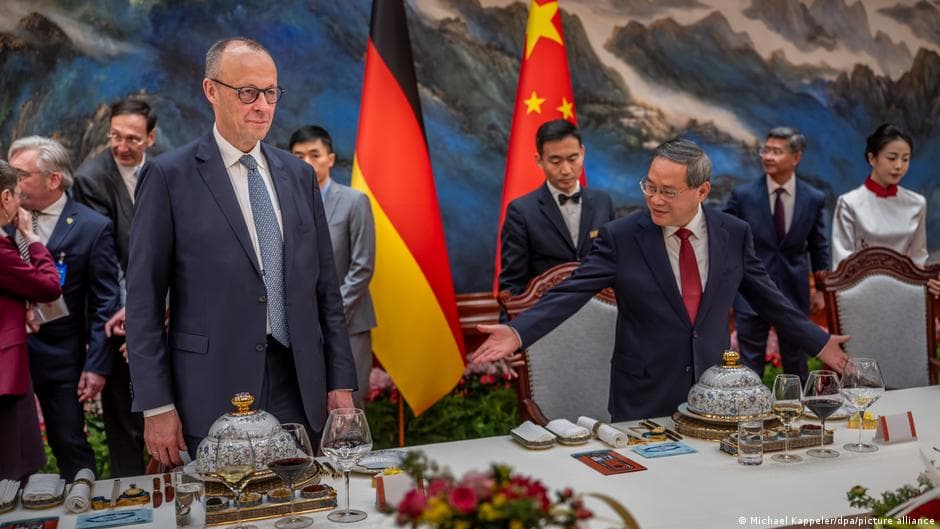
Beijing told Merz it supports a political solution to the war in Ukraine and urged inclusive negotiations.
Several outlets recorded concrete outcomes such as memorandums on climate and food security and a commercial understanding to buy up to 120 Airbus aircraft.
Yicai emphasized invitations to collaborate in areas like clean energy and biotechnology under the 15th Five‑Year Plan.
Al Jazeera and Inbox.lv report China backing a political solution to Ukraine and the Airbus purchase.
whbl and The Straits Times cite Xi and Li’s calls for strategic communication and defending multilateralism.
'Beijing invited German companies to expand cooperation into emerging areas such as clean energy, embodied intelligence, biotechnology and industrial digitalization' (Yicai); 'China told Merz it supports a political solution to the war in Ukraine' (Al Jazeera); and 'China agreed to buy 'up to 120' Airbus aircraft' (Al Jazeera).
Germany-China visit summary
Observers interpret the trip as emblematic of Europe’s balancing act: Germany seeks market access, supply‑chain resilience and investment while simultaneously guarding against unfair competition and strategic dependency.
“Critics have been disparaging China, attacking either its pragmatic approach or its role as a production and development powerhouse”
DW highlights Merz’s five guiding principles — reduce dependency and ensure fair competition among them — and outlets such as El Mundo and The New Arab characterize the visit as part of a wider European recalibration that treats China as both partner and systemic rival.

At the same time, Chinese coverage foregrounds mutual benefit and invitations to new fields.
The visit concluded with memorandums and commercial understandings but also with explicit German warnings about China’s global ambitions and close ties with Russia, leaving some tensions unresolved.
"Merz set out five guiding principles — reduce dependency, boost self‑reliance, ensure fair competition..." (Al-Jazeera Net/DW); "his more cautious tone reflects a wider European recalibration of ties with Beijing" (El Mundo); "Beijing invited German companies to expand cooperation..." (Yicai).
More on China
China Offers Taiwan Energy Lifeline If It Accepts Reunification; Taiwan Rejects Proposal
10 sources compared
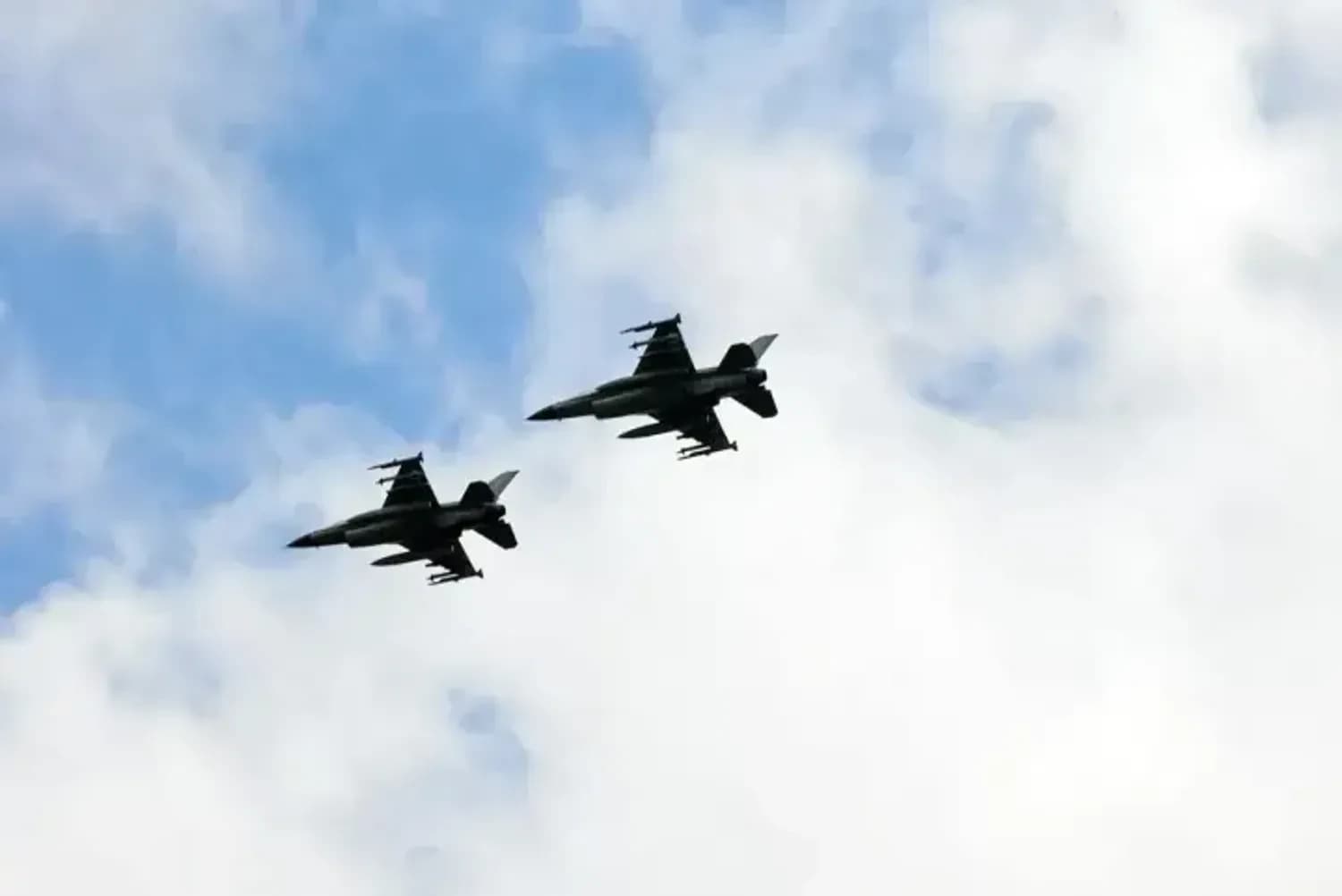
China Resumes Large Scale Military Flights Around Taiwan, Taiwan Reports 26 Aircraft in 24 Hours
14 sources compared

Apple Cuts China App Store Commissions to 25% After Regulator Pressure
25 sources compared

Trump Opens Broad Trade Investigation Targeting China, Mexico and EU; Beijing Calls It Political Manipulation
11 sources compared