
Former Venezuelan President Nicolás Maduro Captured by U.S. in Venezuela Strike
Key Takeaways
- Nicolás Maduro and his wife were captured by U.S. forces in Caracas.
- They were en route to New York for federal court proceedings.
- Indicted in the United States on narcoterrorism and drug-trafficking charges.
Military Capture Operation
The United States conducted a large-scale military operation in Venezuela that resulted in the capture of President Nicolás Maduro and his wife Cilia Flores.
“Democrats condemn 'illegal' military operation, Republicans praise Trump for taking action CHICAGO (WLS) -- Chicago-area leaders are speaking out after President Donald Trump announced the U”
This marks the most significant U.S. military intervention in Latin America since the 1989 invasion of Panama.

According to Time Magazine, witnesses reported strikes in Caracas beginning around 2 am local time.
Videos showed large explosions and what appeared to be U.S. military aircraft flying low over the city.
Venezuelan officials indicated that Maduro and his wife were at their home within the Ft. Tiuna military installation when they were captured.
Iran International reported that Trump claimed "no casualties" on the U.S. side and watched the arrest "like a television program."
Atlantic Council sources noted that the Venezuelan leader and his wife were moved to the USS Iwo Jima en route to New York City.
Oregon Public Broadcasting emphasized that the U.S. launched the operation in the middle of the night following months of military buildup.
Northeastern Global News highlighted this dramatic capture represents a sharp escalation after months of rising tensions.
Legal Context and Charges
The capture operation was predicated on longstanding U.S. legal actions against Maduro.
Northeastern Global News reported that the Department of State and Department of Justice had previously issued a $50 million bounty on Maduro's head.
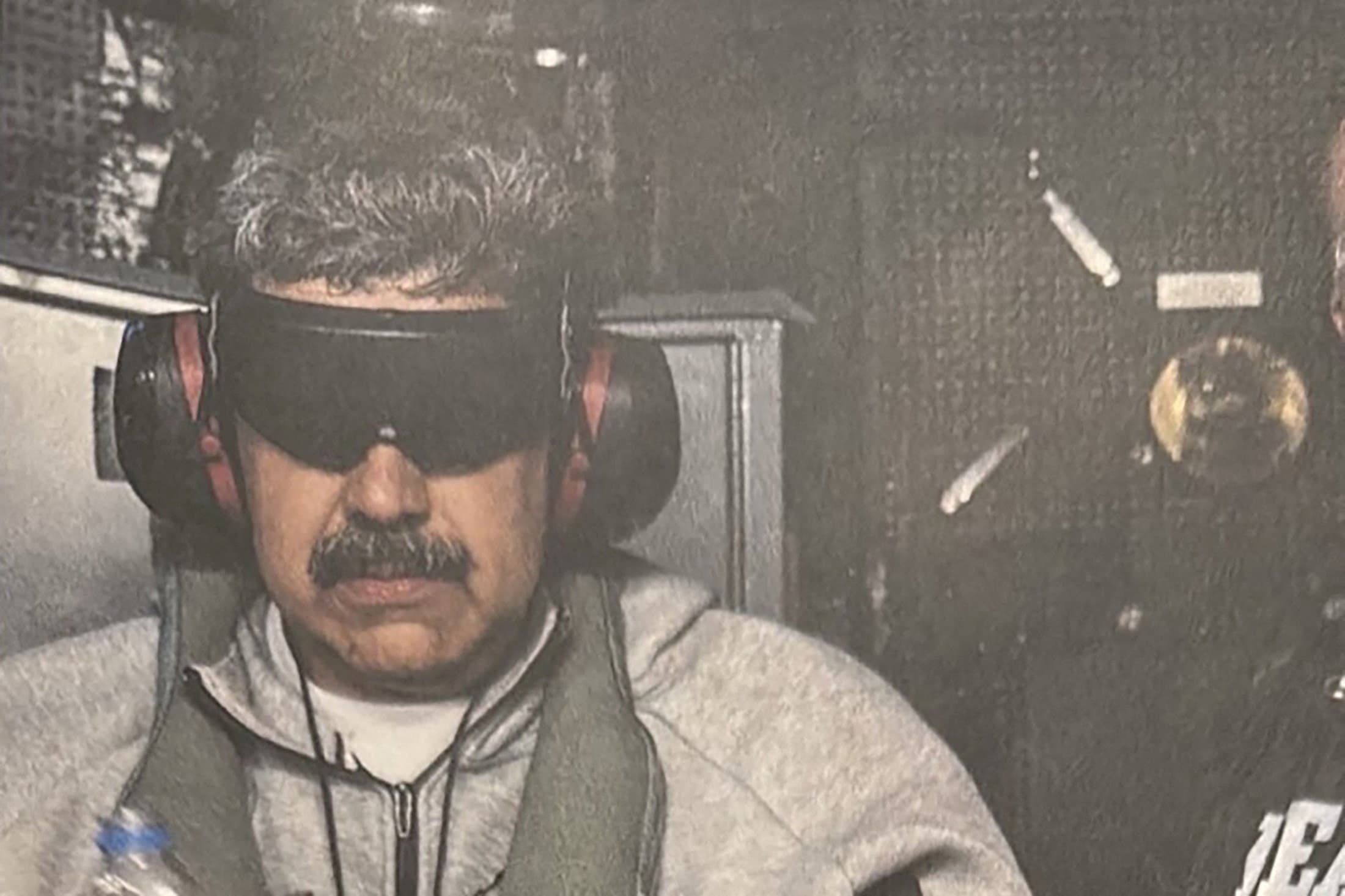
Maduro was indicted on corruption and drug trafficking charges in the U.S. in 2020.
Time Magazine detailed that Attorney General Pam Bondi announced Maduro and his wife had been indicted in New York.
Bondi stated they would "soon face the full wrath of American justice on American soil in American courts."
Iran International reported that the U.S. Department of Justice filed a new indictment with specific charges.
The charges included "narco-terrorism conspiracy, cocaine importation conspiracy, possession of machineguns and destructive devices."
Brookings raised significant legal questions about the operation's international law implications.
The source noted that "international law cannot sanction the decision of one government, even ours, to use its own legal system as a basis and justification for attacking the government of another country."
Northeastern Global News cited legal expert Jeremy R. Paul who questioned whether such an act would violate international law.
International Reactions
The U.S. military operation triggered swift and condemnatory reactions from multiple nations.
“They're sending it into the United States”
Russia described the American attack as "armed aggression" and demanded "immediate clarification" about Maduro's fate.
Cuba labeled the attacks as "state-sponsored terrorism," according to Iran International.
Brazil's President Lula da Silva stated the bombing of Venezuelan soil and arrest of its president crosses an "unacceptable red line."
Colombia's President released a list of targets indicating the United States bombed the Cuartel de la Montaña garrison in Caracas.
Bogotá sent troops to the border after not being briefed in advance about the operation.
In Europe, Spain and Germany expressed "serious concern" and urged respect for international law.
France took a sharper stance with its foreign minister stating the military operation was "contrary to the principle of prohibiting the use of force."
The European Union's foreign policy chief Kaya Kalas reiterated that Maduro lacks legitimacy and called for restraint.
Britain's Prime Minister Keir Starmer clarified that his country had no role in the U.S. operation.
The British Foreign Office advised citizens to avoid traveling to Venezuela.
U.S. Plans for Venezuela
President Trump made clear that the operation extends beyond simple extradition to a broader regime-change effort.
He stated that "We are going to run the country until such time as we can do a safe, proper, and judicious transition," according to Atlantic Council sources.

Iran International reported that Trump said the United States would have a "strong partnership" in Venezuela's oil industry.
He mentioned supporting María Corina Machado, a prominent opposition figure and Nobel Peace Prize laureate.
PBS sources noted that Venezuelan Vice President Delcy Rodríguez was sworn in as interim president.
Trump claimed she had talked to Secretary of State Marco Rubio and was "essentially willing to do what we think is necessary to make Venezuela great again."
Atlantic Council emphasized that today's actions are the first concrete deliverables of Trump's new National Security Strategy.
The organization noted that the United States now bears responsibility for the eventual outcome in Venezuela.
Brookings expressed significant concerns about the challenges ahead.
The source noted that "leadership decapitation does not automatically produce regime change, which requires reprogramming a country's institutions, including its military."
This is needed "in order to change the country's behavior."
Domestic U.S. Reaction
The capture operation has drawn sharply divided reactions across the American political landscape.
ABC7 Chicago reported that Chicago-area leaders are speaking out after President Trump announced the capture.

Democrats are condemning the attack because they say it was done without congressional approval.
Republicans are applauding the action, deeming it a win in the war on drug trafficking.
Large crowds of protesters gathered at Federal Plaza "pushing back against the Trump administration."
Demonstrators called it "another unnecessary act of war while demanding an end to the use of taxpayer dollars for international affairs."
Brookings sources revealed a complex internal U.S. debate.
One analyst stated "On the plus side... I would say that Maduro deserved no protection, had lots of (especially Venezuelan) blood on his hands, and is alleged to be a drug trafficker."
The same analyst expressed constitutional concerns that "Congress should have been asked for authorization in advance of any major mission like this."
Time Magazine quoted Republican U.S. Senator Mike Lee who said Maduro would stand trial on criminal charges.
Lee added that Rubio "anticipates no further action in Venezuela now that Maduro is in U.S. custody."
This suggests some bipartisan recognition of the operation's completion phase.
More on USA

US prosecutors probe Colombia's president Petro over possible drug trafficking ties
11 sources compared
Judge Paul Friedman Blocks Pentagon Press Policy, Orders Reinstatement of Reporters' Credentials
33 sources compared

Trump weighs seizing Kharg Island to reopen Strait of Hormuz
13 sources compared

TSA Officers Quit as Funding Lapse Leaves Screeners Unpaid
12 sources compared