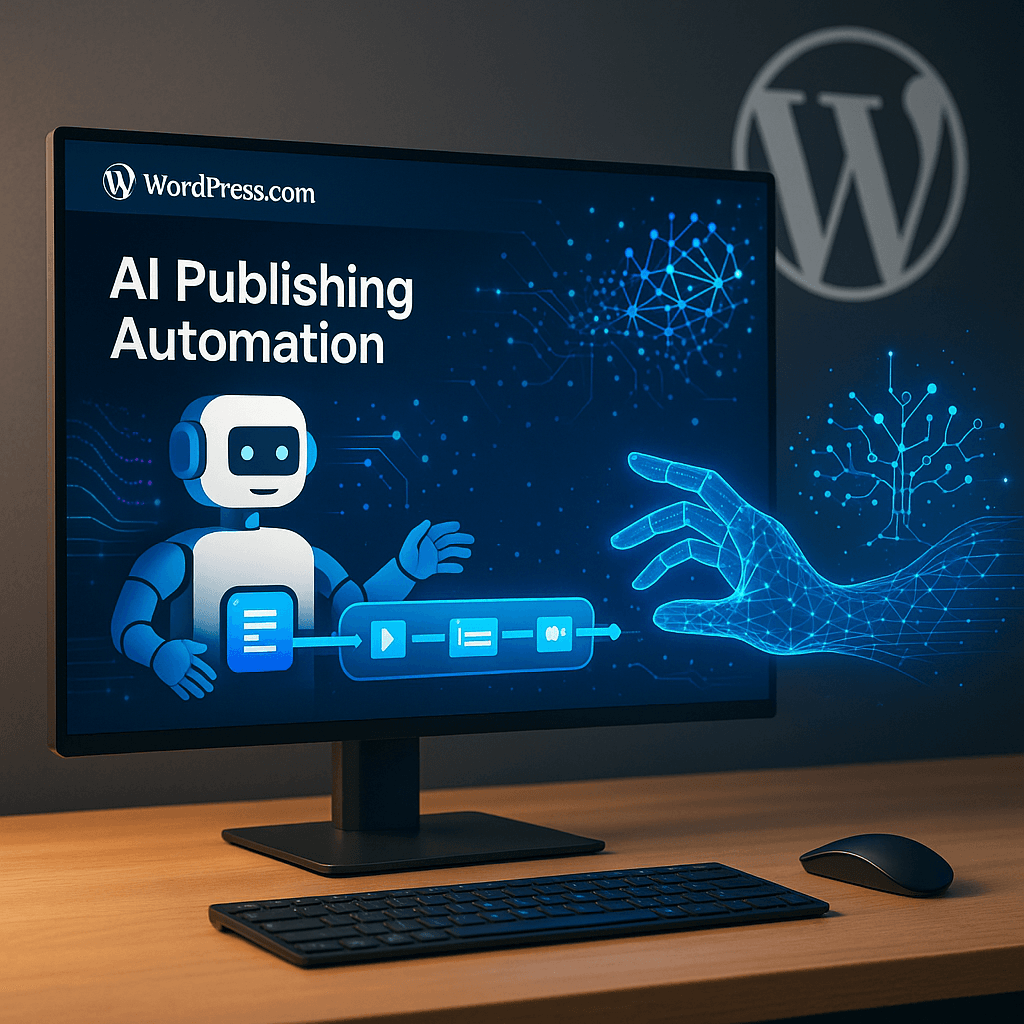
WordPress.com Enables AI Agents to Create and Publish Content on Sites
Key Takeaways
- AI agents draft, edit, and publish site content on WordPress.com under user supervision.
- They manage comments, update metadata, and organize content with tags and categories on WordPress.com.
- Controlled via Model Context Protocol MCP on WordPress.com, enabling natural-conversation actions.
AI Content Revolution
WordPress.com has fundamentally transformed digital content creation by launching groundbreaking AI agent capabilities that enable artificial intelligence to autonomously create, edit, and publish website content across its massive platform.
The landmark announcement, made by WordPress.com's AI Product Lead Ronnie Burt, represents a significant evolution in how the web's content gets produced, extending beyond simple assistance to full agentic capabilities.

This development puts AI agents to work on WordPress.com, where 70 million new posts are published every month, making it one of the largest and most active content platforms globally.
Powering this revolution are major AI systems including Claude, ChatGPT, and Cursor, which can now take action directly on WordPress.com sites through natural conversation.
The move builds upon WordPress.com's position as the platform that powers over 43% of the entire internet, fundamentally altering the digital landscape by granting artificial intelligence unprecedented authority in content creation and management.
Advanced AI Capabilities
The technical capabilities of WordPress.com's AI integration are comprehensive and sophisticated, enabling AI agents to perform a wide range of content management tasks beyond simple text generation.
These agents can now draft and publish blog posts and landing pages, make structural changes to site architecture, and manage complex organizational elements like categories and tags across the entire website.

The system is designed with advanced SEO optimization features, allowing AI to fix alt text, captions, and titles to improve search engine performance while maintaining consistent design elements by analyzing the site's theme, colors, fonts, and spacing patterns before beginning content creation.
Every action taken by AI agents is meticulously tracked through the site's Activity Log, providing complete transparency and auditability for human oversight.
This granular tracking system ensures that all AI-generated content and structural modifications are recorded, giving administrators full visibility into how their sites are being managed by artificial intelligence.
Market Strategy
WordPress.com's AI push appears strategically aimed at maintaining its competitive edge in an increasingly crowded content management landscape, particularly as AI-native publishing tools continue to emerge and capture market share.
“AI agents will draft and manage site content under user supervision”
The company has been systematically building its AI capabilities over the past year, starting with an AI-powered website builder in April 2025 that lets users generate fully designed, content-ready websites from simple prompts.
Earlier this year, they launched the WordPress AI Assistant as an in-editor tool, followed by the initial MCP server launch in October 2025 that gave AI agents their first window into WordPress.com content.
This latest expansion extends the agentic web capabilities, putting WordPress.com in direct competition with newer platforms that have been eating into its market share.
The timing of this move reflects a broader industry trend as businesses scramble to maintain consistent online presence amid rising content demands, with automation tools moving from experimental to essential in the digital content ecosystem.
Authenticity Concerns
The introduction of autonomous AI publishing raises profound questions about content authenticity and the future of human-authored content online, potentially accelerating the web's shift toward machine-generated material.
Critics warn that this development could flood the internet with AI-authored content, creating challenges for distinguishing between human and machine-written material while potentially undermining the trust and credibility of web content.

The Tech Buzz specifically questions what this means for the state of the web's content, suggesting that while these tools democratize publishing for businesses lacking resources, they simultaneously raise urgent concerns about content authenticity.
However, there are also positive perspectives, with TechCrunch noting that AI-authored posts can actually give human readers insight into how these models write and engage, potentially fostering greater understanding of artificial intelligence capabilities.
This tension between accessibility and authenticity represents a fundamental challenge for the future of digital content creation as AI becomes increasingly integrated into publishing workflows.
User Safety Controls
Despite the advanced automation capabilities, WordPress.com has implemented robust safeguards to ensure users maintain control over their websites and content throughout the AI-assisted publishing process.
“Web hosting platform WordPress”
The system operates on an explicit approval model, where all changes require user confirmation before any action is taken, preventing unintended modifications or publications.

AI-authored posts are saved as drafts by default, requiring manual approval before going live, which adds an important layer of human oversight to the automated content creation workflow.
Users can selectively enable or disable specific AI capabilities through a dedicated interface at wordpress.com/mcp, allowing them to customize the level of automation based on their comfort and needs.
These safety measures demonstrate WordPress.com's recognition of the responsibility that comes with granting AI agents content management authority, balancing innovation with user protection and maintaining the human element in content creation decisions.
Industry Context
WordPress.com's AI integration reflects a broader industry shift toward automated content creation, with major tech companies increasingly experimenting with AI-powered publishing capabilities.
The platform's move puts it in good company, as Meta recently acquired Moltbook, a social network where AI agents were allowed to post, reply, and connect with one another, while Anthropic has also experimented with letting AI write blog content under human supervision.
This trend suggests that autonomous publishing is becoming a significant focus for technology companies looking to leverage artificial intelligence in content management and creation.
CryptoRank frames this development as a 'revolutionary shift' and 'significant inflection point' for digital content creation, indicating that WordPress.com's move represents more than just a feature update—it signals a fundamental transformation in how web content will be produced and managed in the coming years.
As AI becomes increasingly sophisticated and integrated into publishing workflows, the line between human and machine creation will continue to blur, requiring new approaches to content verification and quality assurance.
More on Technology and Science

Trump Unveils National AI Policy Framework to Preempt State Laws
20 sources compared

Social media damages youth well-being, World Happiness Report 2026 finds
34 sources compared

Meta Pays Creators Up to $3,000 to Post on Facebook, Launching Creator Fast Track.
25 sources compared

Climate Change Drives Record March Heat in Southwest U.S.
14 sources compared