
Virginia Voters Approve Redistricting Referendum, Giving Democrats Chance At Four House Seats
Key Takeaways
- Voters approved a mid-decade redistricting measure to redraw Virginia's congressional map.
- The measure could yield up to four Democratic House seats in 2026.
- Constitutional amendment bypasses the bipartisan redistricting commission to permit the map change.
Virginia referendum reshapes House
Virginia voters approved a referendum that would let the Democratic-controlled General Assembly temporarily redraw congressional districts, a change that CNN projected would give Democrats “the chance to net as many as four US House seats” in the 2026 midterms.
NBC News projected that the “yes” vote could allow Democrats “to pick up as many as four new seats,” and it reported that with “97% of the vote in, the ‘yes’ vote on the ballot referendum held a narrow lead of 3 percentage points.”

The Associated Press results as quoted by WDBJ7 showed “YES: 1,540,207 NO: 1,463,596” with “Localities reporting: 133 of 133,” and it said the constitutional amendment “bypasses a bipartisan redistricting commission.”
The New York Times described the referendum as a special election to determine if Virginia voters would change the state’s constitution “to allow for congressional redistricting that would likely shift four Republican-held seats to Democratic control.”
The Washington Post said Virginia voters approved a referendum “to draw new congressional districts that could add as many as four Democratic seats,” and it framed the vote as part of “the national redistricting war begun by Republicans.”
Across outlets, the same basic mechanism appeared: the amendment would authorize the legislature to bypass the bipartisan commission and implement a new congressional map through the end of the decade, with NBC News saying it would run “through the end of the decade” and the New York Times adding that “As written, the Virginia amendment expires in 2030.”
How the fight escalated
The Virginia vote landed in the middle of a broader mid-decade redistricting battle that CNN said began when “Trump launched the ongoing mid-decade redistricting battle last year when he pushed Texas Republicans to redraw their maps for GOP advantage.”
BBC described the measure as “the latest in a national redistricting arms race that was launched after President Donald Trump urged conservative states to re-examine voting maps to help Republicans keep the party's slim congressional majority.”
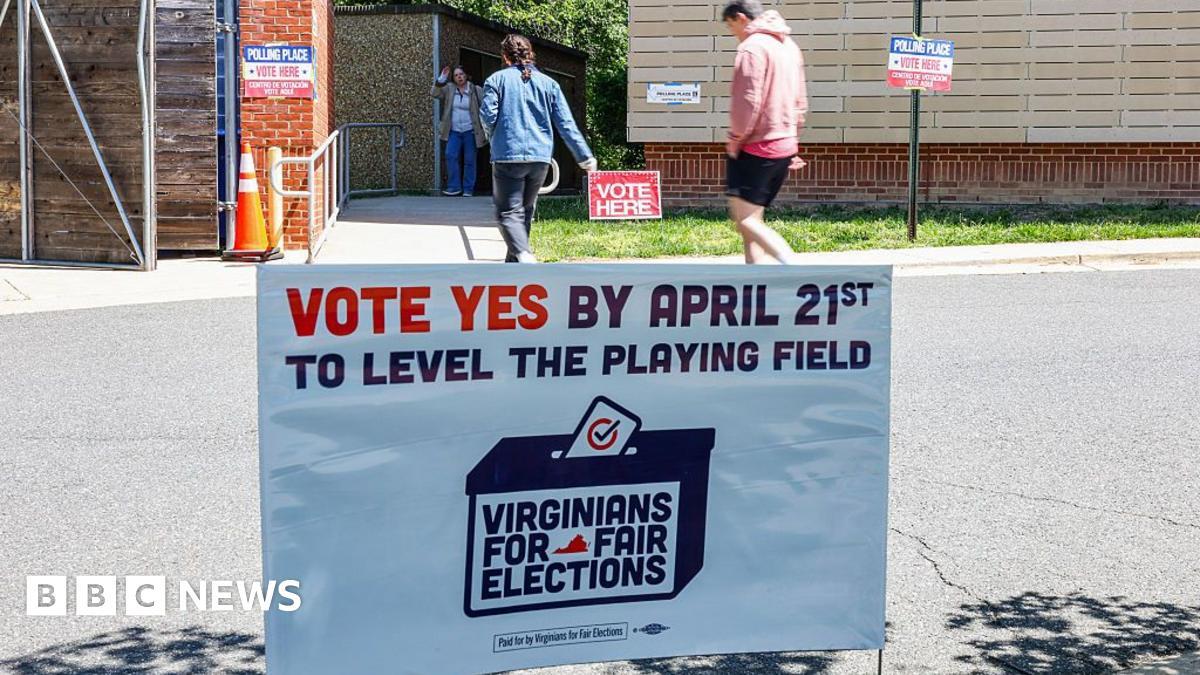
NBC News similarly tied the timeline to Trump’s urging of GOP-led states, saying the redistricting arms race began “last year when President Donald Trump urged GOP-led states to alter their district lines.”
The New York Times added that Virginia’s amendment was part of a process meant to reduce political gamesmanship, noting that “In 2020, Virginia voters approved a constitutional amendment meant to diminish political gamesmanship by shifting redistricting responsibilities away from the legislature,” before lawmakers endorsed a new mid-decade amendment “last fall” and then “passed it again in January as part of a two-step process.”
WDBJ7’s AP account laid out the legal and procedural stakes in detail, saying a Tazewell County judge ruled the redistricting push “was illegal for several reasons,” including that “lawmakers failed to follow their own rules for adding the redistricting amendment to a special session.”
It also said the judge ruled that “their initial vote failed to occur before the public began casting ballots in last year’s general election and thus didn’t count toward the two-step process,” and that “the state failed to publish the amendment three months before that election, as required by law.”
Even as the referendum moved forward, the sources emphasized that the outcome could still be undone by courts, with WDBJ7 warning that “If the state Supreme Court agrees with the lower court, the referendum results could be rendered moot.”
Reactions from both parties
After the vote, Democratic leaders framed the result as a check on President Donald Trump and a rebuke of Republicans’ redistricting push, while Republican figures argued the referendum was unlawful and would be overturned.
“Virginia approves redistricting, giving Democrats edge in midterms Virginia voters have approved a redistricting measure that could hand Democrats control of the thinly-divided US House of Representatives in the midterm elections later this year”
CNN quoted Virginia House Speaker Don Scott saying, “Virginia just changed the trajectory of the 2026 midterms,” and it also reported his claim that “We have rejected him in every state election where he has been anywhere close to the ballot.”
NBC News quoted Gov. Abigail Spanberger saying she was looking forward to campaigning with candidates and that “Virginia voters have spoken, and tonight they approved a temporary measure to push back against a President who claims he is 'entitled' to more Republican seats in Congress.”
The New York Times quoted House Democratic Leader Hakeem Jeffries saying, “Democrats did not step back. We fought back. When they go low, we hit back hard.”
On the Republican side, Fox News reported that former Gov. Glenn Youngkin urged the Virginia Supreme Court to overturn the referendum, writing, “Thank you to all the voters who turned out to vote against this egregious power grab,” and it added his argument that “I urge the Virginia Supreme Court to rule against this unconstitutional process that will disenfranchise millions of Virginians.”
Fox News also quoted former Virginia AG Ken Cuccinelli II saying, “the legal fight is just beginning,” and it reported his claim that “Four Va Constitutional challenges are now teed up.”
The New York Times quoted Terry Kilgore, a Virginia House Republican leader and plaintiff in a lawsuit, saying the ballot box was never seen as “the final word,” and it added that “legal questions remain about the process, which “now move where they belong: to the courts.”
How outlets framed the same vote
While all the reporting described Virginia’s referendum as a mid-decade redistricting measure that could shift House seats, the outlets differed in emphasis, tone, and the political meaning they attached to the vote.
CNN foregrounded the map’s partisan implications and the scale of spending, saying the map was “one of the most extreme political gerrymanders of the 2026 election cycle” and reporting that “The map’s proponents spent more than $56.4 million on advertising through Tuesday morning.”

It also highlighted the national political theater, including Trump’s post and call, quoting his message: “VIRGINIA, VOTE ‘NO’ TO SAVE YOUR COUNTRY!” and quoting Don Scott’s claim that “We have rejected him in every state election where he has been anywhere close to the ballot.”
NBC News focused on the narrowness of the result and the constitutional mechanics, noting that the amendment sought to “authorize the Democratic-controlled Legislature to bypass the state’s bipartisan redistricting commission” and that the “yes” vote held a “narrow lead of 3 percentage points.”
The BBC framed the vote as a potential turning point for control of the House, saying it “could hand Democrats control of the thinly-divided US House of Representatives” and adding that “each of these newly drawn districts could decide what political party takes the House.”
The Washington Post’s framing leaned toward the national stakes, describing the vote as part of “the national redistricting war begun by Republicans,” and it used the headline theme “Democracy Dies in Darkness” while describing the referendum as awarding Democrats an advantage.
Meanwhile, Fox News and local outlets foregrounded the legal fight and the immediate political messaging, with Fox News quoting Youngkin’s “egregious power grab” language and with WRIC ABC 8News stressing that “the court system still has to weigh in before all is said and done.”
Even the Associated Press-style reporting in WDBJ7 emphasized the numbers and the possibility of nullification, listing the vote totals and stating that the Supreme Court was “considering whether the plan is illegal in a case that could make the referendum results meaningless.”
What happens next
The sources consistently portrayed the referendum as a major step toward new congressional maps, but they also emphasized that the legal process was not finished and that the outcome could affect the 2026 midterms and beyond.
“Virginia voters approved a map that gives Democrats the chance to net as many as four US House seats, CNN’s Decision Desk projects, in a major boost to the party’s effort to win House control in the midterms”
CNN said Republicans indicated they will continue to pursue legal challenges, adding that “One avenue is the state Supreme Court,” which “allowed Tuesday’s vote to go forward but is still weighing an appeal of a lower-court ruling that the referendum was invalid.”

WDBJ7 similarly described the state Supreme Court as “considering whether the plan is illegal in a case that could make the referendum results meaningless,” and it detailed how a Tazewell County judge had ruled the redistricting push “was illegal for several reasons.”
WRIC ABC 8News reported that after a Tazewell County judge moved to block the proposal twice, “The Supreme Court of Virginia ruled that the election could proceed,” while also saying the justices would examine the proposal if voters approved it.
It quoted the court’s reasoning that “[This case] involve[s] weighty assertions of invalidity against the process employed by the Virginia General Assembly in an effort to submit a proposed constitutional amendment to the citizens of the Commonwealth,” and it added the court’s statement that “It is the process, not the outcome, of this effort that we may ultimately have to address.”
The New York Times also framed the next phase as litigation, quoting Reid Epstein, the chairman of the state Republican Party, saying, “Now, we enter the phase that will be decided through litigation,” and it added that “We don’t know whether the Supreme Court of Virginia will rule that the General Assembly is not above the law.”
Beyond the courts, the political stakes were tied to House control, with NBC News saying the special election was “a major victory for Democrats as they seek to gain control of the narrowly divided House this fall,” and with BBC stating that “Control of Congress will be decided in the November midterm elections.”
Several outlets also linked the referendum’s temporary nature to a longer horizon, with the New York Times noting the amendment expires in 2030 and NBC News saying the map would be authorized “through the end of the decade.”
More on USA

Virginia Voters Approve Redistricting Plan That Could Give Democrats Up To Four House Seats
22 sources compared

Virginia Voters Approve Redistricting Referendum, Potentially Shifting U.S. House Balance
19 sources compared
Donald Trump Extends U.S. Ceasefire With Iran, Keeps Blockade of Iranian Ports
12 sources compared

Tucker Carlson Says He’ll Be Tormented After Apologizing for Trump Support
11 sources compared