
USDA Confirms New World Screwworm in 3-Week-Old Calf in Zavala County, Texas
Key Takeaways
- New World screwworm detected in a 3-week-old calf in Zavala County.
- USDA APHIS confirmed the first US case in decades near the Mexico border.
- Containment measures and sterile fly releases are being deployed to eradicate it.
Texas detection triggers response
The U.S. Department of Agriculture’s Animal and Plant Health Inspection Service confirmed the presence of New World screwworm in a 3-week-old calf in Zavala County, Texas on June 3, marking the first detection in the state since 1966.
“Texas Ag official says USDA missed New World Screwworm solution News Sports Business Advertise Obituaries eNewspaper Legals Texas Ag Commissioner says USDA missed screwworm solution”
APHIS said larvae were identified in the calf’s umbilical area, and officials reported no additional detections to date as USDA and Texas officials formed a unified response team and established a 12.5-mile (20km) infested zone around the detection.
The response measures described in the coverage included quarantine, livestock movement controls, surveillance, expanded trapping, and sterile fly releases, with USDA saying ground-release chambers would be deployed immediately.
RFD-TV reported that USDA said 4 million sterile flies were already aerially dispersed each week in the area, and that officials planned to add more sterile flies through ground releases.
In a separate account, France 24 (AFP) quoted U.S. Agriculture Secretary Brooke Rollins saying, "We have a confirmed positive detection of New World screwworm in a three-week-old calf," as immediate action to contain and eradicate the parasite began.
Officials and experts urge calm
While the detection raised alarm in livestock markets, RFD-TV quoted Market Specialist Scott Shellady’s guest Tom Leffler stressing that the discovery does not pose a food safety risk, saying, "There’s no risk to our food safety. This is not a disease,".
RFD-TV also quoted Tracy Tomascik of the Texas Farm Bureau describing the containment timeline, saying, "The initial phase of the protocol, when you find an index case—in this case, what’s happened—a 72-hour stop order was placed on that ranch,".
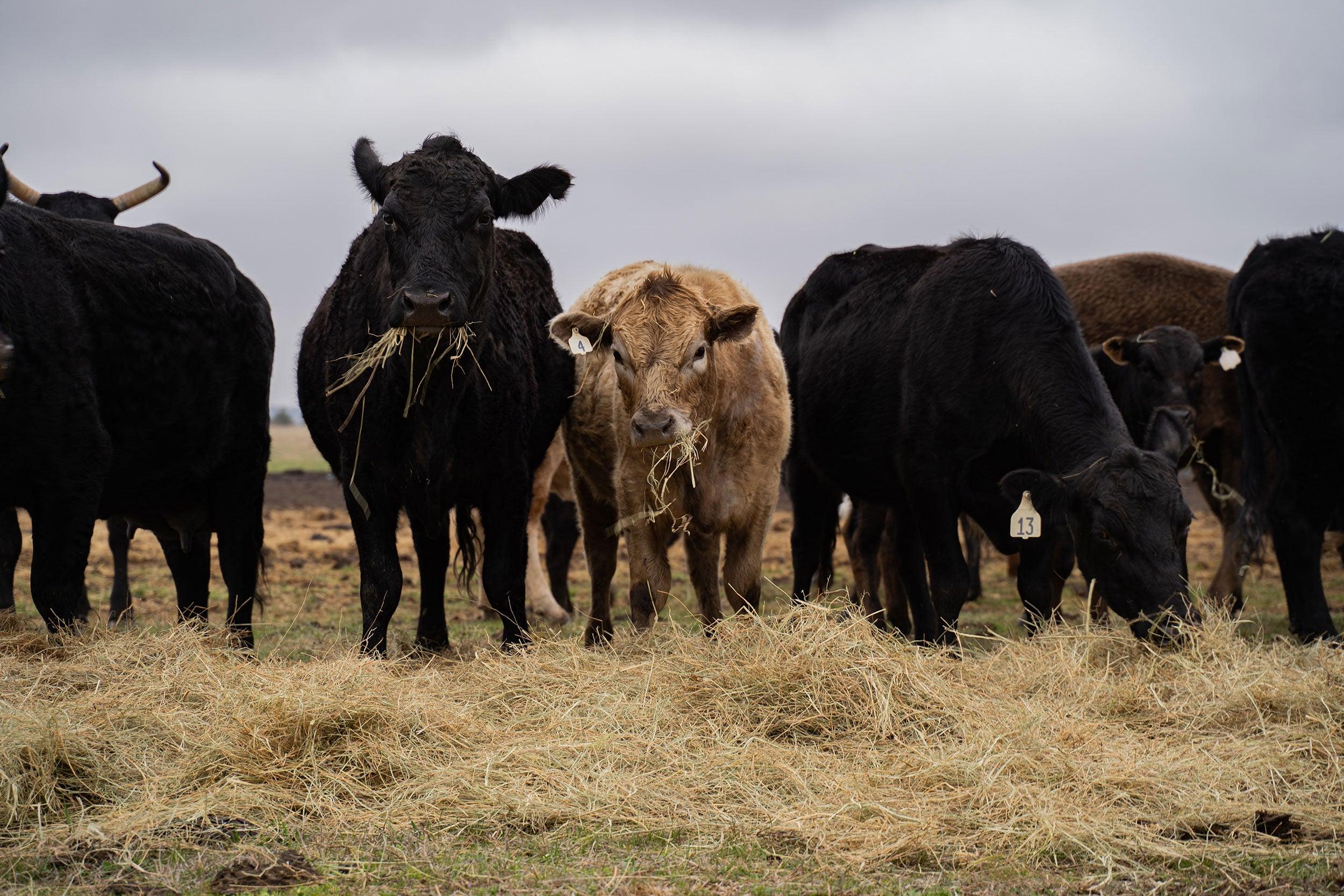
The same RFD-TV coverage said Texas officials established a temporary stop-movement order and a designated quarantine zone by the Texas Animal Health Commission, while state and federal agencies worked to increase surveillance and evaluate surrounding herds.
France 24 (AFP) quoted Michael Schmoyer, the associate administrator for APHIS and head of the NWS Directorate, saying the infested calf "is not a danger to the food supply," and added that the screw worm can be detected easily and treated.
In the coverage, Cornell’s Jennifer Bloodgood also framed the detection as a call for vigilance, telling AFP that the detection in Texas "underscores the need for continued vigilance and collaboration among livestock, wildlife, and public health communities."
Economy, surveillance, and debate
Beyond the immediate quarantine and sterile fly releases, the coverage tied the Texas detection to economic stakes, including a USDA study last year estimating a screwworm resurgence in Texas could cost the state’s economy $1.8 billion.
RFD-TV reported that feeder cattle futures at the Chicago Mercantile Exchange rose Thursday as the market feared an eventual decline in available supply, and it quoted Leffler saying the situation remains manageable and that "We’re going to be able to control the screwworm."
In a separate local account, The Victoria Advocate said the Texas Animal Health Commission confirmed June 3 that New World screwworm was detected in a three-week-old calf in La Pryor, a community in Zavala County approximately 175 miles west of Victoria, and that the infestation was discovered in an umbilical wound and later confirmed by the USDA’s National Veterinary Services Laboratory in Ames, Iowa.
The Victoria Advocate also quoted Texas Agriculture Commissioner Sid Miller urging President Donald Trump to direct USDA to deploy the Screwworm Adult Suppression System, saying, "SWASS was developed by USDA, tested by USDA, and successfully deployed by USDA to eradicate screwworm in Mexico and Texas when it last appeared,".
In that same account, Miller argued that "Even though billions of sterile flies have been dispersed by USDA, the screwworm has still advanced over 1100 miles from southern Mexico to Texas," and said the consequences of federal timing are now "staring us in the face."
More on Technology and Science

Jon Snow, 78, Reveals Alzheimer’s Diagnosis In Channel 4 Documentary
10 sources compared

Airbnb CEO Brian Chesky Plans New Artificial Intelligence Lab Focused On User Interaction
13 sources compared

Kevin O’Leary Scales Back Stratos AI Data Center in Box Elder County After J. Stuart Adams Pressure
11 sources compared

Cash App Launches Cash App Wand Tap-To-Pay Tags Priced At $25
11 sources compared