
Israel Kills Iranian Leaders in Airstrikes, Experts Warn Backlash
Key Takeaways
- Israel targets Iran's leadership through airstrikes to topple Tehran.
- Discrepancies in strategy signal potential risks and possible backfire.
- Regional tensions loom, affecting Hormuz and Gulf security amid the conflict.
Leadership Eliminations
Israel has conducted extensive airstrikes targeting Iranian leadership, eliminating multiple senior military and political figures in recent weeks.
“Divergent Paths: The U”
The attacks have systematically removed key Iranian officials including IRGC spokesperson Ali Mohammad Naini, former parliament speaker Ali Larijani, Gholamreza Soleimani, and Intelligence Minister Esmaeil Khatib.

These targeted killings have significantly altered Iran's power structure, particularly following the death of Supreme Leader Ayatollah Ali Khamenei in an Israeli airstrike on February 28.
This led to his son Mojtaba Khamenei assuming the supreme leadership position, with the younger Khamenei calling for enemies' 'security to be taken away' in his public statements.
The Israeli strategy appears designed to degrade Iran's political and military command structure.
Senior Israeli intelligence officials claim these strikes have 'degraded political leaders' ability to issue orders to the military, form policy and make decisions.'
Strategic Divergence
The U.S. and Israel are pursuing divergent strategies in their conflict with Iran, with Israel focused on decapitating Iranian leadership while the United States prioritizes dismantling Iran's missile and naval capabilities.
According to U.S. Director of National Intelligence Tulsi Gabbard, these strategic differences reflect nuanced approaches to handling Iran's potential nuclear threat and regional influence.
Israeli strikes have targeted Iranian clerics and military leaders specifically, while American operations have concentrated on missile-related sites and infrastructure.
This divergence underscores the complex nature of the coalition against Iran, where both nations share common enemies but employ different methodologies to achieve their respective objectives.
The Israeli approach emphasizes removing key decision-makers to disrupt Iran's command structure, while the American strategy focuses on degrading Iran's military capabilities to limit its regional power projection.
Expert Assessments
Military and security experts have expressed mixed assessments about the effectiveness and risks of Israel's targeted killing strategy.
“Business News›News›Newsblogs›US-Israel Iran War News Live Updates: Indian gas tankers getting ready to sail through Hormuz, data shows US-Israel Iran War News Live Updates: Indian gas tankers getting ready to sail through Hormuz, data shows 20 Mar 2026 | 08:00:13 PM IST Strait of Hormuz Synopsis US-Israel Iran War News Live Updates: No tankers loaded with crude oil have sailed through Hormuz in past 24 hours”
Yossi Kuperwasser, the former head of Israel's military intelligence research division, acknowledged that targeted killings can be an effective tool but are not a 'cure for all problems,' noting that 'these operations by themselves don't dramatically change the ability of those organizations to cause damage and to carry out attacks.'
Northeastern University political scientist Max Abrahms warned that leadership decapitation often backfires, citing data from Afghanistan, Pakistan, Israel and the Palestinian territories showing that violence against civilians spikes after targeted killings.
Mohanad Hage Ali, deputy director of the Carnegie Middle East Center, emphasized that targeted killings can create leadership vacuums and potential for change only when coupled with a coherent political strategy.
Hage Ali warned that 'you can decapitate an organization or defeat it militarily, but if you don't follow through politically, it doesn't work.'
Iranian Response
Iran has responded to the targeted killings with defiant rhetoric and continued military preparations, asserting its ability to maintain operations despite the losses.
The spokesman for Iran's paramilitary Revolutionary Guard, Gen. Ali Mohammad Naeini, insisted that Tehran was still building missiles and that 'the Iran war would go on,' countering Israeli Prime Minister Benjamin Netanyahu's claim that Iran could no longer produce weapons.
Naeini stated that 'our missile industry score is 20 and there is no concern in this regard because we are producing missiles even during war conditions, which is amazing, and there is no particular problem in stockpiling.'
Meanwhile, Iranian state media has portrayed the targeted killings as martyrdom, potentially radicalizing followers and turning slain leaders into symbols of resistance with enduring influence.
The IRGC has emphasized that the Iranian public 'expects the war to continue until the enemy is completely exhausted,' suggesting widespread support for continued resistance despite leadership losses.
Economic Impact
The escalating conflict has significant economic implications, with both sides increasingly targeting energy infrastructure across the Gulf region.
“Israel has killed one senior Iranian leader after another in airstrikes as it seeks to topple the Islamic Republic”
The war has transformed from targeting traditional military installations to focusing on 'the economic lifeline of the modern world: energy infrastructures across West Asia,' according to reports.
Energy sites including Qatar's Ras Laffan, Iran's South Pars, Kuwait's Mina Al-Ahmadi complex, and Saudi's Shaybah refineries have been affected, with Kuwait's key refinery being hit repeatedly.
Global oil prices have fluctuated in response to the conflict, dipping after Netanyahu reassured that Iran was being 'decimated' and that the war would end earlier than feared.
However, the conflict has pushed oil prices around $100 and caused gas prices to surge amid the effective closure of the crucial Strait of Hormuz.
These developments raise concerns about broader economic consequences as the conflict enters its fourth week.
More on Iran

Iran Attacks Kuwaiti Oil Refinery as Tehran Steps Up Gulf Attacks
21 sources compared

Switzerland Halts Arms Exports to US Over Attacks on Iran, Citing Neutrality
16 sources compared

Police Scotland Arrest Iranian Man and Woman After Breach Attempt at Faslane Nuclear Submarine Base
14 sources compared
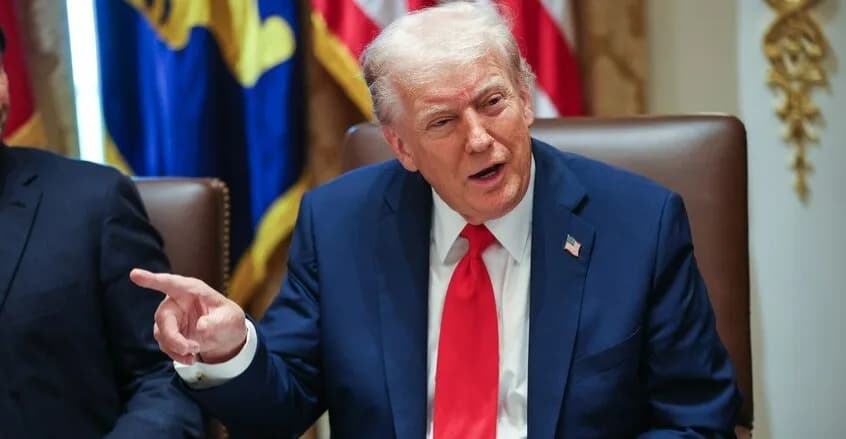
Trump Mulls Winding Down Iran War as Marines Head to the Middle East.
51 sources compared