
Trump Administration Sues Harvard, Seeks Repayment and Freezing of Grants Over Antisemitism Allegations
Key Takeaways
- DOJ filed suit alleging Harvard failed to address antisemitism against Jewish and Israeli students.
- Lawsuit seeks to recover billions in federal research grants and withhold further funding.
- DOJ alleges Harvard leadership violated civil rights law by not addressing antisemitism.
Lawsuit Filed
The Trump administration filed a new lawsuit against Harvard University on Friday, March 20, 2026, alleging the Ivy League school violated federal civil rights laws by failing to protect Jewish and Israeli students from harassment on campus.
“The lawsuit was filed on Friday in a federal district court in Massachusetts, according to court papers”
The Justice Department accused Harvard faculty and leadership of 'deliberate indifference' to antisemitic behavior, claiming the university 'turned a blind eye to antisemitism and discrimination against Jews and Israelis' since the October 7, 2023 Hamas attacks on Israel.

The lawsuit, filed in Massachusetts federal district court, detailed specific incidents including Jewish students being 'harassed, physically assaulted, stalked, and spat upon' and 'repeatedly denied access to educational facilities by antisemitic demonstrators.'
The DOJ argues these violations create grounds for the government to freeze existing grants and seek repayment for federal funding already received.
Harvard's Defense
Harvard University immediately pushed back against the allegations, calling the lawsuit 'yet another pretextual and retaliatory action by the administration for refusing to turn over control of Harvard to the federal government.'
The university emphasized its commitment to protecting Jewish and Israeli students, stating 'Harvard cares deeply about members of our Jewish and Israeli community and remains committed to ensuring they are embraced, respected, and can thrive on our campus.'
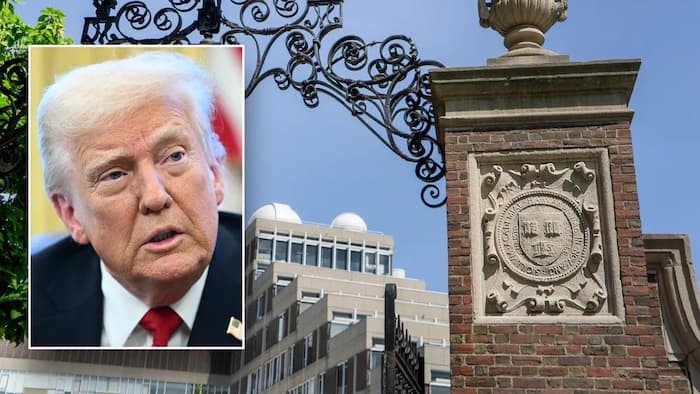
Harvard officials highlighted specific actions taken to address antisemitism, including updating disciplinary processes, expanding training programs, releasing official university reports, and making significant changes to programs accused of bias.
The university also pointed to its efforts since the fall of 2025, including issuing new guidance to clarify protest rules, enhancing education on antisemitism, supporting viewpoint diversity initiatives, and introducing new courses on Jewish and Israeli history.
Legal Escalation
The new lawsuit represents the latest escalation in a year-long battle between the Trump administration and Harvard that has repeatedly tested the boundaries of federal authority over universities.
“Trump administration sues Harvard, saying it violated civil rights law and seeking to recover funds Trump administration sues Harvard, saying it violated civil rights law and seeking to recover funds WASHINGTON (AP) — The Justice Department filed a new lawsuit Friday against Harvard University, saying its leadership failed to address antisemitism on campus, creating grounds for the government to freeze existing grants and seek repayment for grants already paid”
What began as an investigation into campus antisemitism escalated into an all-out feud as the administration slashed more than $2.6 billion in research funding, ended federal contracts, and attempted to block Harvard from hosting international students.
Legal proceedings have been ongoing since last spring, when Harvard sued the administration over funding freezes.
In September 2025, federal Judge Allison Burroughs ruled in Harvard's favor, finding that the Trump administration had unlawfully terminated more than $2 billion in federal grants and describing the antisemitism justification as a 'smokescreen.'
The administration has appealed that decision, while Harvard continues to defend its legal position.
The House Committee on Education and the Workforce, led by Republican Representative Tim Walberg, also released a report this week alleging widespread antisemitism on U.S. campuses, lending political support to the administration's legal actions.
Financial Stakes
The financial stakes in this legal battle are enormous, with Harvard potentially facing the loss of billions in federal funding.
The lawsuit specifically targets Harvard's receipt of more than $2.6 billion in grants from the Department of Health and Human Services alone, though the university receives funding from multiple federal agencies.

The DOJ is seeking to recover all federal grants paid to Harvard during what it terms the university's period of noncompliance with Title VI of the Civil Rights Act of 1964, which prohibits discrimination based on race, color, or national origin in federally funded programs.
The administration also requested authorization to freeze ongoing grant payments and the appointment of a U.S.-approved independent monitor to oversee Harvard's compliance.
While the exact amount sought remains uncertain, negotiations have reportedly broken down after talks that included proposals for Harvard to pay $500 million initially, with Trump later increasing that demand to $1 billion, stating Harvard has been 'behaving very badly.'
Other universities facing similar investigations have reached settlements, including Columbia University, which agreed to pay $200 million to resolve claims.
Broader Implications
Beyond the immediate legal and financial implications, the Trump administration's lawsuit against Harvard has broader implications for higher education policy and the relationship between federal funding and campus speech.
“The Trump administration slapped a new multibillion-dollar lawsuit against Harvard University on Friday, alleging that the school is in violation of a civil rights law and has failed to protect Jewish and Israeli students from discrimination”
The case represents a significant test of the administration's authority to condition federal funding on institutions' handling of antisemitism and other forms of discrimination.

The administration has employed multiple tactics to pressure Harvard beyond this lawsuit, including attempting to suspend military training programs for officers at Harvard, targeting the university's patents through the Department of Commerce, and placing it on 'Heightened Cash Monitoring' status due to 'growing concerns regarding the university's financial position.'
The legal battle has also highlighted tensions between academic freedom and federal oversight, with some critics arguing the administration is exploiting legitimate concerns about antisemitism to exert political control over educational institutions.
The Nexus Project, an antisemitism watchdog group, condemned the lawsuit as an 'authoritarian abuse of power' that 'continues to exploit legitimate Jewish concerns over antisemitism as a thinly veiled excuse to attack and bully major academic institutions.'
More on USA

President Trump Slams NATO as Cowards as Marines and Warships Head to the Middle East
44 sources compared

Iran Threatens Global Tourist Sites Worldwide
14 sources compared

California Moves to Rename César Chávez Day Amid Sexual Abuse Allegations
14 sources compared

U.S. Attacks Iranian naval vessels and drones near Strait of Hormuz.
10 sources compared