Over 10,000 Japanese Protest Prime Minister Sanae Takaichi's Dangerous Policies in Tokyo
Key Takeaways
- Over 10,000 gathered in Tokyo to protest Prime Minister Sanae Takaichi's policies.
- Protesters oppose moves to revise Japan's pacifist Constitution.
- Protest also opposed deployment of long-range missiles.
Mass Tokyo Protest
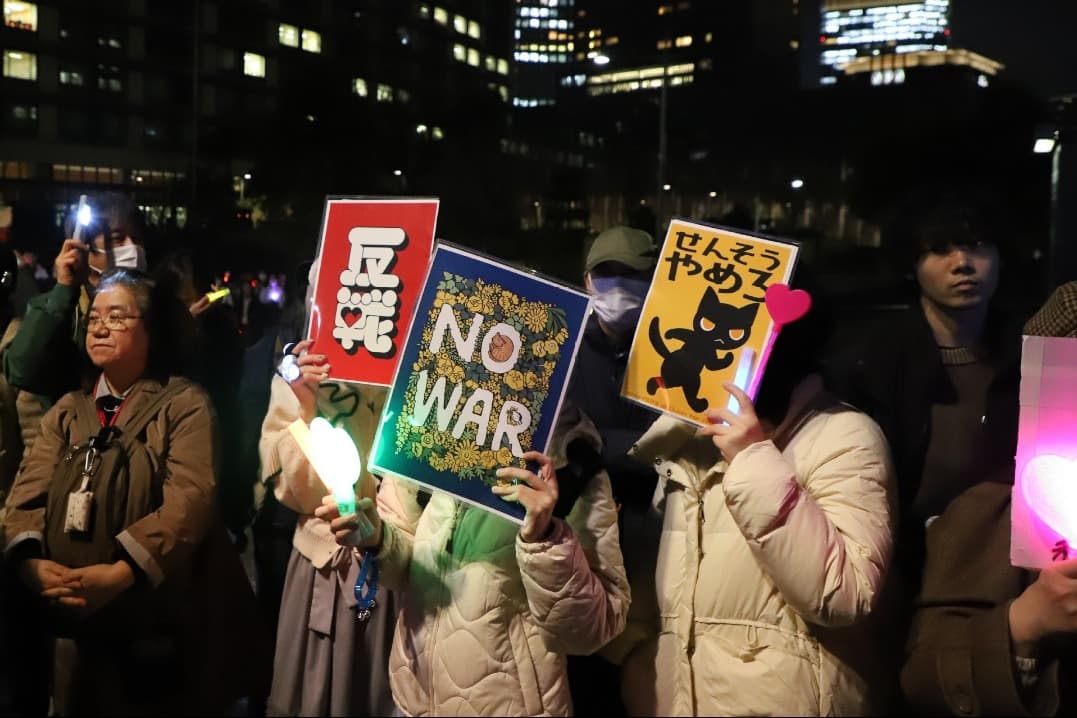
Over 10,000 Japanese citizens gathered in Tokyo Thursday night in a massive demonstration against Prime Minister Sanae Takaichi's controversial policy agenda.
“Over 10,000 Japanese rally in Tokyo to protest against PM's dangerous policies More than 10,000 Japanese people gathered in Tokyo Thursday night to protest against Prime Minister Sanae Takaichi's dangerous policy agenda, including attempts to revise the country's pacifist Constitution and deployment of long-range missiles”
The rally took place outside the Second Members' Office Building of the House of Representatives, where demonstrators held placards reading 'No War' and 'Oppose Constitutional Revision.'

Protesters expressed deep concern over Takaichi's policies, particularly her attempts to revise Japan's pacifist Constitution and her push for deploying long-range missiles.
The scale of the demonstration underscores the growing public opposition to the prime minister's right-wing agenda and the perceived risks it poses to Japan's post-war peace structure.
Constitutional Revision Concerns
The protest centered on Prime Minister Takaichi's long-standing commitment to constitutional revision, which has intensified recent political divisions in Japan.
Takaichi and other right-wing politicians have consistently sought to amend Article 9 of the Constitution, a provision that has been a cornerstone of Japan's post-war identity.
The prime minister's recent public remarks reaffirming her dedication to revising the Constitution have sparked widespread alarm across Japanese society.
Protesters view these efforts as fundamental changes to Japan's pacifist principles that could lead to increased military engagement and regional instability, particularly given the deployment of long-range missiles as part of her security agenda.
Pacifist Constitution Significance
Japan's Constitution, enacted in 1947, is widely known as the pacifist Constitution due to Article 9's landmark provisions that renounce war as a sovereign right of the nation.
“Over 10,000 Japanese rally in Tokyo to protest against PM's dangerous policies More than 10,000 Japanese people gathered in Tokyo Thursday night to protest against Prime Minister Sanae Takaichi's dangerous policy agenda, including attempts to revise the country's pacifist Constitution and deployment of long-range missiles”
This constitutional framework has served as Japan's foundation for peace and stability for nearly eight decades, prohibiting the threat or use of force as means of settling international disputes.
Article 9 represents a unique commitment to peaceful resolution of conflicts and has been instrumental in preventing Japan from direct military involvement in warfare since World War II.
The protesters argue that maintaining this constitutional framework is essential for preserving Japan's peaceful identity and preventing the country from being drawn into regional military conflicts.
Public Reaction
Demonstrators at the rally voiced strong personal concerns about the potential erosion of Japan's constitutional protections, with participants emphasizing the human stakes involved in the political debate.
Natsuki Mitomi, one of the prominent protesters at the rally, articulated the collective sentiment when he stated that Article 9 has played an important role in keeping Japan out of war throughout its post-war history.
'It will remain essential for Japan in the future, and we cannot allow it to be taken away by Takaichi,' Mitomi told reporters, capturing the urgency felt by many participants.
The protest reflected a broad cross-section of Japanese society, indicating that concerns about constitutional revision transcend partisan lines and represent a fundamental question about Japan's national direction.
Political Implications
The Tokyo protest represents a significant moment in Japan's ongoing political discourse about national security and constitutional identity.
“Over 10,000 Japanese rally in Tokyo to protest against PM's dangerous policies More than 10,000 Japanese people gathered in Tokyo Thursday night to protest against Prime Minister Sanae Takaichi's dangerous policy agenda, including attempts to revise the country's pacifist Constitution and deployment of long-range missiles”
Prime Minister Takaichi's policies, including her push for long-range missile deployment and constitutional revision, have positioned Japan on a potentially more militaristic trajectory that contrasts sharply with its post-war pacifist tradition.
The large-scale nature of the demonstration suggests that many Japanese citizens remain deeply committed to maintaining their constitutional peace framework despite the government's rightward shift.
This protest movement highlights the tension between evolving security demands and Japan's historic commitment to peaceful conflict resolution, setting the stage for what may become an increasingly polarized debate about the country's future role in regional and global affairs.
More on Protests

Naturalized US citizen Ayman Mohamad Ghazali rams vehicle into West Bloomfield synagogue, dies
129 sources compared

Artist Secret Handsake Installs Titanic-Pose Statue of President Trump With Jeffrey Epstein on National Mall
15 sources compared
ISIS-Inspired Suspects Throw Homemade Bombs at Mayor Zohran Mamdani's Residence; Two Charged
10 sources compared
Emir Balat, Ibrahim Kayumi Throw Homemade Bombs Near Gracie Mansion; NYPD Calls ISIS-Inspired Terrorism
12 sources compared