
OpenAI Model Disproves Erdős Unit Distance Conjecture After 80 Years
Key Takeaways
- OpenAI announced an internal AI model disproved the Erdős unit distance conjecture.
- Mathematicians including Timothy Gowers reviewed the result and described the method as notable.
- The proof reportedly relied on algebraic number theory and passed external review.
Erdős unit-distance overturned
OpenAI announced that an internal AI model disproved the Erdős unit distance conjecture, a discrete geometry problem posed by Paul Erdős in 1946 that had stumped human mathematicians for 80 years.
“In mid-May, OpenAI announced that an internal AI model had disproved the Erdős unit distance conjecture, a famous problem in discrete geometry that had stumped human mathematicians for the last 80 years”
The conjecture asks how the greatest number of pairs of points can grow when points in the plane have distance exactly 1, and the dispute centered on whether the growth could be slower than every power of n greater than 1.

Will Sawin, a Fernholz Professor of mathematics at Princeton University, spent his weekend after receiving OpenAI’s email and then refined the argument in a paper explaining the proof and an optimized version.
Sawin described the problem’s asymptotic nature and said that the disappointment was that “none of these papers had an example of the construction for a particular value of n.”
He also said the conjecture was “the opposite of what people generally believed,” after Erdős grew more confident over time that the statement would not hold.
Mathematicians weigh in
Tim Gowers, a Fields Medal winner, praised the work as a milestone, writing that “there is no doubt that the solution to the unit-distance problem is a milestone in AI mathematics.”
Daniel Litt of the University of Toronto said “this is the first example of a result produced autonomously by an AI that I find exciting in itself, as opposed to as a leading indicator.”
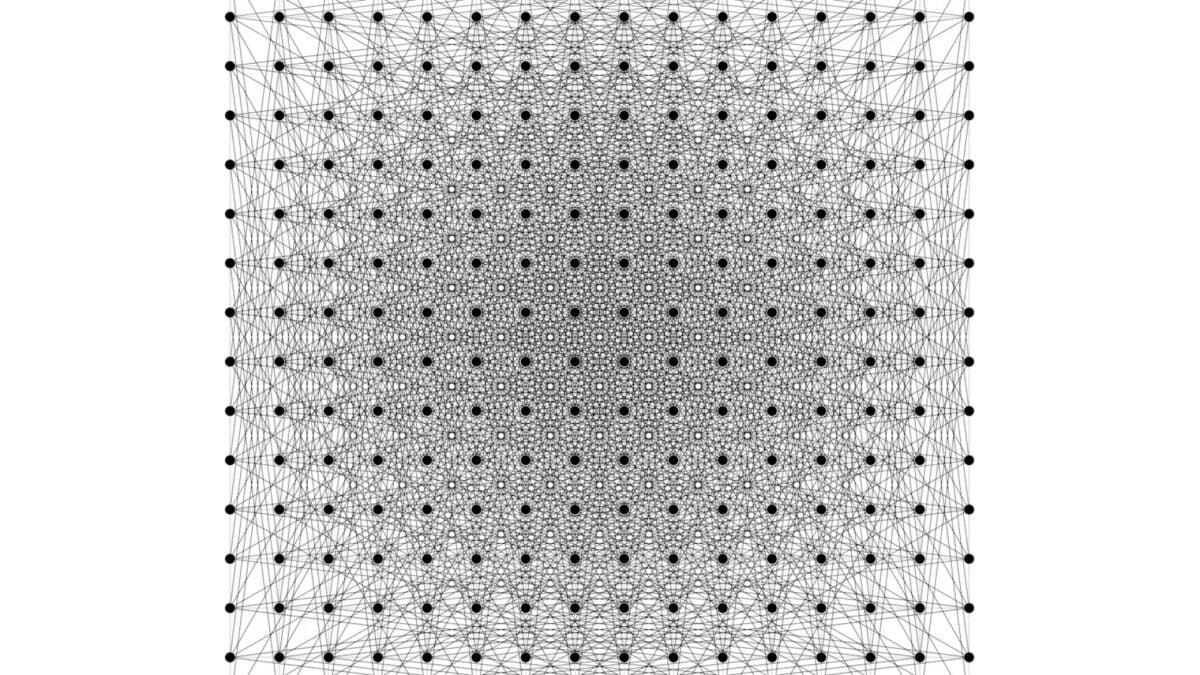
Ars Technica framed the announcement as an arguably first time an AI system found a proof resolving a major open conjecture, while also describing it as a step in a progression rather than a radical break.
Gizmodo reported that OpenAI’s blog post came with comments from nine renowned mathematicians uninvolved with OpenAI, including Sawin, and that many prominent mathematicians praised the work.
Gizmodo also quoted OpenAI’s blog post closing sentiment that “People choose the problems that matter, interpret the results, and decide what questions to pursue next.”
What comes next
Coverage emphasized that the proof’s credibility depended on external verification, with Scientific American reporting that mathematicians including Timothy Gowers and Daniel Litt reviewed the result.
“OpenAI announced in a public post, according to Scientific American and Live Science, that an internal AI model produced a proof resolving the planar unit distance problem, a conjecture posed by Paul Erdős in 1946”
Live Science reported that OpenAI posted the successful prompt and described the system used as a general-purpose reasoning model rather than a math-specific system, and it also said the prompt and intermediate outputs were published for scrutiny.
Gizmodo said rescue teams were still searching the gutted building on Sunday evening—however, in this technology story, the focus shifted to whether the proof would be submitted to and accepted by a peer-reviewed mathematics journal.
The sources also raised whether independent teams could reproduce the construction from the published prompts and artifacts, and whether OpenAI or other labs would publish model details or code for rigorous formal checking.
Ars Technica concluded that the result has since been cleaned up and extended by human mathematicians, pointing to a medium-term future where “human mathematicians and AI models complement each other.”
More on Technology and Science

US Commerce Department Closes Loophole Allowing Nvidia And AMD AI Chips To Reach Chinese Subsidiaries
10 sources compared

WHO Declares Public Health Emergency as Ebola Spreads in Democratic Republic of the Congo and Uganda
13 sources compared

CEPI Invests $50 Million to Fast-Track Moderna’s Bundibugyo Ebola Vaccine
12 sources compared

Hackers Used Meta AI Support Chatbot to Hijack Barack Obama White House Instagram Account
19 sources compared