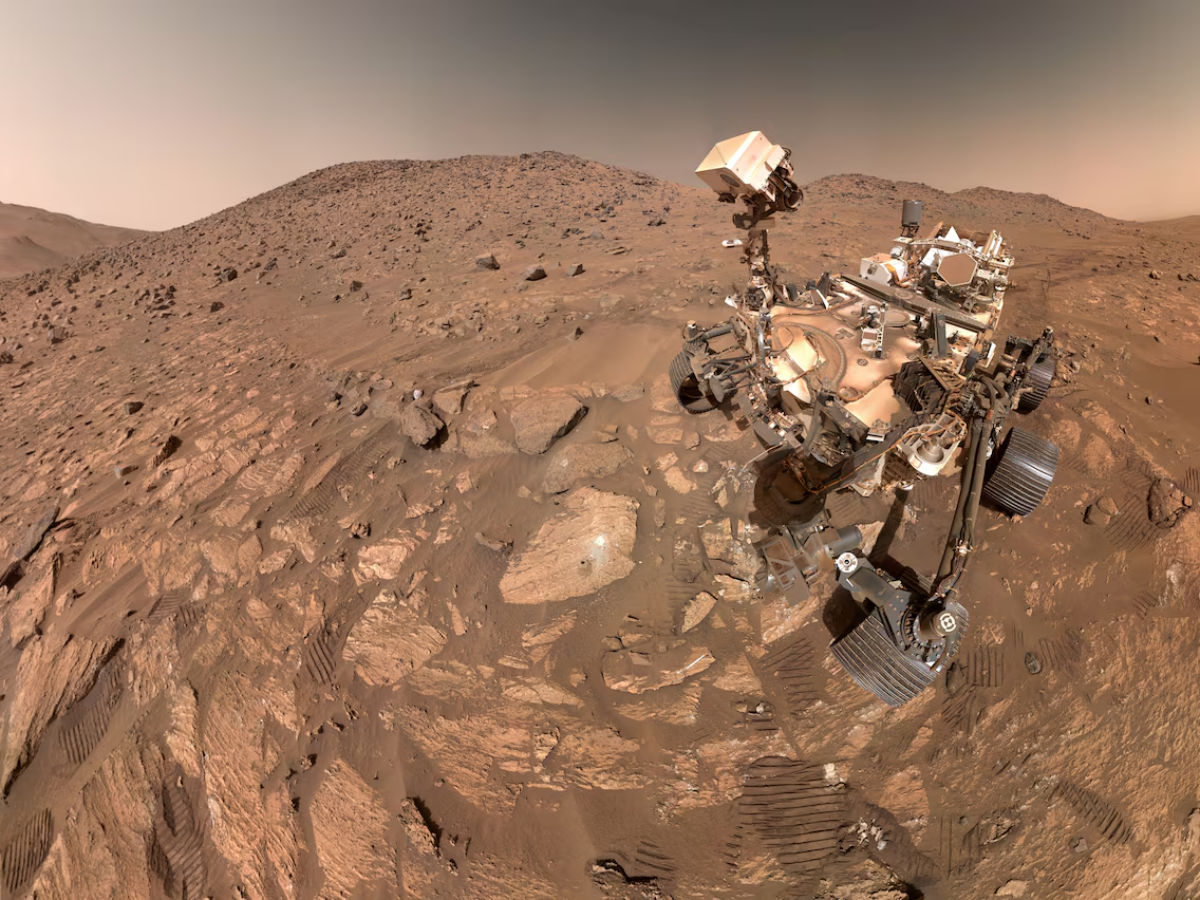
NASA's Perseverance Detects Buried 3.7 Billion-Year-Old River Delta Beneath Mars Surface
Key Takeaways
- Perseverance's RIMFAX radar detected a buried ancient river delta beneath Jezero Crater.
- Dating to roughly four billion years, among oldest Mars water deposits.
- Suggests Mars may have supported flowing water longer than previously thought.
Ancient Delta Discovery
NASA's Perseverance rover has made a groundbreaking discovery by uncovering the remains of an ancient river delta buried deep beneath the surface of Mars.
“When NASA’s Perseverance rover landed in Jezero Crater in 2021, its primary mission was to scour the remnants of a dried-up Martian lakebed for signs of ancient life”
This provides some of the oldest evidence yet of water flowing on the Red Planet.
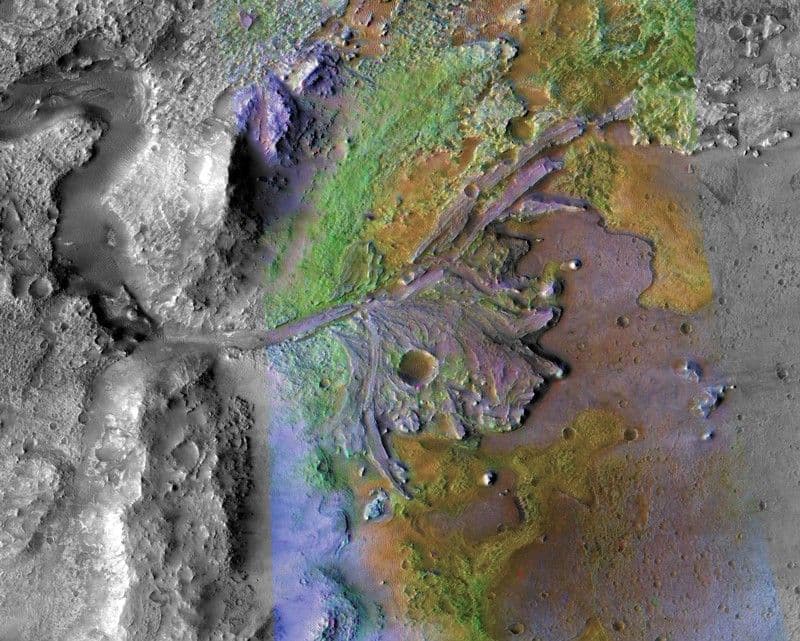
The six-wheeled rover detected subsurface geological features while traversing Jezero Crater in Mars' northern hemisphere.
The discovery revealed layered sediments and eroded surfaces indicative of a delta environment formed where a river enters a larger body of water.
This buried delta represents significant evidence of Mars' watery past and suggests that the northern hemisphere crater was once a massive lake basin fed by active rivers.
These features indicate a much older, buried delta system beneath the one visible today.
Radar Technology
The technological breakthrough enabling this discovery came from the rover's RIMFAX instrument.
RIMFAX uses ground-penetrating radar to send pulses into the Martian soil and record their reflections.

This process creates detailed three-dimensional maps of subsurface features.
During its mission spanning from September 2023 to February 2024 over 250 Martian days, Perseverance traveled approximately 6.12 kilometers.
This advanced radar technology allowed scientists to visualize geological structures as deep as 115 feet (35 meters) underground.
The tool revealed complex sedimentary formations that would otherwise remain invisible to surface observations.
Geological Timeline
The scientific significance of this discovery extends far beyond confirming Mars' watery past.
“NASA rover finds 4B year old river delta on Mars What's the story NASA's Perseverance rover has discovered the remains of an ancient river delta buried deep beneath the surface of Mars”
It provides crucial insights into the planet's geological evolution and potential for ancient habitable conditions.
Researchers have determined that the now-buried delta dates back to approximately 3.7-4.2 billion years ago.
This represents one of the earliest indicators of water activity on Mars's surface.
The finding suggests that Jezero Crater experienced multiple phases of water activity throughout Martian history.
The newly identified underground delta predates the Western Delta which formed about 3.5 to 3.7 billion years ago.
The layered deposits point to long-term water flow across the Martian surface.
This created conditions potentially suitable for life over extended periods.
Life Implications
The discovery has significant implications for the search for past life on Mars.
The presence of sustained water environments dramatically increases the probability that microbial life could have developed.
Geomicrobiologist Emily Cardarelli of the University of California, Los Angeles noted that the RIMFAX data reveal a broader fluvial system than previously seen from orbit.
This extends the timeline for when habitable conditions may have existed on Mars.
The buried delta structures are particularly valuable because they may contain protected layers of rock.
These layers could preserve biosignatures—chemical or physical signs of past life.
This discovery builds upon previous findings where scientists last year discovered a rock sample containing a potential biosignature.
The findings further support the theory that Mars once hosted ancient microbial life dependent on water.
Scientific Impact
This remarkable discovery reinforces the scientific understanding that Mars once hosted a sustained, water-rich environment.
“NASA rover finds 4-billion-year-old flowing water evidence on Mars, raising hopes of past life Scientists last year found a sample of rock in Jezero Crater which contained a potential biosignature NASA’s Perseverance rover has discovered a “buried treasure” of Martian history”
The environment was capable of supporting life during its early geological history.
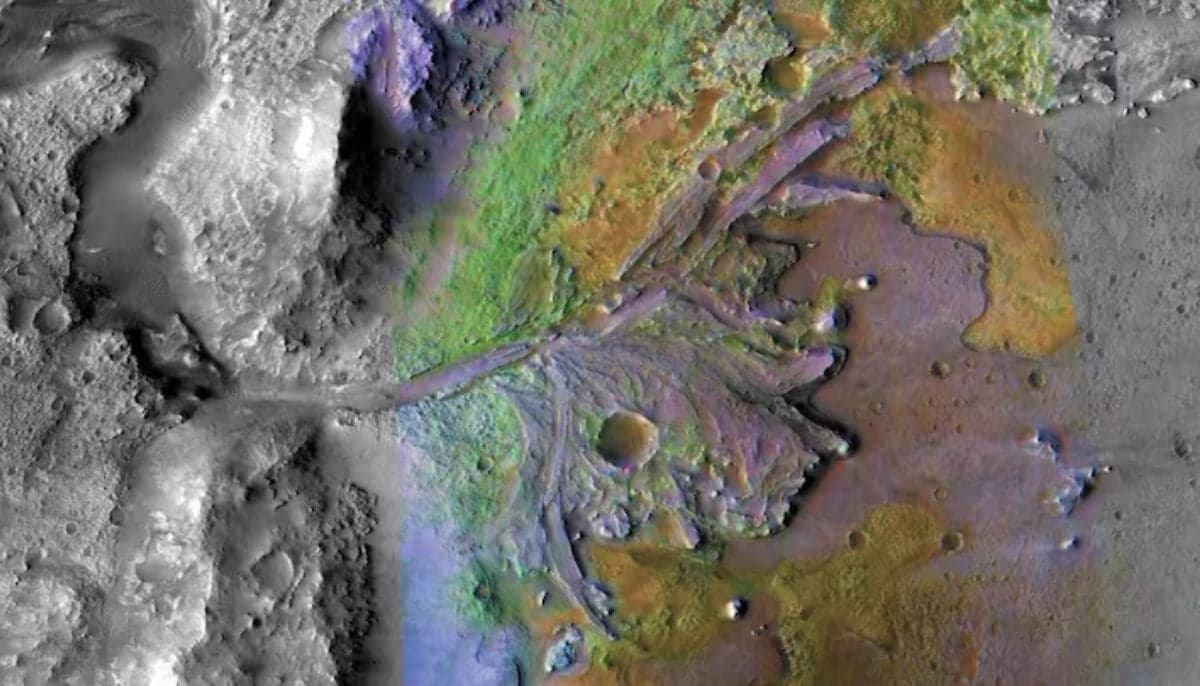
The findings published in Science Advances provide compelling evidence that the Red Planet underwent significant hydrological activity billions of years ago.
This created delta systems similar to those found on Earth.
The identification of multiple delta phases suggests a complex water cycle that persisted for extended periods.
This created diverse environments that could have supported different forms of microbial life.
As Perseverance continues its mission exploring Jezero Crater since 2021, these discoveries help scientists unravel Mars' past mysteries.
The findings are guiding future searches for evidence of ancient life within the planet's geological record.
More on Technology and Science

Trump Unveils National AI Policy Framework to Preempt State Laws
20 sources compared

Social media damages youth well-being, World Happiness Report 2026 finds
34 sources compared

Meta Pays Creators Up to $3,000 to Post on Facebook, Launching Creator Fast Track.
25 sources compared
Climate Change Drives Record March Heat in Southwest U.S.
14 sources compared