Liberal and National Parties Reunite After Nationals Split Over Hate Speech Laws
Key Takeaways
- Liberal and National parties reunited after a three-week split over hate-speech laws
- Sussan Ley and David Littleproud agreed to restore senior Nationals to the frontbench
- Senior Nationals were sacked or stood down for breaking coalition solidarity on hate-speech laws
Coalition reunion over hate laws
Australia's Liberal and National parties announced they had reunited after a split over proposed hate speech laws.
“The Liberal and National parties have reunited after an acrimonious three-week split”
Leaders Sussan Ley and David Littleproud presented the reconciliation as a forward-looking reset for the Coalition.

Multiple outlets reported the restoration using phrases such as 'back together,' 'looking to the future,' and that the parties 'trust' each other after a rupture caused by disagreement over the legislation.
The reunion was reported to have occurred in early February, ending a break that began in late January when Nationals senators refused to back the reforms.
Split over hate speech laws
The immediate cause of the split was disagreement over Labor's proposed hate speech laws, introduced after a deadly attack at Bondi Beach in December.
Coverage consistently notes the Nationals raised free-speech concerns and objected to the speed and handling of the bill.
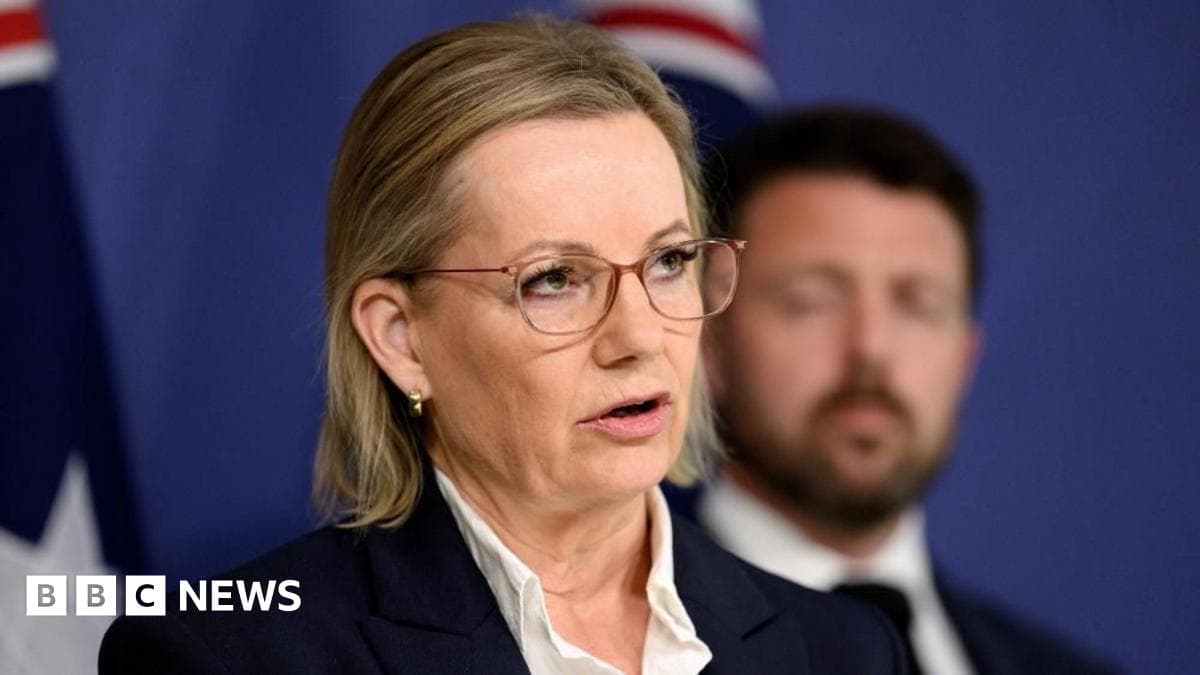
BBC reported the Nationals refused on 22 January to back Labor's reforms, introduced after a December Bondi Beach attack on a Jewish festival that killed 15, citing free-speech concerns, while SSBCrack highlighted David Littleproud's criticism that the bill was fast-tracked with only four to five hours' notice.
The Straits Times also linked the legislation directly to the Bondi Beach mass shooting and noted that some Nationals senators opposed the measures.
Coalition reconciliation reforms
As part of the reconciliation, the Coalition agreed to internal changes aimed at preventing future unilateral breaks over shadow cabinet solidarity.
“Sussan Ley (right) and David Littleproud (left) agreed on a deal to restore senior Nationals to the frontbench”
SSBCrack reports the Coalition introduced a new rule requiring a joint Coalition party-room decision to alter shadow cabinet solidarity.
That procedural reform was explicitly tied to rebuilding trust after two splits since the last election.
SBS frames the reunion in personnel terms, noting the deal restored Nationals frontbenchers who had been sacked or stood down for breaching solidarity conventions.
BBC and The Straits Times quote leaders saying the Coalition must find a way back to government and that the parties are 'looking to the future,' indicating a strategic motivation behind the reconciliation.
Coalition split and reunion
The split was the Coalition's second rupture in under a year and reporting places the reunion in the wider context of a party still recovering from a heavy election loss.
BBC explicitly notes the Coalition suffered a heavy election loss last year and documents a prior brief split in May over climate and energy policy; SSBCrack likewise refers to rebuilding trust after two splits since the last election.

The Straits Times reiterates this is the second split in under a year, while SBS frames the episode as a three-week separation that has now ended.
Together the accounts present a party managing internal tensions while seeking unity ahead of future political contests.
Media coverage comparison
Coverage differs in focus and level of detail.
“Synopsis We encourage you to review ourTerms of Service, andPrivacy Policy”
SSBCrack foregrounds internal reforms and procedural critiques of the bill's handling.

BBC foregrounds free-speech concerns and provides the Bondi attack and election context.
SBS centers reconciliation and frontbench restoration.
The Straits Times offers a concise international summary with dates.
The Economic Times entry in the provided materials does not contain the article text and instead indicates a rights notice and asks for the article itself.
This omission means the Economic Times contributes no substantive reporting to this set of sources.
These contrasts reflect source-type influences.
For example, Western mainstream reporting such as the BBC emphasizes context and chronology.
Regional outlets like The Straits Times give concise factual timelines.
Other outlets such as SSBCrack and SBS highlight internal party mechanics and personnel moves.
More on Australia

Australia Grants Asylum to Seven Iranian Women's Football Team Members
22 sources compared

Police Charge Two Men With Kidnapping, Torturing and Murdering 85-Year-Old Pensioner in Mistaken Identity Case
14 sources compared

Australian PM Albanese Refuses to Repatriate 34 Women and Children Linked to IS — Reports Conflict on Whether They Left or Were Sent Back to Roj Camp
33 sources compared
Australia Bars Citizen Returning From Roj Camp, Issues Temporary Exclusion Order Citing Security Advice
14 sources compared