
Julius Malema Sentenced To Five Years In Prison For Firing Rifle At EFF Rally
Key Takeaways
- Julius Malema sentenced to five years for firing a rifle at a 2018 EFF rally.
- Magistrate Twanet Olivier handed Malema a five-year prison term.
- Convicted of illegal use of a firearm for firing a rifle at a rally.
Sentencing in KuGompo City
South African opposition politician Julius Malema was sentenced to five years in prison on Thursday after a court found him guilty for firing a rifle into the air at an Economic Freedom Fighters (EFF) political rally in 2018.
“The leader of a South African opposition party, Julius Malema, was sentenced on Thursday to five years in prison after being found guilty of contravening firearm legislation by firing a rifle at a political rally in 2018”
The sentence was handed down by Magistrate Twanet Olivier in KuGompo City, formerly East London, according to Al Jazeera and DW.
Al Jazeera reported that Malema “was handed a five-year sentence on Thursday by Magistrate Twanet Olivier,” and DW said the court sentenced him to “five years in prison on Thursday for firing a rifle into the air at a political rally in 2018.”
Multiple outlets describe the same core facts: Malema was convicted in October of unlawfully possessing a firearm and ammunition and discharging a firearm in a public place.
Al Jazeera said the court sentenced Malema to five years for unlawful possession of a firearm and two years for unlawful possession of ammunition, with sentences running at the same time.
DW similarly described that Malema was convicted in October of “unlawfully possessing a firearm and firing a weapon in a public place,” and that prosecutors said he discharged a rifle into the air during the rally.
The sentencing drew a large political crowd: Al Jazeera said “hundreds of Malema’s red-clad EFF supporters gathered for the sentencing,” while DW described “hundreds of red-clad EFF supporters gathered outside the court.”
Within minutes of the decision being read out, Al Jazeera reported that Malema’s lawyers applied for leave to appeal, and that “a request that was later granted.”
Firearm law and the 2018 incident
The case against Malema centered on an incident in 2018 at an EFF rally, with prosecutors arguing that he deliberately violated firearm laws by shooting the gun into the air.
DW said prosecutors “said he discharged a rifle into the air during the rally,” and it described Malema’s defense as a claim that the shots were celebratory.
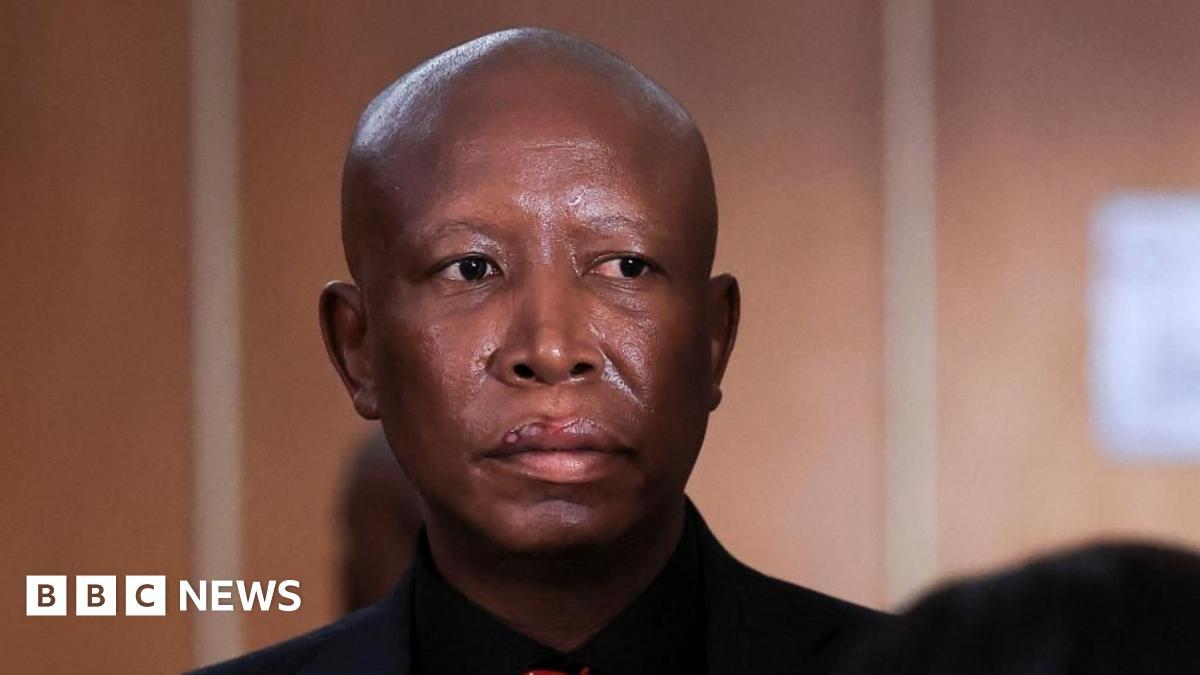
Al Jazeera reported that Malema “pleaded not guilty, arguing the gun was a toy,” and that his defense said the shots were “only intended to be celebratory.”
In court, Magistrate Twanet Olivier rejected the “impulsive” framing, saying, “It wasn’t … an impulsive act,” and adding, “It was the event of the evening.”
DW quoted the same judicial language, stating, “It wasn't... an impulsive act,” and “It was the event of the evening.”
UPI added more detail about the timing and setting, saying Malema fired the gun in 2018 “celebrating the fifth anniversary of the party in KuGompo City, then known as East London.”
UPI also said defense lawyers argued there were “no injuries,” and that Malema told the court “the gun didn’t belong to him and that he had fired the shots to energize the crowd.”
The sentencing also included additional legal consequences beyond the prison term itself, including fines and potential prison time if they were not paid, and disqualification from Parliament if the sentence stood.
Malema’s defense and the court’s reasoning
Malema’s sentencing arguments and the magistrate’s remarks were presented as a direct clash over intent, with multiple outlets quoting the court’s reasoning and Malema’s response.
“South African opposition politician Julius Malema has been sentenced to prison time for firing a rifle in the air at a party rally”
Al Jazeera said Malema argued the gun was a toy and that the shots were meant to be celebratory, while the magistrate said, “It wasn’t … an impulsive act,” and “It was the event of the evening.”
DW similarly quoted Olivier’s view that the act was not impulsive, stating, “It wasn't... an impulsive act,” and “It was the event of the evening.”
WOWK 13 News reported that Magistrate Twanet Olivier said she considered the magnitude of the offense, quoting her: “We hear daily, or weekly, of children playing in the front yards, in the street, who are caught in crossfire, random shots fired, killing people.”
WOWK 13 News added Olivier’s conclusion that “It’s just the first time that we hear, it’s being called celebratory shots,” linking the court’s view of the act to broader public safety concerns.
Malema, meanwhile, challenged the fairness of the process and criticized the magistrate, with South China Morning Post quoting him as saying, “We were tried by a magistrate who doesn’t read, who uses emotions, who speaks politics. We are done with her, we are going to a higher court.”
WOWK 13 News also quoted Malema telling supporters after his release, “They are trying by all means to silence this voice,” and “They will never win.”
KTEN and themercury both reported Malema accusing the magistrate of racism, with KTEN quoting him: “We are fighting the enemy and the enemy is white supremacy.”
Political fallout and competing narratives
The sentencing triggered immediate political reactions, with outlets describing both supporters’ defiance and opponents’ approval, and with Malema and his critics offering sharply different interpretations of the case.
Al Jazeera said the EFF “says the case is an attempt to silence its outspoken leader,” and that “Party supporters have threatened protests should their leader be jailed,” while the magistrate stressed the conviction was personal rather than party-based.
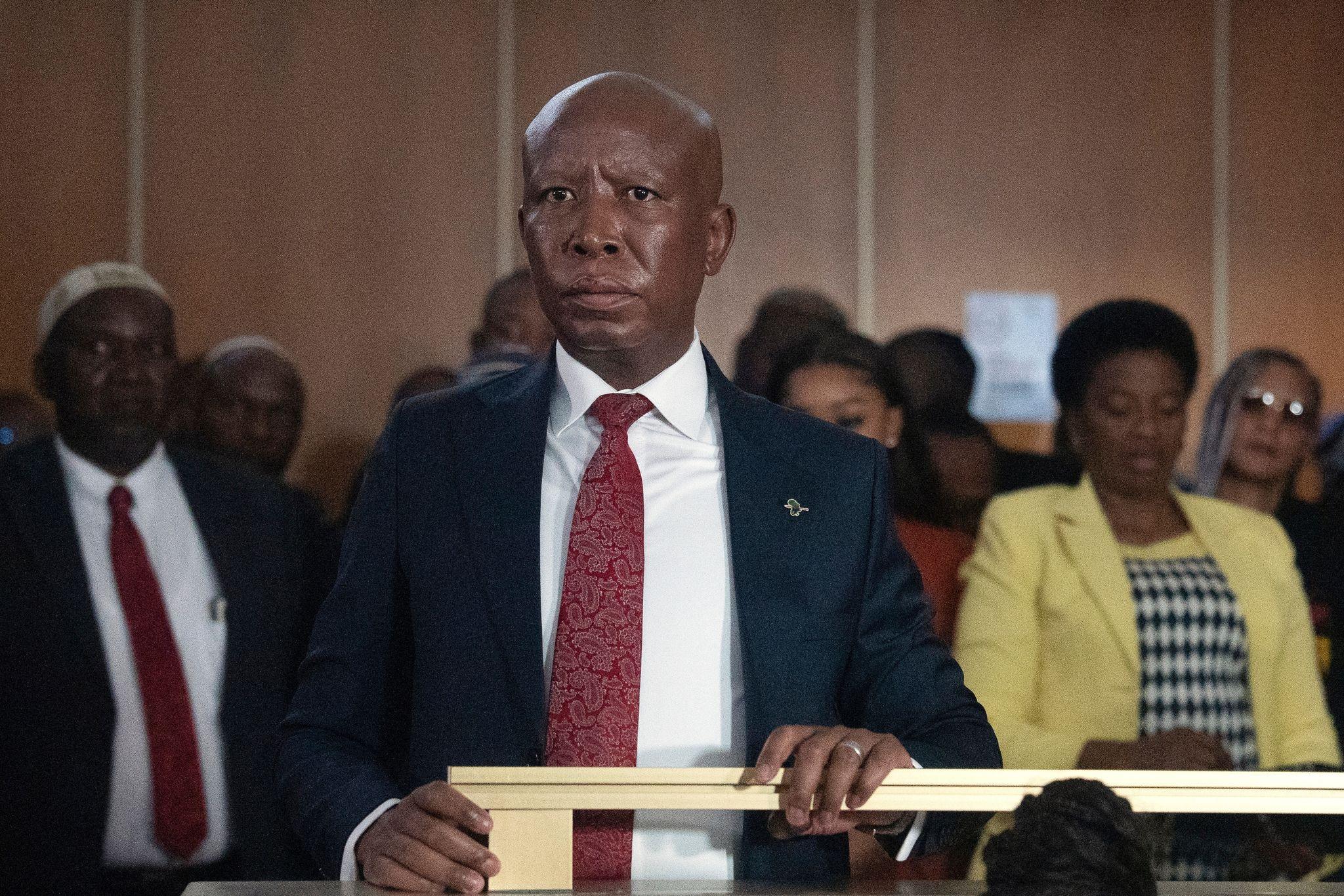
DW reported that EFF supporters warned they would stage protests if Malema was sent to prison, and it also described Malema’s claim that the charges were politically motivated.
DW said Malema claimed the case was driven by AfriForum, and it described AfriForum as a lobby group representing South Africa’s Afrikaner minority that has criticized Malema for using the anti-apartheid chant “Kill the Boer.”
KTEN and themercury both reported that the case was brought by AfriForum and that Malema accused the process of racism and political persecution, with KTEN quoting his statement outside court: “They are trying by all means to silence this voice,” and “They will never win.”
KTEN also quoted Democratic Alliance (DA) leader Geordin Hill-Lewis saying, “Gun violence is out of control in South Africa, so any crime involving illegal gunfire is extremely serious. It's important to punish illegal firearm crimes harshly,” and it said the DA welcomed the decision.
KTEN included a direct counterclaim from the EFF, quoting senior EFF parliamentarian Carl Niehaus on X calling the sentence “a travesty of justice, persecution, and only and totally politically motivated.”
KTEN also described police action during the aftermath in Mbombela, saying police “fired rubber bullets and irritation smoke to disperse a ‘commotion’” after people “reportedly started pelting stones on members of the public” and tried to block a major highway.
International attention and what’s next
The Malema case also sits within a wider international political context described by multiple outlets, including references to Donald Trump’s criticism and a White House meeting with South African President Cyril Ramaphosa.
Al Jazeera noted that Malema is “one of South Africa’s most prominent politicians,” and it described the politically charged nature of the case, including the maximum possible sentence of 15 years in prison.
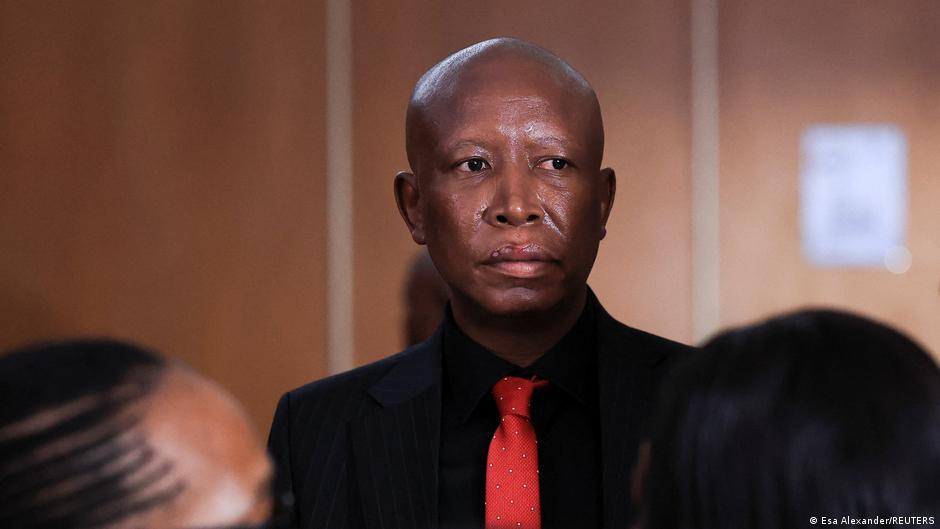
DW described how AfriForum has taken complaints to the United States, where footage of Malema has drawn attention from politicians, and it said Trump raised the issue with Ramaphosa at the White House last year, asking, “But why wouldn’t you arrest that man?”
UPI similarly said Trump showed clips of Malema chanting the slogan at talks at the White House with Ramaphosa in May last year, and it quoted Trump’s question: “But why wouldn’t you arrest that man?”
WOWK 13 News and the Houston Chronicle account both linked Malema’s profile to Trump’s attention, with WOWK 13 News describing that Malema appeared in a video shown by Trump during a tense meeting with Ramaphosa last year.
Looking ahead, the immediate next step is the appeal process and the possibility of disqualification from Parliament if the sentence stands.
Al Jazeera said Malema’s lawyers applied for leave to appeal, and that the request was later granted, while DW said “the court later granted Malema leave to appeal the sentence.”
The stakes described by the sources are therefore both legal and political: Al Jazeera said that if confirmed after all appeals, Thursday’s five-year sentence would “bar Malema from serving as a lawmaker,” and it framed that as “a major setback to the EFF.”
More on Africa
Pope Leo XIV Condemns Tyrants Spending Billions on Wars in Cameroon After Trump Attacks
14 sources compared

Pope Leo XIV Condemns Tyrants, Warns Against Using Religion To Justify Violence In Bamenda
12 sources compared
Former Nigerian Oil Minister Diezani Denies Taking Bribes in London Court
13 sources compared

Armed Robbers Kill Ghana Footballer Dominic Frimpong in Team Bus Attack
18 sources compared