
Italy's Prime Minister Meloni Rules Out Military Mission in Strait of Hormuz, EU Favors Diplomacy.
Key Takeaways
- Meloni rules out any Italian military mission to force Hormuz blockade.
- EU favors diplomacy and de-escalation in response to Hormuz tensions.
- Remarks followed the European Council, clarifying interpretations of the joint statement.
Military Mission Ruled Out
Italian Prime Minister Giorgia Meloni has explicitly ruled out any military mission to forcibly break the Iranian blockade of the Strait of Hormuz.
“Le parole della premier al termine del Consiglio europeo: "Nelle conclusioni riferimento a moratoria su attacchi a infrastrutture energetiche, Ue impegnata per de-escalation"”
Meloni pushed back against what she called forced interpretations of a joint statement by European and Asian countries.
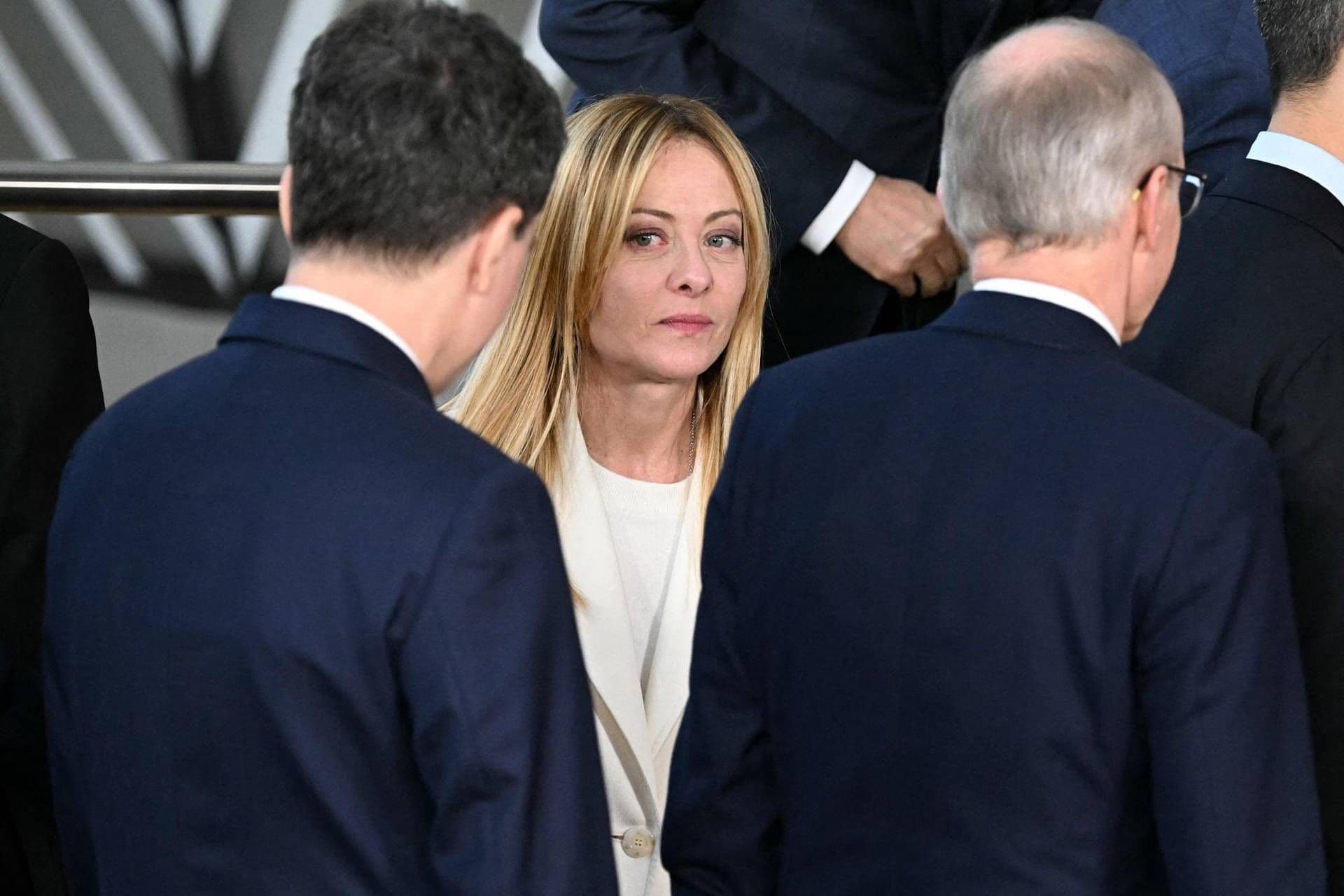
She made clear that no country is currently considering the use of military force in the region.
Meloni emphasized that EU countries are not party to the conflict and favoring diplomacy and de-escalation instead.
The Italian Premier clarified that the question being asked was about contributing to freedom of navigation in appropriate conditions.
This clarification came after Downing Street released a joint statement that had been subject to various interpretations.
Joint Statement Details
The joint statement was released by Downing Street and supported by multiple European and Asian countries.
It condemned Iranian attacks on commercial vessels and civilian energy infrastructure in the Gulf.

The document expressed readiness to 'contribute to appropriate efforts to ensure safe passage through the Strait.'
European leaders interpreted this as supporting maritime security through diplomatic means rather than military intervention.
The statement specifically condemned attacks on 'navi commerciali disarmate nel Golfo' and denounced Iranian forces' effective closure of the Strait.
It warned that the effects of Iranian actions would be felt worldwide, especially by the most vulnerable populations.
European Diplomatic Stance
Meloni emphasized that Italy and other EU countries are not party to the conflict.
EU countries are committed to de-escalation rather than military confrontation.
The Premier clarified that any European contribution would only be considered in a post-conflict phase.
This contribution would require appropriate conditions and agreement from all parties involved.
The EU is positioning itself as a mediator rather than a participant in the regional tensions.
Political Opposition Reactions
Italian political opposition has reacted to the Hormuz situation with skepticism and demands for parliamentary oversight.
The leader of the Five Star Movement (M5S), Giuseppe Conte, agreed with Meloni's position.
Conte stated 'Da Londra ci vien detto che l'Italia parteciperebbe' to a mission for reopening the Strait.
Conte added 'Noi diciamo assolutamente no' to military involvement.
+Europe party's secretary Riccardo Magi insisted any Hormuz decision must pass through Parliament.
These reactions highlight the political sensitivity of Italy's involvement in Middle Eastern security matters.
Middle East Escalation Context
The broader context of escalating tensions in the Middle East impacts the Strait of Hormuz situation.
“Creating new perspectives since 2009 March 20, 2026 at 10:30 am Italy’s Premier Giorgia Meloni attends a session at the Senate ahead of the upcoming European Council and refers about her government position on the Middle East war, in Rome, Italy, on March 11, 2026”
Recent attacks continue to contribute to regional instability.

The Kuwaiti government has denounced a new drone attack by Iran against the Mina Al-Ahmadi refinery.
This refinery had already been hit in previous attacks.
The latest attack caused fires in several facility units.
Firefighters were working to contain the flames with no reported injuries.
These attacks demonstrate the volatile regional security environment.
They highlight challenges for diplomatic efforts ensuring freedom of navigation through this critical maritime chokepoint.
Domestic Policy Context
While addressing foreign policy, Meloni also outlined Italy's domestic policy priorities.
These priorities include energy security and economic measures.
The Premier defended Italy's energy bill decree.
After lengthy discussions, Italian negotiators succeeded in including urgent national measures in Council conclusions.
These measures aim to mitigate the impact of electricity price formation components.
This achievement allows Italy to work with the European Commission based on its energy decree.
Meloni also addressed criticisms about the excise tax decree.
She explained it was implemented with limited time due to crisis timeline uncertainty, not electoral reasons.
More on Iran

Trump Administration Lifts Sanctions on Iranian Oil Stranded at Sea
16 sources compared

Trump Administration to Seize Iran's Kharg Island to Reopen Strait of Hormuz
16 sources compared

Iran Attacks Kuwaiti Oil Refinery as Tehran Steps Up Gulf Attacks
21 sources compared
Switzerland Halts Arms Exports to US Over Attacks on Iran, Citing Neutrality
16 sources compared