
Iranian Authorities Give Hero's Welcome to Women's Football Team After Asylum Drama
Key Takeaways
- Iranian women's football team returned home to Tehran after Australia trip.
- Several players and staff briefly sought asylum in Australia before withdrawing.
- Authorities staged a hero's welcome for the team upon their Tehran return.
Asylum Incident
The Iranian women's football team returned to a hero's welcome in Tehran after a dramatic asylum incident during the Women's Asian Cup in Australia.
“BREAKING World Trade Organization chief warns war on Iran threatens global food securityIran strikes Israeli oil refinery as regional energy facilities targetedSurge in oil and gas prices amid concerns over global fuel supplies Click to pause breaking news tickerpause-square-backgroundClose Breaking News Tickerclose Toggle Play Iranian football players celebrated in Tehran Iran’s national women’s football team has been given a hero’s welcome in Tehran, just weeks after they were thrust into an international crisis, involving accusations of treason, cancelled Australian asylum bids and claims they would face the death penalty”
The crisis began when the team sparked controversy by remaining silent during Iran's national anthem before their opening match, drawing criticism from hardliners who viewed the act as treasonous.

Seven delegation members—including six players and one staff member—sought asylum in Australia on March 10, citing fears of persecution if they returned to Iran.
Five of these individuals later reversed their decision and returned home, including team captain Zahra Ghanbari, while two members remained in Australia.
The incident occurred amid heightened tensions involving Iran, with US President Donald Trump praising the athletes' actions, creating an international diplomatic incident that drew global attention to the team's plight.
Welcome Ceremony
The returning players were greeted with an elaborate celebration emphasizing loyalty to the Islamic Republic and the regime's authority.
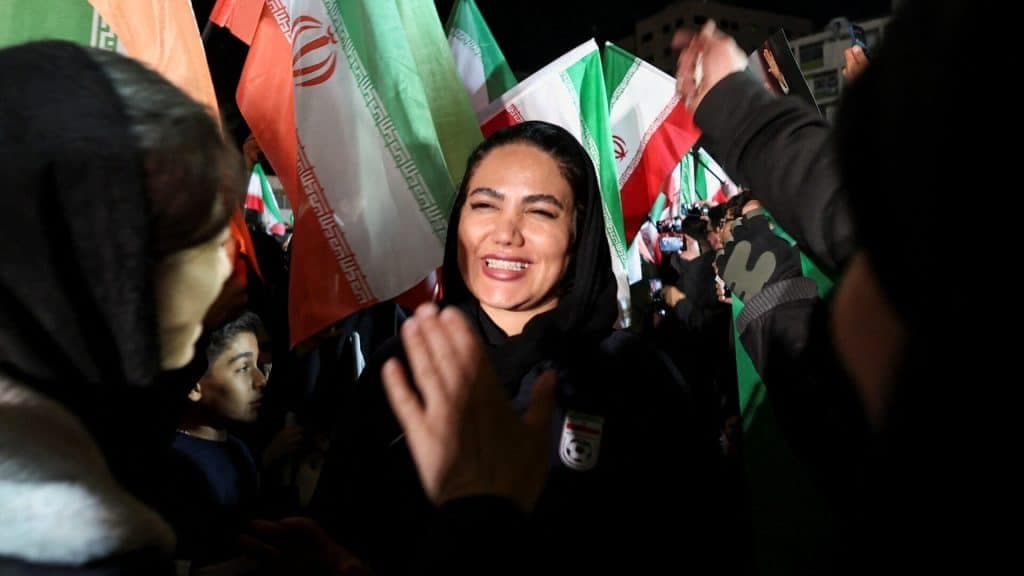
Thousands of supporters gathered at Valiasr Square in central Tehran, waving Iranian flags in a display of state-orchestrated patriotism.

The ceremony prominently featured a massive billboard displaying the message 'My Choice. My Homeland' alongside images of the players in national jerseys and mandatory hijabs, symbolically framing their return as a voluntary act of national devotion.
Iranian Football Federation President Mehdi Taj declared at the event, 'What is certain is that these athletes are loyal to the homeland, flag, leader and revolution,' while government spokesperson Fatemeh Mohajerani welcomed the team with the words, 'All Iranians were waiting for you; welcome to Iran.'
The square, which has hosted multiple pro-government rallies in recent weeks, served as both a celebration venue and a political statement reinforcing state narratives.
International Reactions
The international community reacted with divergent perspectives to the Iranian team's asylum drama, reflecting broader geopolitical tensions.
“Iran's women's football team received a hero's welcome in Tehran upon returning from Australia”
US President Donald Trump publicly praised the athletes who sought asylum, framing their actions as a courageous stand against the Iranian regime.
Australian authorities provided protection for the asylum seekers, with Home Affairs Minister Tony Burke confirming that the government had engaged in 'secret talks with the players' and whisked them to a safe house after they left their hotel.
Iranian officials in turn accused Australia of pressuring the players to defect, claiming foreign interference in what they described as an internal matter.
The incident occurred amid heightened tensions between Iran and Western powers, particularly as Iran engaged in military actions against Israel, with Iranian strikes targeting Israeli oil refineries and regional energy facilities, causing surges in global oil and gas prices.
The FIFA organization also became indirectly involved through World Trade Organization chief warnings that the 'war on Iran threatens global food security.'
Political Context
The Iranian women's football team situation unfolded within a complex political context involving regional military tensions and regime consolidation efforts.
Iranian authorities framed the athletes' return as a victory against foreign interference and deception, with Parliament Speaker Mohammad Bagher Ghalibaf declaring that the players had 'disappointed the enemies (of Iran) and did not surrender to deception and intimidation by anti-Iran elements.'
The regime leveraged the incident for propaganda purposes, emphasizing national unity and loyalty while simultaneously issuing warnings about external threats.
In a related development, Iran called on countries in West Asia to prevent the United States from using military bases in their territories, claiming these bases represent the 'root cause' of the current crisis and are being used for operations against Tehran.
The timing of the incident coincided with Iran's military activities in the region, including missile attacks on Israeli targets, suggesting that the football team drama served as both a domestic distraction and an opportunity to rally nationalist sentiment amid broader geopolitical conflicts.
Human Rights Concerns
Human rights organizations and international activists raised serious concerns about the circumstances surrounding the Iranian players' decision to return home, alleging systematic pressure and intimidation by Iranian authorities.
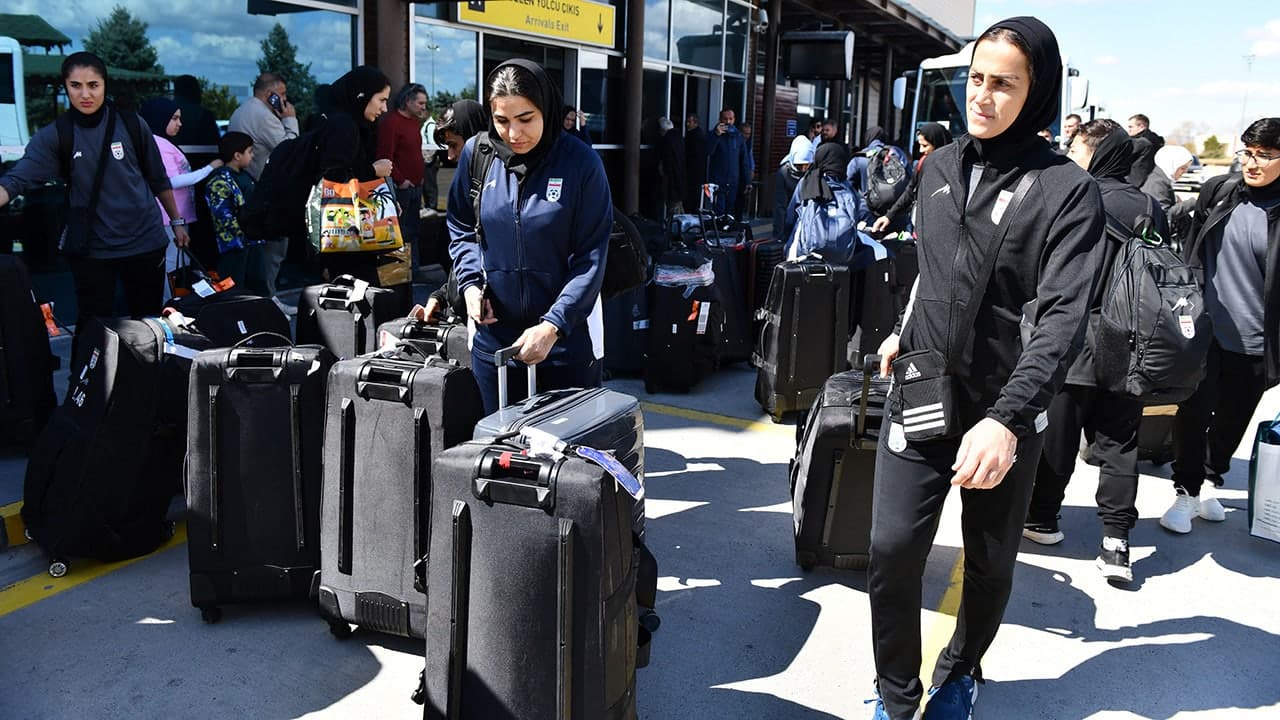
“Members of Iran's women's football team at Igdir airport in Turkey, waiting for a bus to take them to the Iranian border The Iranian women's football team, whose plight has become embroiled in the Middle East war, returned back to Iran on Wednesday where they were promised a welcome ceremony in Tehran”
Rights groups accused Tehran of pressuring athletes abroad by threatening relatives with the seizure of property if they defect or make statements against the Islamic republic.
Activists claimed that the families of the players were subjected to interrogations and threats, creating an environment of coercion that influenced the athletes' reversal of their asylum applications.
An Iranian state TV presenter had branded the players 'wartime traitors,' fueling fears they would face severe punishment if they returned, including potential death penalty threats.
The incident highlighted broader patterns of human rights abuses in Iran, particularly regarding women's rights and freedom of expression, as the mandatory hijab requirement and anthem singing represent key components of state-enforced ideological compliance.
The two players who remained in Australia were viewed by activists as having demonstrated genuine courage in refusing to return to what they perceived as an oppressive environment.
More on Sports

Online Racists Target Liverpool's Ibrahima Konate After Osimhen's Injury
13 sources compared

Head coach Benjy Taylor sues Morehouse and campus officers over on-court handcuffing
11 sources compared

Nottingham Forest beat Midtjylland on penalties to reach Europa League quarter-finals
10 sources compared

Tuchel drops Trent Alexander-Arnold from England squad for March friendlies
31 sources compared