
House Democrats Say Trump’s USAID Shutdown Contributed to 600,000 Preventable Deaths
Key Takeaways
- House Democrats say USAID shutdown caused 600,000 entirely preventable deaths.
- Report links funding cuts to weaker global outbreak response and increased adversary influence.
- Health workers report funding cuts hinder Ebola response, as CBS News and The Hill document.
USAID cuts and Ebola
A House Oversight Democrats report says the Trump administration’s decision to kill the U.S. Agency for International Development (USAID) likely contributed to 600,000 “entirely preventable” deaths and left the globe “faltering” in responding to the latest Ebola outbreak.
“The WHO raised the highest alert on May 17, 2026 in response to a Bundibugyo Ebola virus outbreak in the DRC and Uganda”
The report, issued Thursday, links the USAID shutdown to the firing of over 10,000 federal workers and contractors and to a surge in diseases like HIV and malaria that the agency had prioritized for decades.
Ranking member Rep. Robert Garcia (D-Calif.) said, “By shuttering USAID, Donald Trump is causing hundreds of thousands of preventable deaths, harming our national security,” while the report also argues that “It is likely that countries like Russia and the [People’s Republic of China] will fill the void.”
The report adds that the rapid spread of Ebola is “directly linked to a failure to test, track, isolate and treat sick patients,” and it says that approach had previously been possible in a war-torn, economically volatile region thanks to USAID and humanitarian assistance programs that are no longer operational.
Rubio, quarantine, and blame
As the Ebola outbreak in the Democratic Republic of Congo appears poised to become the largest on record, The New York Times says Trump administration officials have not articulated a clear plan for caring for Americans at risk of the disease.
Secretary of State Marco Rubio declared the administration “cannot and will not allow any cases of Ebola to enter the United States,” while the paper says the administration has already shipped one American physician sickened with Ebola to a hospital in Germany and six others with possible exposure to Germany and the Czech Republic for monitoring.
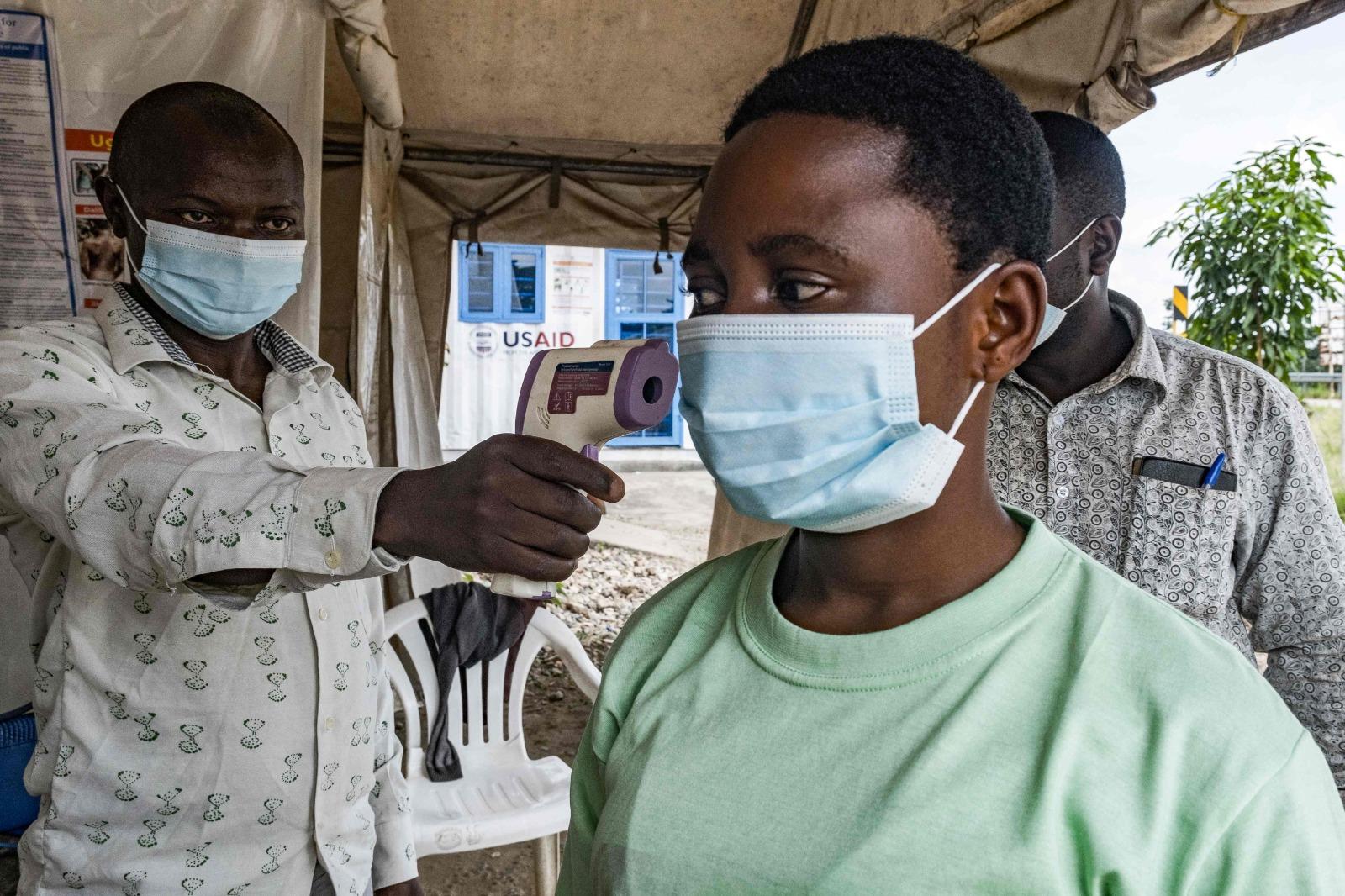
The Intercept reports that State Department spokesperson Tommy Pigott lashed out at WHO and said, “The security concerns in the area – which President Trump has taken unprecedented steps to address – and the WHO’s delay in informing the world of concerns until May 15 has had an impact.”
In response to the dispute over timing, WHO Director-General Tedros Adhanom Ghebreyesus told journalists, “The outbreak had a big head start, and we’re still behind, but under the leadership of the Government of DRC, we are catching up,” after visiting the epicenter in eastern Democratic Republic of Congo.
What’s at stake next
In the Democratic Republic of Congo, Afrik says the WHO raised the highest alert on May 17, 2026 in response to a Bundibugyo Ebola virus outbreak, while the DRC Ministry of Health confirmed Ebola fever cases in Ituri Province on May 15, 2026.
Afrik reports that by May 20 the situation was already critical, with 51 confirmed cases, nearly 600 suspected cases, and 139 probable deaths in the DRC, and it says the virus had reached major East African urban centers like Bunia, Butembo, and Goma and crossed the border to strike Kampala.
The Intercept adds that on May 5 WHO issued an alert of a high-mortality outbreak in Congo’s Ituri Province and that on May 14 blood samples were finally analyzed across the country in Kinshasa, with analysis confirming Bundibugyo virus disease a day later.
Jeune Afrique frames the stakes as the cost of “budget savings that come at a high price,” arguing that the Trump administration’s “dismantling of USAID” and withdrawal from the WHO present cuts as “sound accounting,” while the Intercept describes the response as undermined by policies that have “undermined global health security.”
More on Technology and Science

Jon Snow, 78, Reveals Alzheimer’s Diagnosis In Channel 4 Documentary
10 sources compared

Airbnb CEO Brian Chesky Plans New Artificial Intelligence Lab Focused On User Interaction
13 sources compared

Kevin O’Leary Scales Back Stratos AI Data Center in Box Elder County After J. Stuart Adams Pressure
11 sources compared

Cash App Launches Cash App Wand Tap-To-Pay Tags Priced At $25
11 sources compared