
Blue Origin Plans Solar-Powered AI Data Center in Orbit with 51,600 Satellites
Key Takeaways
- Blue Origin plans to launch up to 51,600 satellites for an orbital data center.
- Orbital data center to run AI workloads, bypassing traditional Earth infrastructure.
- FCC filing seeks authorization for Sunrise, positioning Blue Origin against SpaceX.
Project Sunrise Overview
Blue Origin has formally submitted an ambitious proposal to the U.S. Federal Communications Commission (FCC) for Project Sunrise.
“Blue Origin To Challenge SpaceX In High-Stakes Data Center Race In Space Looks like we have a new entrant to the orbital data center race: Blue Origin is formally challenging the likes of SpaceX and Axiom with plans for an initial constellation of tens of thousands of satellites”
This project involves a massive constellation of over 51,600 satellites designed to function as a solar-powered artificial intelligence data center in orbit.
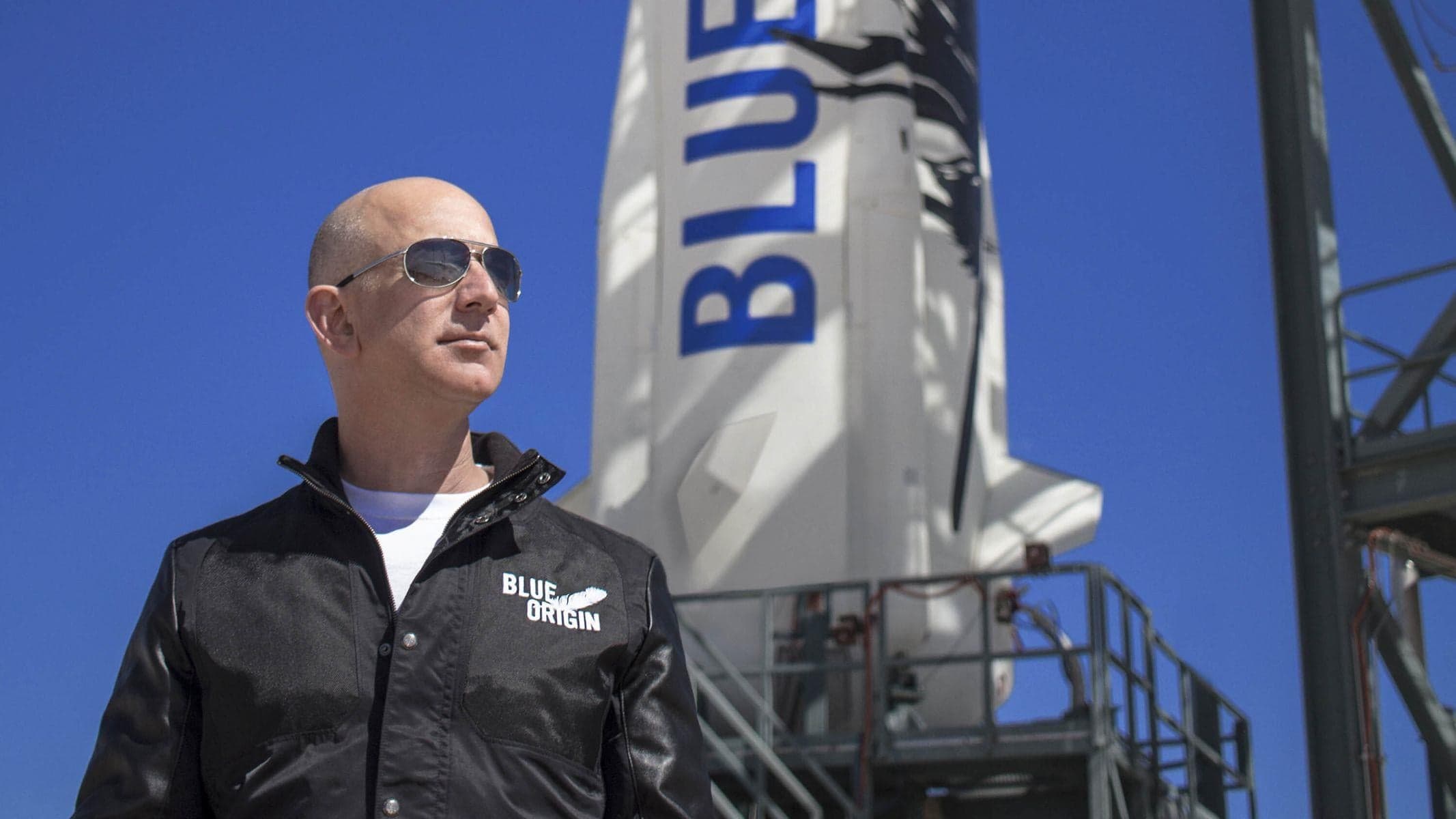
The company filed its detailed plans on March 19, 2026, seeking regulatory approval to launch and operate this unprecedented space-based computing infrastructure.
The filing represents Blue Origin's entry into the emerging field of orbital data centers.
Other tech giants are also exploring ways to leverage space for computational needs.
The project aims to address growing demand for AI processing power while potentially alleviating pressure on terrestrial resources and infrastructure.
Technical Architecture
The technical specifications of Project Sunrise reveal a sophisticated orbital architecture designed for maximum efficiency and performance.
Blue Origin plans to deploy the satellites in sun-synchronous orbits at altitudes between 500 and 1,800 kilometers.

Each orbital plane will be separated by 5 to 10 kilometers in altitude.
Each plane will contain approximately 300 to 1,000 satellites, creating a massive distributed computing network.
The constellation will communicate primarily through optical intersatellite links.
The company's separate TeraWave broadband constellation will serve as a high-throughput communications backbone.
Blue Origin has requested approval to use Ka-band frequencies for telemetry, tracking, and control applications.
AI Computing Revolution
Project Sunrise aims to fundamentally transform how artificial intelligence computing is performed by leveraging the unique advantages of orbital environments.
“Blue Origin joins SpaceX in the orbital data center race, aims to launch over 50,000 satellites Jeff Bezos’ Blue Origin has filed a proposal for the authorization of their ‘Project Sunrise', which aims to launch a constellation of up to 51,600 satellites for establishing an orbital data center system”
Blue Origin's filing emphasizes that the solar-powered satellites offer 'always-on solar energy' without land displacement costs.
The grid infrastructure disparities that plague terrestrial data centers would be eliminated.
The company argues this 'fundamentally lower[s] the marginal cost of compute capacity compared to terrestrial alternatives.'
The space-based data center will specifically target the broad AI market.
Blue Origin seeks to enable U.S. companies developing and using AI to flourish.
The project aims to accelerate breakthroughs in machine learning, autonomous systems, and predictive analytics.
By shifting energy and water-intensive compute workloads away from Earth, the company seeks to ease mounting pressure on communities and natural resources.
Industry Competition
Blue Origin's ambitious plans place it in the midst of a rapidly growing space data center race.
Several other tech companies are pursuing similar orbital computing concepts.
SpaceX has filed for permission to launch an even more ambitious network of one million satellites to be used as a distributed data center.
The startup Starcloud has proposed a network of 60,000 spacecraft to the FCC.
Google is also developing a concept for a space data center called Project Suncatcher.
This convergence of major technology players reflects the growing belief in space-based computing as the future of AI infrastructure.
Entrepreneurs envision a future where AI tools are widespread and much of the inference work will be outsourced to orbit.
Implementation Challenges
Despite the excitement surrounding space data centers, significant technical, economic, and environmental challenges remain.
“Blue Origin To Challenge SpaceX In High-Stakes Data Center Race In Space Looks like we have a new entrant to the orbital data center race: Blue Origin is formally challenging the likes of SpaceX and Axiom with plans for an initial constellation of tens of thousands of satellites”
Technology for cooling processors in the vacuum of space needs to be developed and manufactured cost-effectively.
Communicating between spacecraft with powerful lasers presents technical hurdles.
Scientists are still determining how well advanced chips perform in space's high radiation environment.
The cost to launch these computers into orbit remains a critical challenge.
Most industry participants bet that prices will fall due to SpaceX's Starship rocket program.
Astronomers have expressed serious concerns about the impact on astronomical observations.
The Royal Astronomical Society noted that massive satellite constellations could result in thousands of visible satellites.
This could cause significant interference with telescope observations.
Mitigation Strategies
In response to growing concerns, Blue Origin has outlined several mitigation strategies for Project Sunrise.
The company stated it will pay close attention to astronomical community concerns.
Blue Origin will work with astronomers to minimize satellite brightness.
This aims to ensure minimal impact on astronomical observations.
The company has committed to following strict guidelines to reduce orbital debris.
Blue Origin promises to deorbit its satellites within five years when they reach end-of-life.
These commitments address environmental and observational concerns.
The effectiveness of these measures will depend on implementation details.
The challenge is balancing space-based computing needs with preserving observations and orbital sustainability.
More on Technology and Science

Trump Unveils National AI Policy Framework to Preempt State Laws
20 sources compared

Social media damages youth well-being, World Happiness Report 2026 finds
34 sources compared

Meta Pays Creators Up to $3,000 to Post on Facebook, Launching Creator Fast Track.
25 sources compared

Climate Change Drives Record March Heat in Southwest U.S.
14 sources compared