
Bank of England Holds Rates as Middle East Tensions Threaten Inflation
Key Takeaways
- BOE holds rate at 3.75% with unanimous MPC vote.
- Inflation risks rise amid Middle East tensions, prompting readiness to hike.
- MPC emphasized readiness to adjust rates; some members expect future hikes.
Rate Decision Context
The Bank of England unanimously maintained its benchmark interest rate at 3.75% amid heightened Middle East tensions.
“BOE holds rates, signals hikes as Middle East war lifts inflation Share: The Bank of England (BoE) held its benchmark interest rate steady on Thursday but signaled a more hawkish stance as rising energy prices linked to the Middle East conflict threaten to push inflation higher”
The nine-member Monetary Policy Committee (MPC) reached this decision despite market expectations of a potential split vote.

This marked the first unanimous decision in over four years.
Governor Andrew Bailey emphasized the central bank's cautious approach while acknowledging the evolving geopolitical landscape.
The decision comes as the BoE carefully monitors how the ongoing Middle East conflict could impact energy prices.
Officials are concerned about how these tensions could feed through to broader inflationary pressures in the UK economy.
Inflation Risks
The central bank has signaled a clear shift toward a more hawkish stance as Middle East-related energy price rises threaten to push inflation higher.
Officials warned that the inflation outlook has worsened due to geopolitical developments affecting global energy markets.
Governor Bailey stressed that 'whatever happens, our job is make sure inflation gets back to its 2% target.'
The BoE now expects inflation to accelerate to around 3.5% in the near term, higher than previous forecasts.
This reflects the impact of elevated energy prices on the economy.
Policymakers remain concerned about 'second-round effects' where higher energy costs feed into wages.
These effects could create more persistent inflation requiring further monetary tightening.
Market Reactions
Financial markets reacted swiftly to the BoE's more hawkish stance with traders significantly adjusting expectations.
“BOE holds rates, signals hikes as Middle East war lifts inflation Share: The Bank of England (BoE) held its benchmark interest rate steady on Thursday but signaled a more hawkish stance as rising energy prices linked to the Middle East conflict threaten to push inflation higher”
Market participants now fully price in at least two quarter-point rate hikes this year.
They have increased the likelihood of a third hike, showing growing confidence in future tightening.
Government bond yields surged, with two-year gilt yields rising sharply.
The British pound strengthened against the dollar in response to policy signals.
The MPC dropped earlier guidance suggesting rates were 'likely to be reduced further.'
This reinforces the shift away from expectations of near-term easing.
The market response reflects traders' assessment that the BoE will prioritize inflation control.
Economic Challenges
Despite inflationary concerns, the BoE faces significant economic challenges complicating its policy path.
Recent data showed wage growth slowing to its lowest pace since late 2020.
Broader economic growth remains subdued, creating a delicate balancing act for policymakers.
The central bank acknowledged labor market has softened in recent quarters.
Officials maintain vigilance against inflation risks despite economic weakness.
Internal discussions revealed range of perspectives within the MPC.
Chief Economist Huw Pill stated he was 'ready to act' if risks intensified.
Alan Taylor noted there remains 'a high bar to hiking' given energy price uncertainty.
This backdrop suggests the BoE will carefully calibrate its response to avoid further economic weakness.
More on Gaza Genocide

French naval officer Arthur reveals Charles de Gaulle's location via Strava
19 sources compared
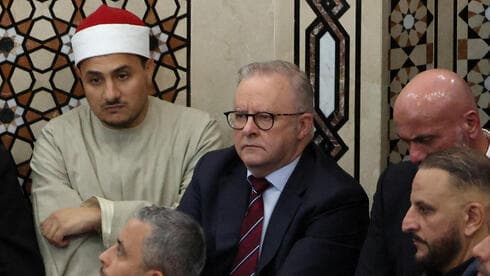
Protesters heckle Australian PM Albanese at Sydney mosque over Israel stance
18 sources compared
Kent resigns as Trump's counterterrorism chief, says Israel deceived U.S. into Iran war
24 sources compared

Iran Fires Missiles at Israel, Killing Three Palestinian Women and a Foreign Worker
23 sources compared