300 Million Indian Workers Stage Nationwide Strike Against Modi's Anti-Worker, Anti-Farmer Policies
Key Takeaways
- An estimated 300 million people participated in the one-day national strike.
- Major trade unions and farmers’ organisations, including JPTCU and Samyukta Kisan Sabha, called the strike.
- Peasants and agricultural workers joined industrial workers in nationwide protests.
India general strike
On 12 February 2026 an estimated 300 million people — described as workers, farmers, students and others — participated in a one-day nationwide general strike across India called by central trade unions and major farmer bodies and backed by left parties.
“CPIM: Congratulations to Working Class on Successful General Strike The Polit Bureau of the Communist Party of India (Marxist) congratulates the working class of our country on the successful general strike today”
Organisers and participants called the mobilisation "historic."
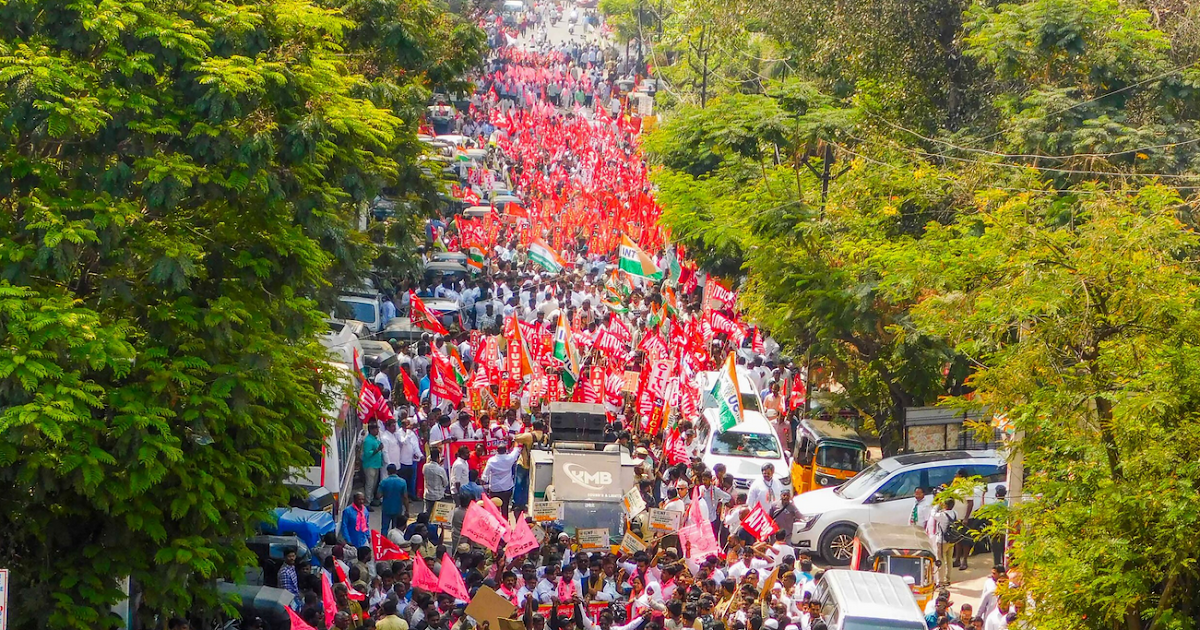
The action reportedly shut down thousands of coalfields, refineries, factories, banks and transport services.
The strike produced large gatherings in Delhi at the state secretariat and Jantar Mantar.
Union leaders framed the strike as both a protest against what they described as pro-corporate policies and a warning of larger future action if the government did not meet demands.
Unions' demands and stance
Organisers listed a concrete set of demands framing the strike as opposition to recent central government policies, calling for withdrawal of recent trade deals with the U.S. and EU, repeal of four new labour codes, reversal of a newer rural employment law (VB GRAM G) in favour of the earlier MGNREGA, and scrapping laws deemed pro‑corporate such as an electricity law and a seed bill.
The unions also couched the action in political terms, calling for protection of India’s secular, democratic polity and explicitly opposing what they described as the BJP government’s majoritarian and authoritarian actions.
Nationwide strike coverage
Reports emphasised the strike’s geographic breadth and sectoral impact.
“The article argues that Thursday’s one-day “general strike,” called by the Joint Platform of Central Trade Unions (JPTCU), was a political maneuver by pro-capitalist union leaders—particularly the Stalinist-led CITU and AITUC—to preserve oppositional credibility and bind workers to the Congress-led INDIA electoral coalition, rather than to build a sustained industrial and political counter-offensive against the Modi government or the ruling class”
Organisers and participants reported closures and protests across states including Kerala, Odisha and Tripura, and large rallies in West Bengal.
Student groups, women’s groups and civil society added support.
Union leaders described the action as symbolic but warned it could escalate into longer and larger strikes if the government did not respond to demands, signalling continuing labour-farmer political pressure.
Political framing of strike
Reporting links the strike to broader opposition against the BJP-led government's policy direction.
Organisers and left parties framed the protest as not just about wages and rural employment but as resistance to trade deals and legislation seen as favouring corporations.
The coverage available is limited to mronline.org's perspective.
Another provided source (@id_communism) contains no article text, so cross-checking, alternative framings, or official government responses are absent from the supplied material.
More on India

Pakistan Attacks Kabul Omid Hospital, Killing Over 400, Taliban Says
12 sources compared

Pakistan Airstrike Kills Hundreds at Kabul Drug Rehabilitation Center
41 sources compared
Afghanistan Says Pakistan Strikes Kabul Hospital, Killing 400
77 sources compared
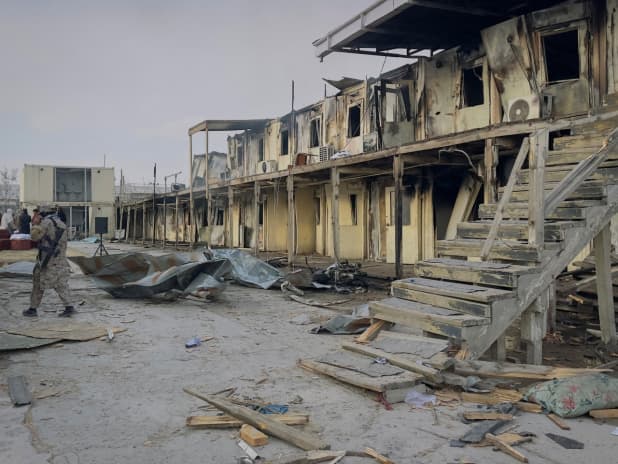
Afghanistan Says Pakistan Killed 400 at Kabul Hospital
244 sources compared